Bolted Connections vs Welded Connections for Industrial Buildings
Bolted vs welded steel connections is no longer a purely technical debate limited to engineers—it has become a strategic decision that directly affects construction speed, quality control, and project risk in modern industrial buildings. In 2026, as industrial projects move faster and labor conditions tighten, the choice between bolted and welded connections increasingly determines whether a project stays on schedule or slips into costly delays.
Industrial developers today operate under intense pressure: compressed timelines, fixed budgets, stricter QA requirements, and limited access to skilled site labor. Under these conditions, connection strategy is no longer a minor design detail—it is a core execution decision.
This article examines bolted vs welded steel connections from a practical, real-world perspective, focusing on erection speed, site welding risk, and QA inspection implications that matter most to industrial building owners and project managers.
Why Steel Connections Matter More Than Most Developers Realize
In industrial buildings, steel members often receive the most attention—span length, section size, and load capacity dominate early discussions. Yet in practice, structural connections are far more likely to become the source of schedule disruption, quality issues, and cost escalation.
Connections sit at the intersection between design intent and site reality. While members are fabricated under controlled factory conditions, connections must often be completed or adjusted on site, where variability is unavoidable.
This is why bolted vs welded steel connections has emerged as a key decision factor for industrial developers who prioritize predictability over theoretical optimization.
- Connection errors are harder to correct than member errors
- Inspection requirements differ significantly by connection type
- Labor skill dependency is concentrated at connection work
Connections as the Interface Between Design and Reality
Drawings assume ideal conditions: perfect alignment, stable weather, and consistent workmanship. Site conditions rarely comply.
Steel connections must accommodate tolerances, sequencing challenges, and coordination gaps between trades. When connection strategies are not aligned with real site conditions, even well-designed structures can experience delays and rework.
Understanding Bolted Steel Connections in Industrial Buildings
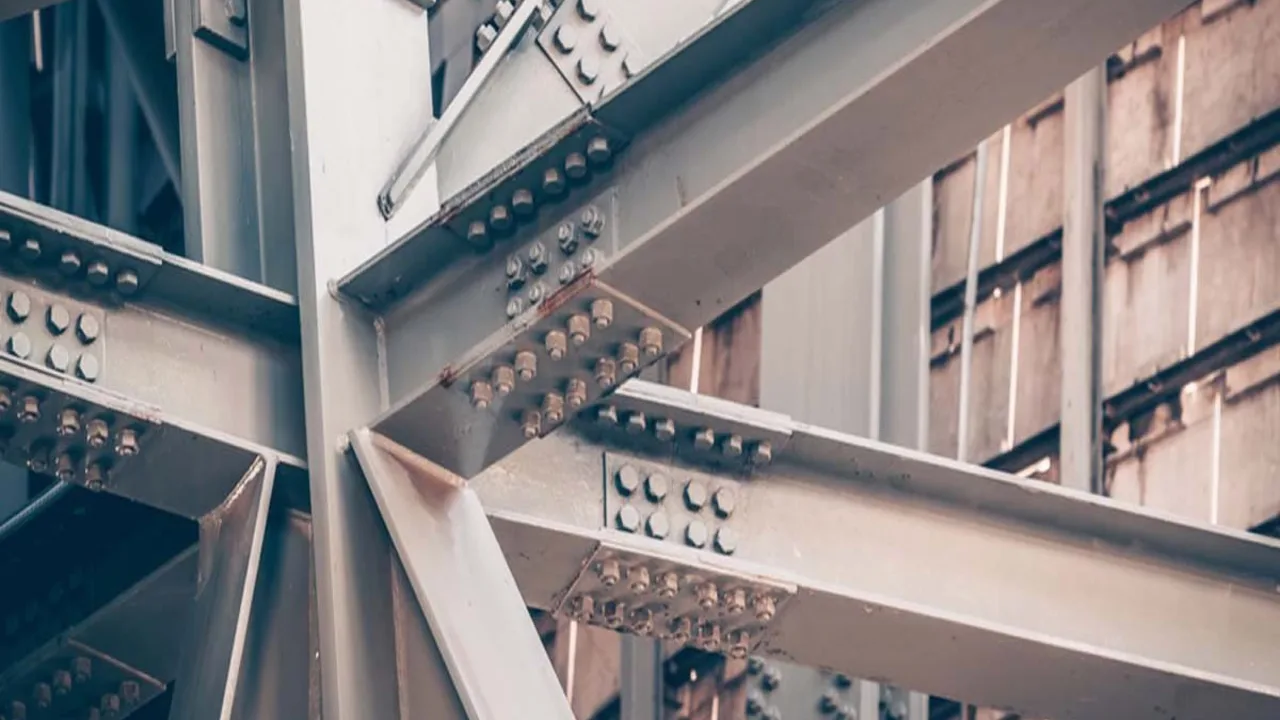
Bolted steel connections rely on mechanical fasteners—typically high-strength bolts—to transfer forces between structural members. In industrial buildings, bolted connections are commonly used for columns, beams, bracing, and secondary framing.
The appeal of bolted systems lies in their simplicity and repeatability. Components are fabricated with pre-drilled holes, delivered to site, and assembled using standardized procedures.
As fast-track construction becomes the norm, bolted systems align naturally with the priorities behind modern bolted vs welded steel connections decisions.
How Bolted Connections Improve Erection Speed
Erection speed is one of the most visible advantages of bolted connections. Because bolting does not require heat input, weather-sensitive procedures, or curing time, erection can proceed rapidly once members are positioned.
Bolted connections also support parallel workflows:
- Structural members fabricated while foundations are still underway
- Rapid on-site assembly using cranes and standard tools
- Immediate load transfer once bolts are tightened
For industrial projects with strict completion milestones, this speed advantage often outweighs theoretical structural efficiency.
Understanding Welded Steel Connections in Industrial Buildings
Welded steel connections join members by fusing steel elements together through heat and filler material. In theory, welding provides continuity and rigidity that can reduce the number of required components.
However, in real industrial construction environments, welded connections introduce complexity that must be carefully managed. Welding quality depends heavily on workmanship, environmental conditions, and inspection rigor.
This reality places bolted vs welded steel connections at the center of risk assessment for developers evaluating execution reliability.
Site Welding Risk in Real-World Industrial Projects
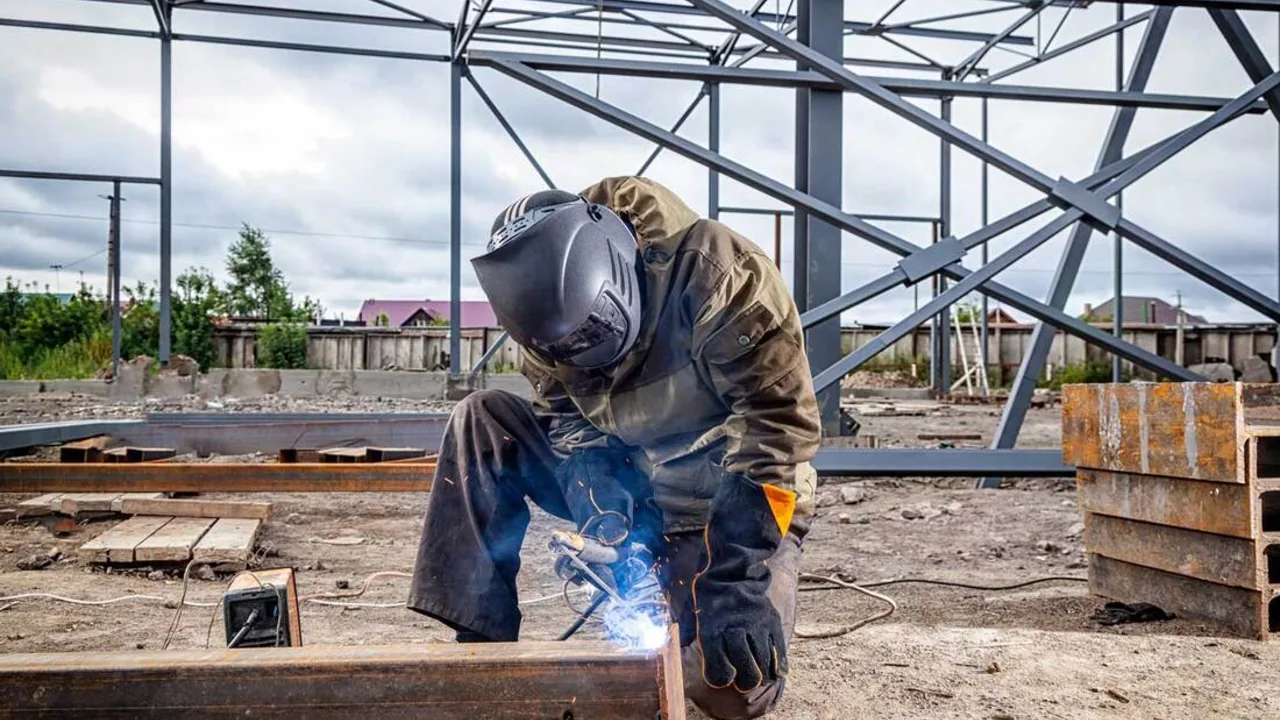
Site welding risk remains one of the most underestimated factors in industrial construction. Unlike shop welding, which occurs in controlled environments, site welding is exposed to multiple variables:
- Weather conditions affecting weld quality
- Inconsistent welder skill levels
- Access constraints and awkward welding positions
- Higher safety exposure
Each of these factors increases the likelihood of defects, rework, and inspection delays. According to industry analysis published by the American Institute of Steel Construction, quality consistency is one of the key advantages of prefabricated and bolted steel systems in modern projects.
Bolted vs Welded Steel Connections as a Project Risk Decision
At a strategic level, the choice between bolted and welded connections reflects how project teams manage uncertainty. Bolted systems favor predictability, repeatability, and schedule control. Welded systems favor continuity but require stricter supervision.
As industrial projects accelerate, developers increasingly treat bolted vs welded steel connections as a risk management decision rather than a purely structural one.
This shift sets the stage for a deeper, side-by-side comparison—examining how connection choices affect erection speed, QA inspection, labor dependency, and long-term project outcomes.
Bolted vs Welded Steel Connections: A Practical Comparison
When industrial developers evaluate bolted vs welded steel connections, the most meaningful comparison is not theoretical strength, but how each system performs under real project constraints. Schedule pressure, labor availability, inspection capacity, and risk tolerance all influence which connection strategy delivers better outcomes.
Below is a practical comparison based on execution realities commonly encountered in industrial building projects.
| Decision Factor | Bolted Steel Connections | Welded Steel Connections |
|---|---|---|
| Erection Speed | Fast, repeatable, minimal curing or waiting time | Slower, dependent on welding sequence and inspection |
| Site Welding Risk | Low, most work completed via mechanical fastening | High, sensitive to weather and workmanship |
| QA Inspection Complexity | Visual checks, torque verification, standardized | NDT required, higher inspection cost and delay risk |
| Labor Dependency | Lower, easier to source trained crews | Higher, relies on certified welders |
| Rework Probability | Low, defects easily corrected | High, failed welds require grinding and re-welding |
| Suitability for Fast-Track Projects | Very high | Limited |
This comparison explains why, in fast-moving industrial environments, bolted vs welded steel connections is increasingly resolved in favor of bolted systems.
Quality Control and QA Inspection Differences
Quality assurance is often underestimated during early project planning, yet it has a direct impact on schedule certainty and cost control. Connection choice significantly affects how QA inspection is executed on site.
Bolted connections allow for standardized inspection procedures. Visual alignment checks, bolt grade verification, and torque measurement can be completed quickly and consistently.
Welded connections, by contrast, require more complex QA inspection. Non-destructive testing methods such as ultrasonic or radiographic inspection introduce additional coordination, cost, and potential delays.
For developers evaluating bolted vs welded steel connections, inspection capacity becomes a critical bottleneck—especially on large industrial sites with tight handover deadlines.
Why QA Inspection Impacts Project Cost More Than Expected
Inspection delays often cascade through the construction schedule. A single failed weld can halt progress on connected structural zones, delaying follow-on trades and increasing indirect costs.
Bolted systems reduce this risk by simplifying acceptance criteria. When defects occur, corrections are faster and less disruptive, preserving overall schedule integrity.
Decision Drivers for Industrial Building Developers
By 2026, industrial developers are increasingly guided by execution certainty rather than theoretical optimization. This shift is reshaping how bolted vs welded steel connections decisions are made.
Key decision drivers now include:
- Erection speed to meet aggressive commissioning targets
- Reduced dependency on scarce skilled welders
- Predictable QA inspection workflows
- Lower exposure to site welding risk
As industrial parks and standalone factories scale faster, developers favor systems that behave consistently across multiple projects and locations.
When Welded Connections Still Make Sense
Despite the growing preference for bolted systems, welded connections still have a role in specific scenarios. Shop welding, performed under controlled conditions, can deliver high-quality results with minimal risk.
Welded connections may also be appropriate where structural continuity is critical or where architectural or spatial constraints limit the use of bolted joints.
The key distinction is location and control. When welding can be performed in a factory environment, many of the traditional drawbacks are mitigated.
Why 2026 Favors Bolted Connection Strategies
The industrial construction landscape in 2026 is shaped by labor shortages, fast-track delivery models, and heightened QA scrutiny. These conditions collectively favor bolted connection strategies.
Rather than asking which system is theoretically stronger, developers now ask which option delivers predictable results across multiple projects. In this context, bolted vs welded steel connections has become a business decision grounded in risk management.
Bolted systems align more closely with modern industrial priorities: speed, scalability, and repeatability.
Final Thoughts: Choosing the Right Connection Is About Risk Control
The debate over bolted vs welded steel connections ultimately comes down to how much uncertainty a project can tolerate. Industrial buildings demand reliability under pressure, not just structural adequacy.
Bolted connections offer execution certainty, simplified QA, and faster erection—qualities that matter most in today’s industrial environment. Welded connections remain valuable in controlled settings, but require stricter oversight.
For developers building at scale, connection strategy is no longer a detail—it is a core component of project risk control.