Pre-Fabrication Tolerances: What’s Acceptable and What Isn’t
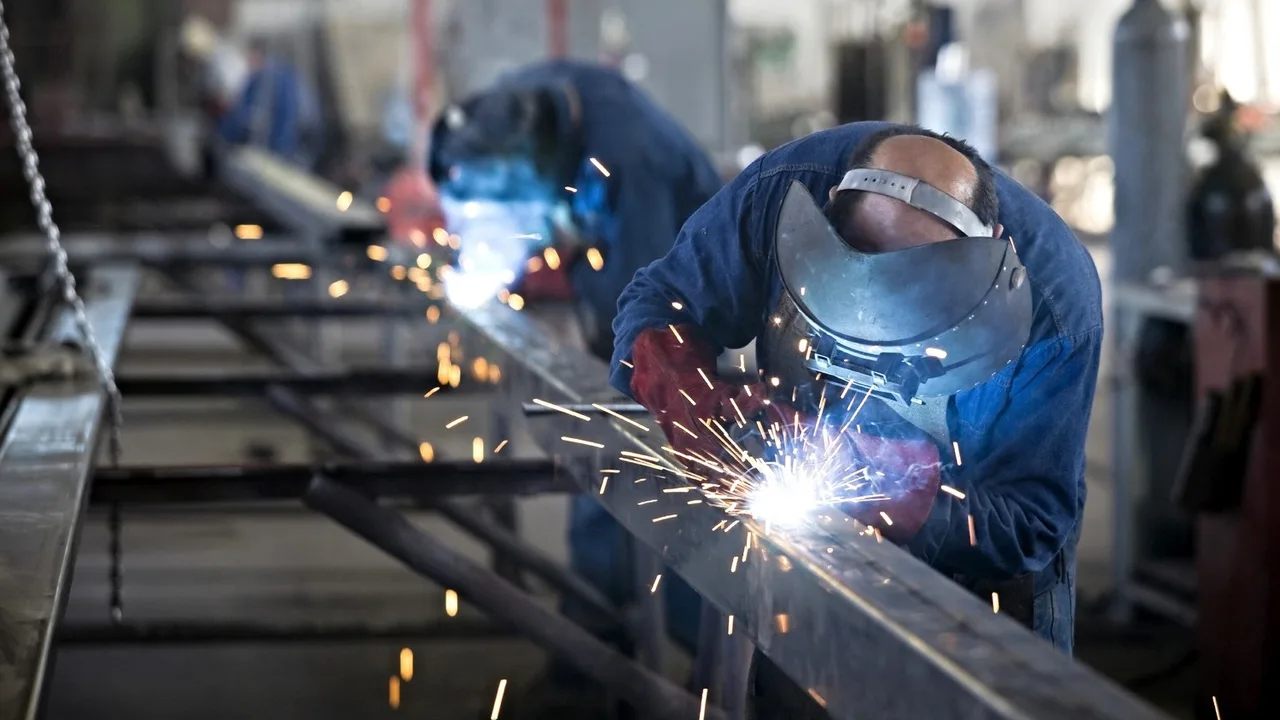
In steel construction industry, precision is not a luxury—it is a requirement. While drawings may look perfect on paper, real-world fabrication introduces variables that must be controlled long before materials reach the job site. This is where steel fabrication tolerances play a decisive role. They define how much deviation is acceptable, where flexibility exists, and where precision is non-negotiable.
Misunderstood tolerances are one of the most common causes of site delays, rework, and costly disputes between fabricators, contractors, and project owners. Knowing what is acceptable—and what is not—can be the difference between a smooth installation and a stalled project.
Why Steel Fabrication Tolerances Matter
Steel structures are rarely forgiving. A few millimeters of error in a single component may seem insignificant in the fabrication shop, but once multiple members are assembled together, those small deviations can compound into serious alignment problems. This is why steel fabrication tolerances exist—not to complicate production, but to ensure that fabricated components can be assembled efficiently on site.
Tolerances act as a shared language between designers, fabricators, and erectors. They define expectations upfront and provide an objective basis for quality control. Without clearly understood tolerance limits, disagreements over “acceptable quality” become subjective, often resolved only after delays or corrective work.
In practice, tolerances balance three competing priorities:
- Constructability – ensuring parts fit together on site
- Cost efficiency – avoiding unnecessary over-precision
- Schedule reliability – minimizing rework and adjustments
Understanding Steel Fabrication Tolerances
Steel fabrication tolerances refer to the allowable dimensional variations permitted during cutting, drilling, welding, and assembly of steel components. These tolerances recognize that steel behaves dynamically during fabrication due to heat input, material properties, and machine limitations.
It is important to distinguish between different tolerance layers:
- Design tolerances – defined by engineers to ensure structural performance
- Fabrication tolerances – reflect manufacturing realities
- Erection tolerances – accommodate site conditions and installation variability
Problems arise when these layers are confused or treated interchangeably. A dimension acceptable in fabrication may still cause erection issues if not coordinated properly. This is why tolerance management must be approached as a system rather than a checklist.
Common Sources of Dimensional Deviation
Deviation does not usually come from a single mistake. Instead, it emerges from a combination of normal fabrication processes. Understanding these sources helps fabricators control risk before it escalates.
Typical contributors include:
- Thermal distortion caused by welding heat
- Cutting method limitations in plasma, oxy-fuel, or laser cutting
- Material straightness variations from rolling mills
- Drilling and hole positioning inaccuracies
- Assembly sequencing that locks in error early
Each deviation may fall within tolerance individually, but when combined across multiple members, the result can exceed acceptable limits. This cumulative effect is known as tolerance stack-up—a concept that becomes especially critical in long-span or multi-bay structures.
Tolerance Stack-Up: When Small Errors Become Big Problems
Tolerance stack-up occurs when individual deviations add together across multiple components, creating a final misalignment that exceeds allowable limits. In steel structures, this is one of the most underestimated risks during pre-fabrication.
For example, imagine a structure with ten beams connected end-to-end. If each beam length is within tolerance but consistently at the maximum deviation, the total accumulated error at the far end can be substantial. What appears acceptable at the shop level becomes a major fit-up issue on site.
Stack-up problems are most common in:
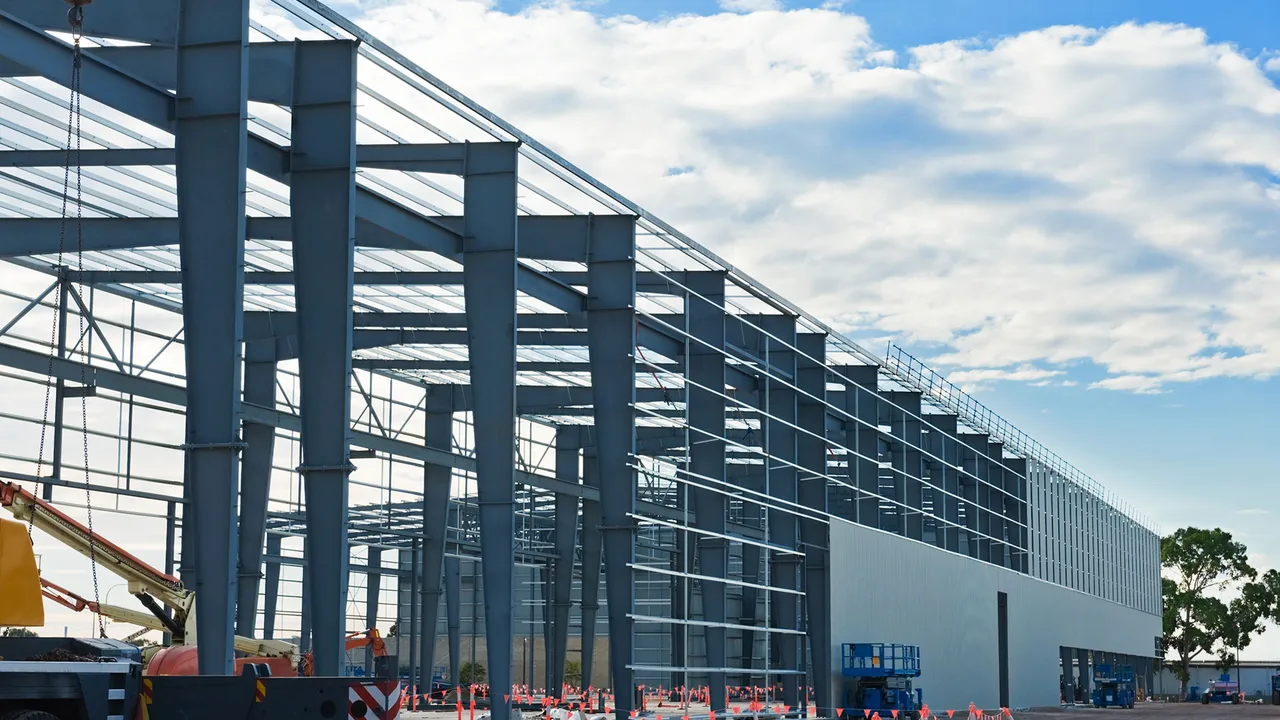
- Long-span roof structures
- Multi-bay industrial buildings
- Pipe racks and modular frames
Industry guidance from organizations such as the American Institute of Steel Construction highlights the importance of controlling cumulative tolerances rather than inspecting components in isolation. Effective tolerance management requires anticipating how parts interact—not just how they measure individually.
Fit-Up Reality: Shop Accuracy vs Site Conditions
Fit-up refers to how well fabricated components align during assembly, either in the shop or on site. A common misconception is that if parts fit together in the shop, they will automatically fit on site. In reality, site conditions introduce variables that make fit-up more demanding.
There are three main stages of fit-up:
- Shop fit-up – controlled environment, ideal conditions
- Trial assembly – verification for complex structures
- Site fit-up – influenced by foundation accuracy and erection tolerances
Minor deviations that seem acceptable during shop fit-up can become critical during erection, especially when components must align with anchor bolts, base plates, or previously installed frames. Forcing components into place is a clear sign that tolerance limits have been exceeded, even if measurements appear “close enough.”
This is why experienced fabricators treat fit-up as a validation step—not just an assembly task. Proper fit-up confirms that steel fabrication tolerances have been respected throughout the production process.
What’s Generally Acceptable in Steel Fabrication
While specific tolerance limits depend on project specifications, industry practice has established general acceptance ranges that balance precision with practicality. These ranges are not targets—they are limits designed to prevent functional problems.
| Item | Typical Acceptable Tolerance | Risk if Exceeded |
|---|---|---|
| Beam length | ±2–3 mm | Frame misalignment |
| Bolt hole position | ±1–2 mm | Fit-up difficulty |
| Plate flatness | Limited warping | Uneven load transfer |
These values illustrate why tolerance discussions must happen early. Once fabrication is complete, correcting tolerance issues becomes exponentially more expensive.
What’s Not Acceptable—and Why It Becomes a Problem
While some dimensional variation is unavoidable, certain deviations cross the line from acceptable to problematic. In steel projects, these issues rarely stay isolated; they cascade into installation delays, structural adjustments, and contractual friction. Understanding what falls outside acceptable steel fabrication tolerances is critical for both fabricators and project managers.
Common non-acceptable conditions include:
- Bolt holes outside allowable position range, preventing proper alignment
- Excessive beam camber or sweep that affects load transfer
- Warped base plates causing uneven bearing on foundations
- Misaligned connection faces leading to forced fit-up on site
These issues often trigger a chain reaction. A single misaligned connection may require on-site grinding, re-drilling, or even component replacement. Each corrective action adds labor cost, crane time, and schedule risk. In many cases, the root cause traces back to tolerances being misunderstood or relaxed too early in fabrication.
The Hidden Cost of Ignoring Tolerance Limits
Tolerance violations are rarely free. Even when issues are resolved without rejecting components, the indirect costs can be substantial. These include additional inspection time, extended erection windows, and strained coordination between fabrication and site teams.
From a project management perspective, tolerance-related rework often creates downstream inefficiencies:
- Delayed follow-on trades due to stalled steel erection
- Increased safety risk from prolonged crane operations
- Loss of productivity from unplanned site modifications
In disputes, tolerance compliance is frequently used as an objective benchmark. If fabricated members fall outside agreed limits, responsibility becomes clear. Conversely, when tolerances are ambiguous or undocumented, accountability becomes difficult to establish.
Role of QA/QC in Managing Fabrication Tolerances
Effective tolerance control depends heavily on a robust QA/QC system. Quality assurance defines the process, while quality control verifies the results. Together, they ensure that steel fabrication tolerances are maintained consistently—not just checked at the end.
A typical QA/QC workflow includes:
- Incoming material inspection to confirm straightness and dimensions
- In-process checks during cutting, drilling, and welding
- Final dimensional inspection before coating or shipment
Modern fabrication shops rely on tools such as jigs, fixtures, laser measurement devices, and calibrated gauges to reduce operator-dependent variation. More importantly, inspection results are documented and traceable, allowing issues to be identified early rather than discovered during erection.
Pre-Fabrication Checks That Prevent Site Problems
Some of the most effective tolerance controls happen before components ever leave the shop. Pre-fabrication verification steps act as a final safeguard against costly site issues.
Key preventive measures include:
- Trial assembly for complex or long-span structures
- Dimensional cross-verification against approved drawings
- Connection alignment review across mating components
These checks are particularly valuable when multiple fabrication batches must align during erection. Catching a tolerance issue in the shop typically costs a fraction of what the same correction would require on site.
Balancing Precision, Cost, and Schedule
There is a common misconception that tighter tolerances always lead to better outcomes. In reality, over-specifying precision can increase fabrication cost without delivering meaningful value. The goal is not perfection—it is fitness for purpose.
Ultra-tight steel fabrication tolerances may be justified for:
- Critical load-bearing connections
- Modular systems requiring repeatable alignment
- Interfaces with prefabricated mechanical systems
However, secondary members or non-critical components often allow greater flexibility. Aligning tolerance requirements with structural importance helps control cost while maintaining constructability.
Industry Best Practices for Tolerance Control
Leading fabricators treat tolerance management as part of a continuous improvement cycle. Rather than relying solely on inspection, they design processes that reduce variation from the start.
Best practices include:
- Using CNC-controlled cutting and drilling wherever possible
- Standardizing connection details to reduce complexity
- Coordinating early with erection teams to understand site constraints
- Feeding site feedback back into fabrication planning
Digital fabrication workflows further improve consistency by reducing manual interpretation. When combined with disciplined QA/QC, these practices help ensure tolerances are achieved reliably, even at scale.
Precision as a System, Not a Guess
In steel construction, tolerances are not arbitrary limits—they are coordination tools that connect design intent with fabrication reality and site execution. Understanding steel fabrication tolerances means knowing where flexibility exists and where precision is mandatory.
Projects rarely fail because tolerances exist. They fail when tolerances are ignored, misunderstood, or treated as an afterthought. By managing tolerance stack-up, verifying fit-up, and embedding quality control throughout fabrication, teams can avoid rework, protect schedules, and deliver predictable outcomes.
Ultimately, precision in steel fabrication is not about chasing zero deviation. It is about building a system where acceptable variation is controlled, communicated, and aligned with project goals—long before the first component reaches the site.