Welding Automation: When Robots Win, When Humans Win
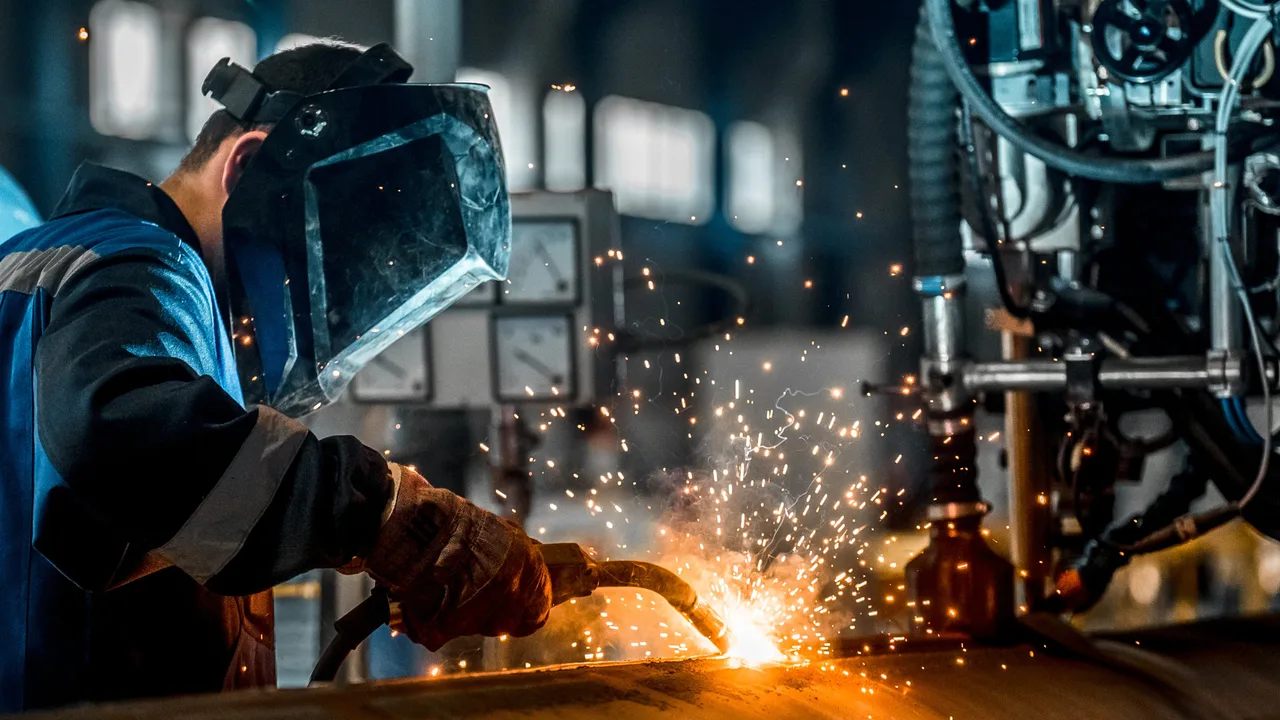
Welding automation vs manual welding is no longer a binary debate in modern manufacturing. In 2026, factories are deciding where automation creates measurable advantage—and where human welders still outperform machines. The question has shifted from “which is better” to “which fits this production context.”
As manufacturers face labor shortages, rising quality expectations, and pressure to increase throughput, welding sits at the center of operational performance. Decisions made at the welding stage ripple across production schedules, cost control, and final product reliability.
This article examines welding automation vs manual welding through real production lenses, identifying when robots win decisively, when humans remain indispensable, and how factories should structure welding strategies for long-term competitiveness.
Why the Debate Between Welding Automation and Manual Welding Still Matters
The relevance of welding automation vs manual welding persists because welding is no longer an isolated task. It is a bottleneck-prone process embedded in complex production systems where variability, quality consistency, and throughput must align.
Several forces keep this debate active in 2026:
- Persistent skilled labor shortages in industrial regions worldwide.
- Rising quality standards driven by global supply chains and certification requirements.
- Higher cost sensitivity as manufacturers operate under tighter margins.
- Production mix volatility, with frequent design changes and shorter product lifecycles.
Under these conditions, choosing between robot welding and manual welding becomes a strategic decision rather than a purely technical one. The wrong choice can reduce flexibility, increase rework, or constrain throughput.
Welding Is No Longer a Standalone Process
In modern factories, welding interacts directly with upstream processes such as cutting and forming, and downstream stages like inspection, coating, and final assembly. A welding method that performs well in isolation may fail once integrated into a full production line.
This integration challenge is why welding automation vs manual welding must be evaluated at the system level, not just at the workstation.
What Welding Automation Really Delivers
Welding automation refers to the use of programmable robotic systems to perform welding tasks with minimal human intervention. These systems excel in environments where repetition, precision, and consistency are prioritized.
The strongest advantages of robot welding include:
- High repeatability across identical welds.
- Stable quality consistency independent of operator fatigue.
- Predictable cycle times that support production planning.
- Data capture for monitoring and continuous improvement.
In high-volume production, these attributes translate directly into improved throughput and reduced defect rates. This is where welding automation vs manual welding clearly favors automation.
Quality Consistency as Automation’s Strongest Advantage
Quality consistency is the defining strength of robot welding. Once parameters are validated, robots can reproduce identical welds over long production runs without deviation.
This consistency reduces rework, simplifies inspection routines, and stabilizes downstream processes. According to industry research summarized by Automation.com, automated welding systems deliver their greatest return in standardized, repeatable applications where variability is minimized.
In such environments, welding automation vs manual welding becomes less about craftsmanship and more about process control.
Where Welding Automation Starts to Lose Its Edge
Despite its strengths, welding automation is not universally superior. Its limitations become apparent in production scenarios defined by variability rather than repetition.
Robot welding systems depend heavily on precise fixturing, consistent part geometry, and stable design parameters. When these conditions break down, automation efficiency declines.
Common challenges include:
- High setup and programming effort for small batch sizes.
- Rigid fixtures that limit design flexibility.
- Changeover downtime when products vary frequently.
In these contexts, welding automation vs manual welding begins to favor skilled human welders who can adapt in real time.
Flexibility Is the Hidden Cost of Automation
Flexibility is often underestimated when evaluating welding automation. While robots excel at repeating known tasks, they struggle with irregular geometries, inconsistent fit-up, and evolving designs.
Each variation increases programming complexity and reduces effective throughput. In mixed-production environments, this hidden cost can outweigh the benefits of automation.
Manual Welding: Still Relevant, Still Competitive
Manual welding remains a critical capability in 2026, particularly in environments where adaptability matters more than repetition. Skilled welders bring judgment, tactile feedback, and situational awareness that machines cannot replicate.
In the ongoing comparison of welding automation vs manual welding, human welders excel when:
- Part geometry varies frequently.
- Fit-up conditions are inconsistent.
- Low-volume or project-based fabrication dominates.
- Rapid design changes are common.
These advantages explain why manual welding continues to coexist with automation rather than being replaced by it.
Human Judgment vs Machine Precision
Human welders can interpret distortion, adjust technique on the fly, and respond to unexpected conditions. This judgment is invaluable in complex assemblies where precision alone is insufficient.
As a result, welding automation vs manual welding should be framed as complementary capabilities rather than competing ideologies.
Welding Automation vs Manual Welding in Real Production Scenarios
Evaluating welding automation vs manual welding becomes most meaningful when viewed through real production scenarios rather than theoretical capability. In practice, factories operate under constraints defined by volume, variability, and delivery pressure.
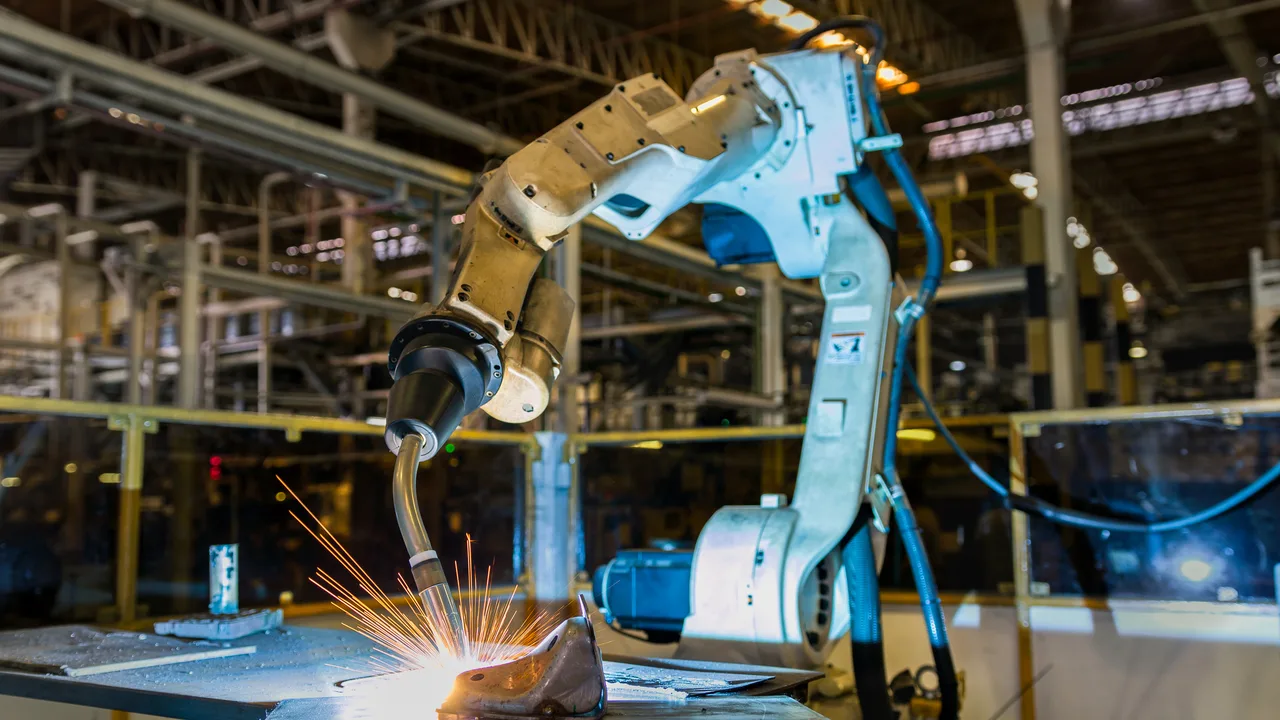
In high-volume, standardized production—such as automotive subassemblies or repetitive structural components—robot welding typically delivers superior throughput and consistency. Once fixtures are validated and programs stabilized, automated systems operate with minimal deviation.
However, in mixed or project-based fabrication environments, the equation shifts. Frequent changes in geometry, tolerances, and joint types introduce friction into automated workflows. Under these conditions, skilled manual welding often maintains higher effective throughput despite lower nominal speed.
Throughput Is Not Always About Speed
Throughput is frequently misunderstood as arc-on time alone. In reality, throughput reflects the entire cycle, including setup, fixturing, inspection, and rework.
In many comparisons of welding automation vs manual welding, automated systems lose efficiency due to extended setup and reprogramming time. Manual welding, while slower per weld, can maintain steady flow by adapting instantly to variation.
Factories that fail to account for this distinction often overestimate the benefits of automation and underestimate the value of human flexibility.
Hybrid Welding Models: Where Robots and Humans Work Together
Increasingly, manufacturers are adopting hybrid welding strategies that combine robotic precision with human adaptability. Rather than choosing sides in the welding automation vs manual welding debate, they design workflows that leverage the strengths of both.
In hybrid models, robots handle repetitive, standardized welds where quality consistency is critical. Human welders focus on complex joints, variable assemblies, and final adjustments.
This division of labor improves overall system efficiency while preserving flexibility. It also allows factories to scale automation incrementally without disrupting existing production.
Designing Welding Strategy, Not Choosing a Side
The most successful manufacturers treat welding as a strategic capability rather than a fixed method. Decisions are driven by production mix, quality requirements, and workforce availability.
When viewed through this lens, welding automation vs manual welding becomes a question of optimization, not ideology. The goal is not maximum automation, but maximum operational alignment.
Cost, Training, and Long-Term Scalability
Cost considerations extend beyond initial equipment investment. Automated welding systems require significant upfront capital, ongoing maintenance, and specialized programming skills.
Manual welding, by contrast, relies on labor investment and continuous skill development. While training costs can be substantial, they often scale more gradually and flexibly.
In long-term planning, manufacturers must evaluate how each approach supports scalability. Automation scales efficiently with volume, while manual welding scales more effectively with variety.
This distinction plays a critical role in the broader assessment of welding automation vs manual welding for facilities anticipating uncertain demand.
Workforce Evolution and Knowledge Retention
Automation reshapes the welding workforce rather than eliminating it. As robots take on repetitive tasks, human roles shift toward supervision, quality assurance, and problem-solving.
At the same time, the loss of hands-on welding experience can weaken organizational knowledge if not managed carefully. Manual welding preserves tacit expertise that remains valuable in non-standard situations.
Balancing automation with human skill development ensures resilience. In this sense, welding automation vs manual welding also reflects a broader workforce strategy.
Making the Right Decision in 2026 and Beyond
The correct welding strategy depends on a clear understanding of production realities. Volume, variability, quality expectations, and labor availability must all be considered together.
For stable, high-volume production, automation often delivers unmatched consistency and throughput. For dynamic, project-driven environments, manual welding remains indispensable.
In many cases, the optimal answer to welding automation vs manual welding lies in hybrid systems that evolve alongside production needs.
Final Thoughts: The Future Is Not Robots or Humans
The future of welding is not defined by a choice between robots and humans, but by intelligent integration. Factories that succeed in 2026 and beyond will be those that align technology with context.
By reframing welding automation vs manual welding as a design problem rather than a competition, manufacturers gain flexibility, resilience, and long-term competitiveness.
In modern production, winning does not belong to machines or people alone—it belongs to systems that use both effectively.