AI for Demand Forecasting: Practical Use Cases in B2B
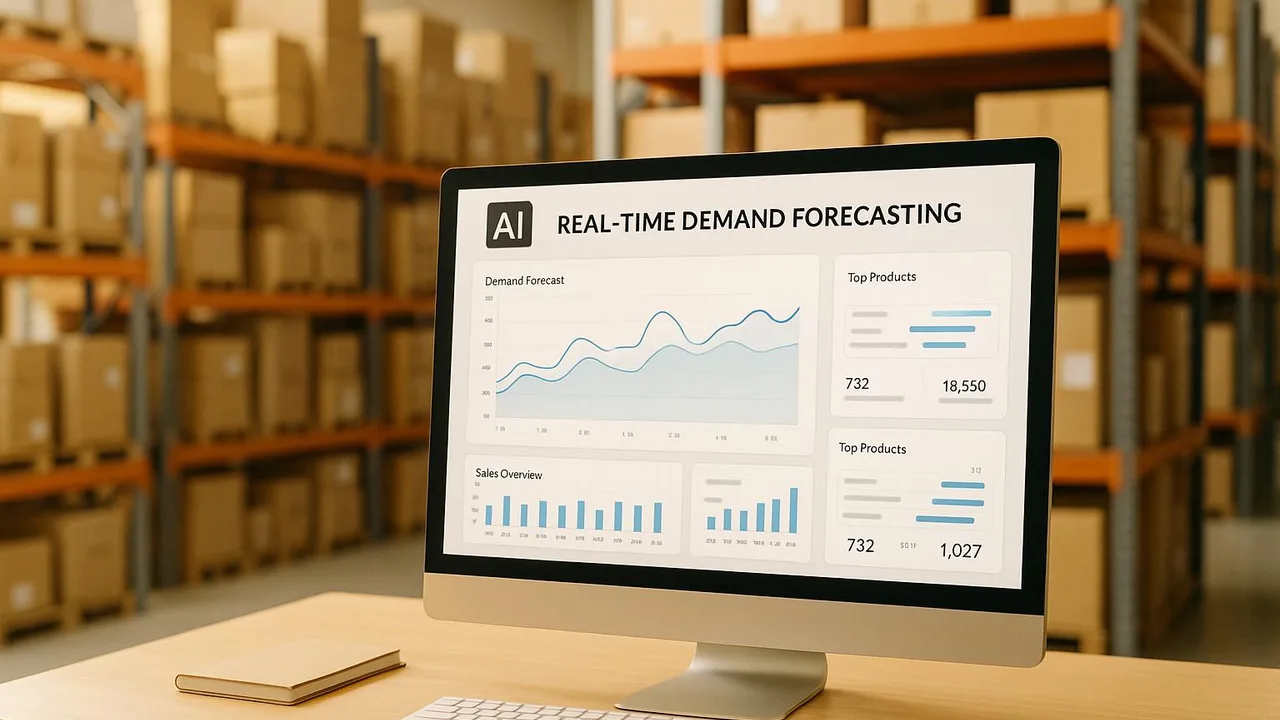
In the B2B world, supply chains operate on precision, not chance. Companies that can accurately predict future demand gain a clear advantage in production planning, cash flow management, and customer satisfaction. Yet most organizations still rely on manual spreadsheets or outdated ERP modules, leaving room for costly errors. Artificial Intelligence (AI) changes that equation. By learning from patterns buried deep within data, AI demand forecasting B2B systems help businesses move from reactive planning to predictive decision-making.
For industries like manufacturing, distribution, and logistics, forecasting isn’t just about sales—it’s about survival. Overestimating demand leads to excessive inventory and capital lock-up. Underestimating it causes delays, lost orders, and damaged reputation. Through smarter algorithms and continuous learning, AI offers an entirely new level of forecast accuracy that traditional methods can’t match.
Understanding AI Demand Forecasting in B2B Context
At its core, AI demand forecasting B2B refers to using machine learning and deep learning models to predict future demand based on historical data and external signals. Unlike classical models such as moving averages or ARIMA, AI doesn’t assume a fixed mathematical trend. Instead, it dynamically learns from a wide range of inputs—seasonality, order timing, macroeconomic factors, and even customer behavior.
In a typical B2B environment, AI forecasting follows a simple flow:
- Data ingestion: Collecting internal and external data sources such as sales history, weather, market indices, and production schedules.
- Model training: Machine learning algorithms identify correlations and non-linear relationships across multiple variables.
- Prediction loop: Models update automatically as new data flows in, continuously refining accuracy.
The result? A system that can adapt to volatility, recognize seasonality shifts, and alert planners before a shortage or surplus occurs. It’s not just about predicting numbers—it’s about enabling proactive business strategies.
Why Traditional Forecasting Fails in B2B Markets
B2B demand behaves differently from retail or consumer markets. Orders tend to be fewer but larger, often tied to projects, contracts, or maintenance cycles. That means one misjudged forecast can disrupt an entire production plan. Traditional tools—like Excel-based regression or linear models—struggle to interpret these complex relationships.
Consider a steel supplier serving construction firms: orders spike when infrastructure budgets are approved, not when consumer spending increases. Human analysts might miss these contextual triggers, while AI can learn from years of correlated data. Similarly, seasonality in B2B isn’t always tied to weather—it might depend on fiscal calendars, equipment replacement cycles, or regional policy changes.
The limitations of manual forecasting become clear when markets turn unpredictable. Without automated learning, planners react too slowly to changing conditions, leading to delayed procurement, excess inventory, or production downtime. AI eliminates much of this guesswork by continuously reading the market and adjusting predictions in real time.
How AI Improves Forecast Accuracy and Responsiveness
AI models excel at finding patterns hidden in noise. By analyzing historical and real-time data, they detect subtle drivers of demand that humans overlook. Algorithms such as gradient boosting and recurrent neural networks (RNNs) can model highly dynamic behavior like multi-region seasonality and cyclical demand patterns. For example, an AI system can learn that industrial paint demand rises three months before construction activity peaks, creating early production signals for suppliers.
One of the most tangible results is higher forecast accuracy. Many B2B companies report accuracy improvements of 30–50% after implementing AI forecasting systems. This directly translates to reduced safety stock and better resource allocation. Manufacturers can plan production runs more confidently, while distributors optimize inventory and logistics scheduling.
Responsiveness is another key advantage. When new information—like an economic slowdown or sudden surge in raw material prices—enters the system, AI recalculates projections automatically. Traditional models require manual adjustments, whereas AI-driven systems update continuously, giving managers an early warning before problems occur.
Key Data Inputs That Power AI Forecasting Models
The success of AI demand forecasting B2B depends heavily on data quality and diversity. Machine learning models thrive on context-rich information, combining both internal and external datasets to capture a full picture of demand dynamics. Typical inputs include:
- Internal data: historical sales, order frequency, customer segmentation, lead time, and price elasticity.
- External data: commodity prices, industrial indices, shipping costs, and macroeconomic indicators.
- Behavioral and environmental data: event schedules, weather conditions, and policy updates that affect industrial activity.
For instance, a construction material supplier might merge historical order data with public indicators like building permits or AI and industry adoption reports to strengthen forecasting precision. These diverse datasets allow the model to identify correlations that linear models would miss—such as how a regional economic stimulus indirectly increases steel plate demand two quarters later.
Data preprocessing is equally crucial. Before training, data scientists clean missing values, normalize variables, and engineer new features (like holiday effects or customer clusters) that enhance predictive power. Once trained, models can automatically detect demand anomalies—spikes, declines, or shifting seasonality patterns—and alert planners accordingly.
Use Case 1: Steel Manufacturing Supply Chains
In steel manufacturing, production cycles are long, inventory costs are high, and demand volatility can cause serious financial strain. By adopting AI demand forecasting B2B systems, steel producers can analyze past project data, construction activity indexes, and infrastructure spending plans to predict future orders with remarkable accuracy.
For example, an AI system can detect that rising investment in renewable energy projects correlates with increased demand for heavy plate and structural sections six months ahead. The software also incorporates signals like weather forecasts, shipping delays, and contractor order histories to adjust daily predictions. This enables mills to optimize production capacity, align procurement schedules, and minimize overstocking costs.
Such systems often integrate directly with ERP platforms, automatically generating procurement and production plans. The result: reduced idle time, leaner inventory, and stronger alignment between manufacturing output and customer demand.
Use Case 2: B2B Chemical Distribution and Logistics
For chemical distributors, demand can fluctuate widely due to seasonality, regulatory changes, and weather conditions. AI forecasting models can analyze complex datasets spanning multiple industries—agriculture, pharmaceuticals, and industrial processing—to predict order volumes and optimize transportation routes.
Consider how AI helps a distributor manage hazardous chemicals. The system factors in temperature data, agricultural planting seasons, and previous order timing to anticipate demand surges. When the model detects an upcoming increase, it triggers inventory alerts, allowing the company to adjust purchasing and storage before shortages occur.
By improving both forecast accuracy and route planning, AI helps reduce logistics costs by up to 25% while enhancing service reliability. The integration of predictive analytics with warehouse management systems ensures that sensitive materials are delivered safely, on time, and in compliance with strict regulations.

Use Case 3: Industrial Equipment and MRO (Maintenance, Repair, Operations)
Maintenance, repair, and operations (MRO) markets are notoriously unpredictable. Equipment failures, unexpected maintenance cycles, or supply disruptions can create sudden spikes in demand. Through AI demand forecasting B2B solutions, companies can anticipate these events using historical maintenance logs, IoT sensor data, and real-time performance metrics.
For instance, an equipment supplier can feed telemetry data from thousands of machines into an AI model that learns failure patterns. When the system detects that vibration or temperature readings exceed safe thresholds, it automatically forecasts higher part usage within a specific timeframe. This foresight allows the supplier to pre-position inventory, preventing downtime for customers and avoiding last-minute airfreight costs.
By linking predictive maintenance data with demand forecasting, MRO providers achieve a perfect blend of reliability and efficiency. The approach turns reactive spare-part management into proactive planning—making it easier to maintain optimal stock levels without overinvesting in slow-moving items.
Integrating AI Forecasting with ERP and Inventory Systems
AI demand forecasting becomes exponentially more powerful when integrated into enterprise systems such as ERP, CRM, and supply chain management platforms. Instead of existing as a standalone analytics tool, the AI engine continuously exchanges data with business applications, ensuring that every department works from the same predictive insights.
For example, once the AI model forecasts a 10% demand increase for specific product lines, the ERP system automatically updates reorder points and adjusts supplier purchase schedules. Procurement teams receive early alerts, finance updates cash flow projections, and logistics teams plan warehouse space accordingly. This synchronization turns planning into a unified, automated workflow rather than a chain of disconnected reactions.
Inventory managers benefit the most from this integration. With accurate inventory planning, they can reduce carrying costs, improve order fill rates, and prevent both shortages and excess stock. The AI model essentially becomes a “digital advisor,” learning from outcomes and fine-tuning predictions over time.
Challenges and Implementation Barriers
Despite the clear benefits, implementing AI demand forecasting B2B comes with challenges. Data quality is often the biggest hurdle—many companies have fragmented datasets scattered across legacy systems. Inconsistent or incomplete data reduces model performance and trust in predictions.
Another obstacle is the talent gap. Not all organizations have in-house data scientists capable of training and maintaining machine learning models. To overcome this, many firms start with managed AI platforms or partner with specialized analytics providers. These systems offer plug-and-play forecasting modules that integrate directly with existing ERP environments.
Lastly, cultural resistance plays a subtle but significant role. Forecasting has long been the domain of senior planners and sales teams, and automation may feel like a threat to their expertise. Successful adopters address this by using AI as a decision-support tool rather than a replacement—combining algorithmic precision with human judgment for optimal results.
Future Outlook: Adaptive AI and Real-Time Forecasting
The next evolution of AI demand forecasting B2B is adaptive intelligence—systems that update forecasts continuously as new data streams in. These models draw from IoT sensors, logistics trackers, and even global economic feeds to refine projections in near real time. Instead of monthly or weekly planning cycles, forecasts become dynamic and self-correcting.
One of the most exciting developments is the use of external data such as freight indices, supplier lead times, and commodity prices to enrich forecasting models. This integration gives businesses unprecedented visibility into how macroeconomic and environmental conditions influence demand. For instance, when freight costs rise sharply, the AI model may predict slower shipment volumes and recommend adjusting production schedules accordingly.
Cross-industry collaboration is also emerging as a key trend. Leading B2B companies are starting to share anonymized data with their suppliers and customers, creating network-level intelligence that benefits the entire supply chain. The goal is to create ecosystems where every participant—from raw material suppliers to distributors—can plan with synchronized, predictive insights.
Conclusion: From Reactive to Predictive Operations
The transformation from manual forecasting to AI-powered intelligence is more than a technological shift—it’s a strategic one. Businesses that embrace AI demand forecasting B2B gain visibility, precision, and agility that traditional methods simply can’t deliver. By improving forecast accuracy and mastering seasonality, companies can allocate resources more efficiently and reduce costly mismatches between supply and demand.
As AI becomes more integrated into daily operations, the focus moves from predicting what will happen to understanding why it will happen. This deeper insight empowers leaders to take proactive action rather than reacting to crises. Whether it’s adjusting procurement cycles, optimizing warehouse layouts, or balancing regional inventories, AI ensures decisions are driven by data, not guesswork.
For modern B2B organizations, predictive forecasting isn’t just an upgrade—it’s a necessity for sustainable growth in volatile markets. By linking technology with human expertise, companies can build smarter, more resilient supply chains ready to face the challenges of tomorrow.