3D Scanning for Renovations: Capturing Reality Before Design
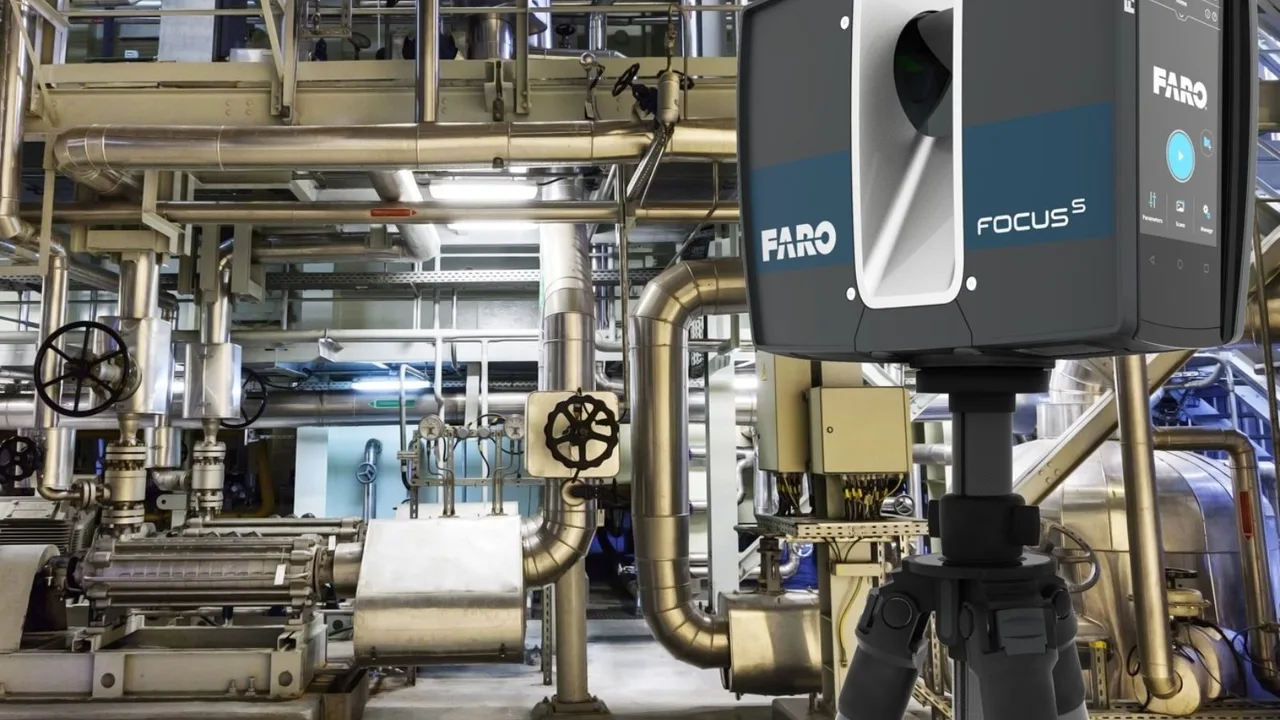
Industrial renovation projects rarely fail because of poor ideas. They fail because decisions are made on incomplete or outdated information. Old drawings, missing as-built documents, and on-site assumptions create invisible risks long before construction begins. In active factories, warehouses, and processing plants, these risks translate directly into rework, delays, and unplanned downtime. This is why 3D scanning for industrial renovations has become a critical first step—capturing reality as it exists today, not as it was documented years ago.
Instead of relying on estimates and manual measurements, modern renovation teams use reality capture to establish a precise digital baseline. By scanning existing structures before design starts, engineers and planners can make decisions with confidence, reducing uncertainty across every downstream phase of the project.
Why Renovation Projects Fail Before They Start
Unlike new construction, industrial renovations operate within fixed constraints. Equipment is already installed, structures have been modified over time, and undocumented changes are common. Yet many renovation designs still begin with assumptions—assuming column locations are accurate, assuming pipe elevations are unchanged, assuming clearances still meet original drawings.
These assumptions often collapse once construction begins. Steel members clash with existing utilities. Retrofit components don’t fit. Temporary shutdowns last longer than planned. Each issue traces back to the same root cause: the project never truly understood existing conditions.
3D scanning for industrial renovations directly addresses this gap by replacing assumptions with measurable data. Before a single line is drawn in CAD, the physical site is captured in full spatial detail.
What Is 3D Scanning for Industrial Renovations?
3D scanning is a reality-capture process that uses laser or LiDAR technology to record the physical geometry of a space. Millions—or even billions—of spatial points are collected, each defined by precise X, Y, and Z coordinates. The result is a highly accurate digital representation of the existing environment.
In renovation projects, this technology is used to document buildings, structures, machinery, piping, and surrounding infrastructure exactly as they are. Unlike traditional surveys, scanning captures everything in the scanner’s line of sight, not just selected reference points.
The core output of this process is the point cloud—a dense collection of spatial data that visually and geometrically represents reality. This point cloud becomes the foundation for downstream modeling, analysis, and design coordination.
From Physical Site to Digital Reality: Understanding Point Clouds
A point cloud may look abstract at first glance, but it is one of the most powerful datasets in industrial renovation. Each point represents a precise location in space, and collectively, they form a complete digital snapshot of the facility.
In complex industrial environments, point clouds capture:
- Steel frames, columns, and beams with millimeter accuracy
- Pipes, ducts, and cable trays running through multiple levels
- Equipment footprints and maintenance clearances
- Floor elevations, slopes, and structural deformations
This level of detail is especially valuable in facilities that have evolved over decades. Additions, retrofits, and undocumented modifications are recorded automatically, eliminating the blind spots that plague traditional surveys.
Modern scanning systems used in industrial contexts—such as those developed by Leica Geosystems—are designed specifically to handle large-scale, high-density environments, producing point clouds accurate enough for fabrication-level decisions.
Creating Reliable As-Built Models from Scan Data
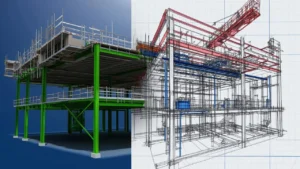
While point clouds capture reality, design teams typically work with structured geometry. This is where scan-to-model workflows come into play. Using the point cloud as a reference, engineers generate an accurate as-built model in CAD or BIM software.
Unlike traditional as-built drawings, which are often approximations created after construction, scan-based as-built models reflect actual conditions. Steel members are modeled where they truly exist. Pipe routes follow their real paths. Clearances are verified, not assumed.
The difference becomes obvious when comparing risk profiles:
| Aspect | Traditional As-Built | Scan-Based As-Built |
|---|---|---|
| Accuracy | Low to medium | High (millimeter-level) |
| Hidden clashes | Common | Rare |
| Design rework risk | High | Low |
| Confidence in retrofit planning | Limited | Strong |
For industrial renovations, where tolerance stacks and access constraints matter, this accuracy is not a luxury—it is a requirement.
Why Retrofit Planning Depends on Reality Capture
Retrofit planning is fundamentally different from designing new facilities. Designers must work around what already exists, not what they wish existed. Without reliable data, retrofit plans often underestimate complexity and overpromise constructability.
Common retrofit failures without scanning include:
- Steel reinforcements clashing with undocumented utilities
- Equipment upgrades exceeding available clearances
- Incorrect elevation assumptions causing misalignment
By using 3D scanning for industrial renovations early in the process, these issues are identified digitally instead of physically on site. Design teams can test multiple retrofit scenarios virtually, resolving conflicts before they become costly field problems.
Reducing Risk and Downtime in Industrial Renovations
Industrial facilities rarely have the luxury of full shutdowns. Production schedules, safety requirements, and operational continuity all constrain renovation work. Any unexpected clash or design error increases downtime risk.
3D scanning offers a non-intrusive way to collect complete site data without interrupting operations. Scans can be performed during normal working hours, capturing geometry without dismantling equipment or halting production.
This directly supports safer planning and sequencing. Temporary structures, access platforms, and phased construction plans can be designed against real conditions, not assumptions. The result is fewer surprises, tighter schedules, and greater cost certainty.
Ultimately, accurate data at the beginning of a renovation project protects every stakeholder downstream—from designers and fabricators to operators and owners.
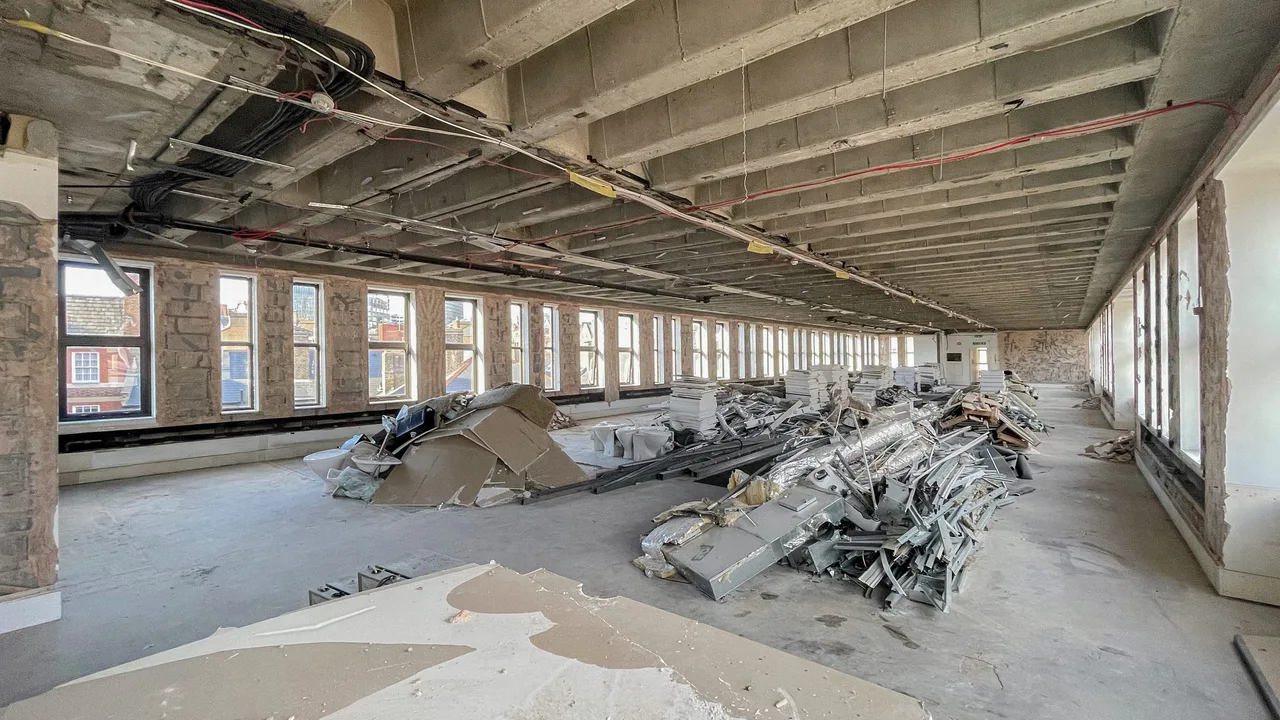
Workflow: From 3D Scanning to Construction Execution
The real value of 3D scanning for industrial renovations emerges when scan data is integrated into a structured project workflow. Scanning is not an isolated task—it is the starting point of a coordinated process that connects reality capture with design, fabrication, and construction.
A typical industrial renovation workflow follows these steps:
- Site scanning: Laser scanners capture the full geometry of the facility, including structures, equipment, and utilities.
- Point cloud processing: Raw scan data is registered, cleaned, and aligned into a unified coordinate system.
- As-built model creation: Designers convert point clouds into usable CAD or BIM models.
- Design overlay and clash detection: New retrofit designs are overlaid onto the as-built model to identify conflicts early.
- Construction execution: Fabrication and installation proceed with verified dimensions and clearances.
This workflow shifts problem-solving upstream. Instead of resolving conflicts on site—where changes are expensive and disruptive—teams resolve them digitally, where iteration is fast and low-risk.
Practical Use Cases in Industrial Facilities
Across industrial sectors, reality capture has become a standard tool for renovation and upgrade projects. In manufacturing plants, scanning is often used to redesign production lines while keeping operations running. Engineers can verify machine spacing, overhead crane clearances, and access routes without repeated site visits.
In logistics warehouses, scanning supports structural retrofits such as mezzanine additions or roof reinforcements. Accurate data ensures new steel members align with existing frames, avoiding costly adjustments during installation. This is especially critical in facilities that have expanded incrementally over many years.
Energy and utility facilities rely heavily on scanning when upgrading pipe racks, platforms, or support structures. Dense mechanical systems make manual measurement unreliable. With point cloud data, engineers can route new systems through congested spaces confidently, reducing the risk of clashes that could halt operations.
Cost Efficiency: Why Scanning Saves Money Long-Term
At first glance, 3D scanning may appear to add cost to a renovation project. However, when evaluated across the full project lifecycle, it consistently reduces total expenditure. The cost of scanning is often marginal compared to the financial impact of rework, fabrication errors, or unplanned downtime.
Common sources of avoidable cost in renovation projects include:
- Fabricated components that do not fit on site
- Design revisions triggered by unforeseen clashes
- Extended shutdowns due to installation delays
- Additional site visits and emergency surveys
By eliminating uncertainty early, 3D scanning for industrial renovations transforms cost risk into cost control. Many project teams report that a single avoided clash or redesign offsets the entire scanning budget.
Scanning also improves bidding accuracy. Contractors working from reliable as-built models can price work more precisely, reducing contingency padding and improving competitiveness.
Technology Trends in Industrial Reality Capture
Reality capture technology continues to evolve rapidly. Handheld scanners and mobile LiDAR systems are making it easier to scan confined or complex spaces. Drone-based scanning extends coverage to roofs, facades, and elevated structures that were previously difficult to document safely.
At the software level, advances in point cloud processing are accelerating model creation. AI-assisted tools now recognize structural elements, piping, and equipment automatically, reducing manual modeling time.
Cloud-based collaboration is another key trend. Large renovation projects often involve teams spread across multiple locations. Centralized access to scan data ensures everyone—from designers to fabricators—works from the same source of truth.
Designing with Certainty in Retrofit Planning
Renovation success depends on certainty. Every unknown dimension, hidden obstruction, or undocumented modification increases project risk. Traditional methods struggle to eliminate these unknowns, especially in aging industrial facilities.
Reality capture replaces uncertainty with clarity. Designers no longer need to assume where a beam is located or whether clearance is sufficient—they can verify it directly in the model. This confidence enables more ambitious retrofit planning, including tighter tolerances, prefabricated assemblies, and phased construction strategies.
For steel-intensive projects, this certainty supports better coordination between design and fabrication. Structural elements can be detailed accurately, reducing on-site adjustments and accelerating installation schedules.
Conclusion: Capturing Reality Before Design
Industrial renovations succeed when decisions are grounded in reality, not approximation. 3D scanning for industrial renovations provides the factual foundation that modern retrofit projects demand. By capturing existing conditions with precision, it enables safer planning, fewer surprises, and more predictable outcomes.
As facilities age and operational complexity increases, reality capture is no longer a specialized option—it is a baseline requirement. Teams that adopt scanning early gain clarity, control, and confidence throughout the renovation lifecycle.
In a world where downtime is costly and margins are tight, capturing reality before design is not just good practice—it is a strategic advantage.