China to Southeast Asia: How Supply Chains Are Redrawing Plant Locations
Supply chain shift China to Southeast Asia is no longer a speculative trend discussed only in boardrooms—it has become a structural reality reshaping how manufacturers decide where to build their next production plants. From electronics and automotive components to consumer goods and industrial equipment, companies are reassessing their geographic exposure and rebalancing manufacturing footprints across Asia.
This shift is not about abandoning China altogether. Instead, it reflects a strategic reconfiguration of regional supply chains, where Southeast Asia increasingly plays a complementary role alongside China’s established manufacturing ecosystem. As a result, plant location decisions are now closely tied to resilience, speed, and long-term flexibility rather than pure cost optimization.
Understanding the drivers behind this transformation is critical for manufacturers, investors, and industrial developers navigating a rapidly evolving global market.
Why Global Supply Chains Are Moving Away from Single-Country Dependence
For decades, global manufacturing strategy prioritized efficiency above all else. Concentrating production in a single country offered scale, cost advantages, and operational simplicity. However, recent disruptions exposed the fragility of this approach.
Geopolitical tensions, trade policy shifts, logistics bottlenecks, and unexpected shutdowns have highlighted the risks of overconcentration. As a result, companies are restructuring supply chains to reduce dependency on any single manufacturing base.
This rebalancing has accelerated the supply chain shift China to Southeast Asia, as manufacturers seek geographic diversification without losing proximity to Asia’s core industrial capabilities.
From Cost Optimization to Risk Mitigation
While labor and operating costs remain important, they are no longer the sole decision drivers. Today’s supply chain strategies prioritize:
- Operational resilience to withstand disruptions
- Redundancy across multiple production locations
- Flexibility to scale capacity up or down quickly
This shift in priorities has fundamentally changed how plant locations are evaluated, making Southeast Asia an increasingly attractive manufacturing region.
Understanding the Supply Chain Shift China to Southeast Asia
The supply chain shift China to Southeast Asia refers to the gradual relocation or duplication of manufacturing activities from China into neighboring Southeast Asian countries. Rather than a wholesale exit, many companies are adopting a “China plus Southeast Asia” model.
Under this approach, China continues to serve as a high-capacity manufacturing and supply base, while Southeast Asia absorbs:
- Final assembly operations
- Labor-intensive manufacturing stages
- Regional distribution and customization
Countries such as Vietnam, Thailand, Indonesia, and Malaysia have emerged as preferred destinations due to their improving infrastructure, expanding industrial parks, and favorable trade relationships.
Why China Still Matters in Regional Manufacturing
Despite relocation trends, China remains central to Asian manufacturing networks. Its mature supply chains, engineering expertise, and large-scale fabrication capabilities continue to support downstream production across the region.
In practice, the supply chain shift China to Southeast Asia is less about replacement and more about redistribution—leveraging China’s strengths while expanding capacity closer to emerging consumer markets.
Nearshoring and Friendshoring as Strategic Drivers
Two concepts frequently cited in modern supply chain discussions are nearshoring and friendshoring. While often used interchangeably, they reflect distinct strategic considerations.
Nearshoring emphasizes geographic proximity to end markets, reducing transit times and logistics risk. Friendshoring focuses on relocating production to countries with aligned political, regulatory, and trade frameworks.
Southeast Asia sits at the intersection of these strategies, offering relative proximity to major Asian markets and increasing alignment with global trade networks. This positioning reinforces the momentum behind the supply chain shift China to Southeast Asia.
Southeast Asia as a Strategic Manufacturing Middle Ground
Rather than replacing China, Southeast Asia functions as a strategic extension of existing supply chains. Manufacturers can maintain upstream sourcing and complex fabrication in China while placing new plants closer to regional demand centers.
This hybrid approach reduces exposure to single-country risk while preserving operational efficiency.
The Rise of New Manufacturing Hubs in Southeast Asia
As manufacturing activity expands, Southeast Asia is witnessing rapid development of industrial parks and special economic zones. Governments across the region are investing heavily in infrastructure, utilities, and logistics connectivity to attract foreign manufacturers.
This surge in industrial development is reshaping land use patterns and increasing demand for facilities that can be delivered quickly and scaled over time. In this context, construction methodology becomes a strategic consideration rather than a technical detail.
Manufacturers relocating or duplicating capacity often require plants that can be operational within tight timelines. This demand has increased reliance on standardized, fast-track building systems.
Industrial Parks and the Demand for Build-Ready Facilities
To compete for investment, industrial parks must offer sites that minimize time-to-operation. Buildings that support rapid construction, flexible layouts, and future expansion are increasingly favored.
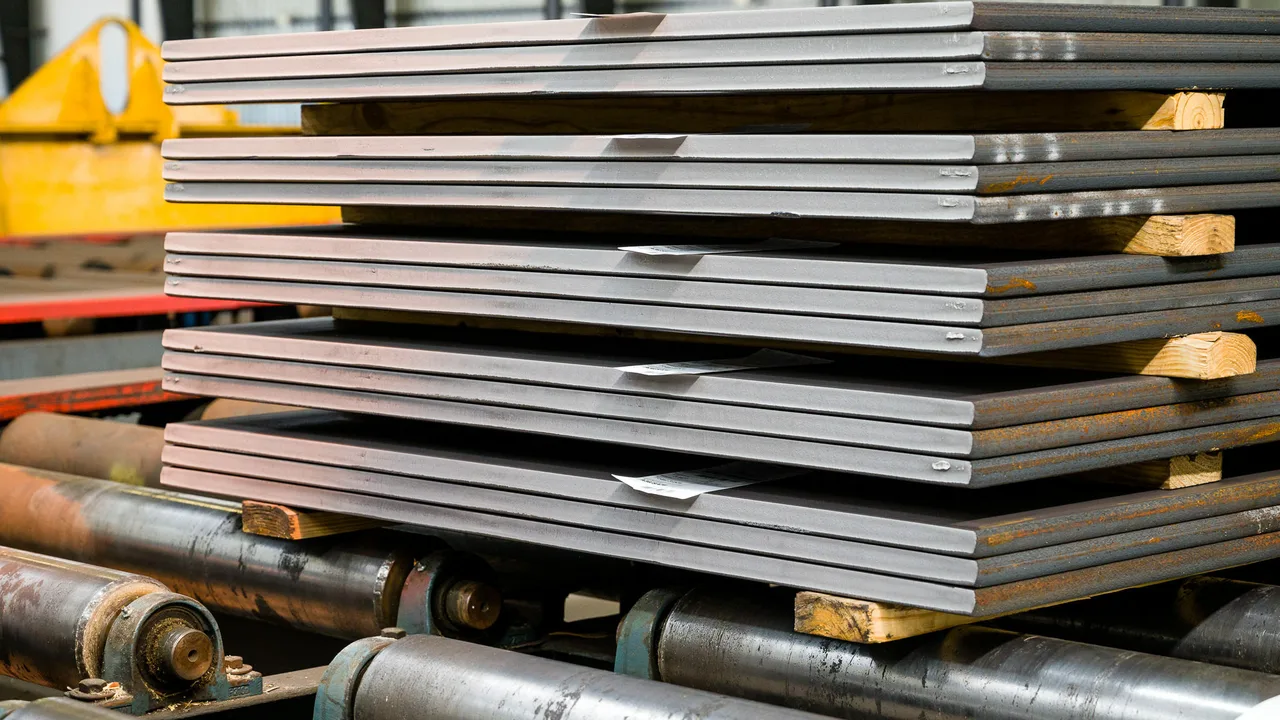
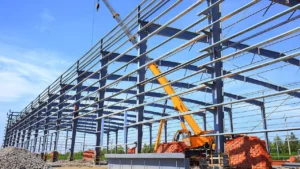
As a result, construction approaches such as steel structure systems—widely used for industrial facilities due to speed and adaptability—are gaining prominence. For an overview of steel structure construction, its common applications, and performance benefits in industrial environments, this steel structure construction guide provides useful information.
How Plant Location Shifts Are Changing Construction Requirements
As manufacturers adjust their geographic footprints, the supply chain shift China to Southeast Asia is redefining not only where plants are built, but how quickly and flexibly those facilities must be delivered. Relocation and diversification strategies often operate under compressed timelines, driven by market entry targets, customer commitments, and risk mitigation goals.
In this environment, construction speed becomes a strategic variable. Companies relocating production to Southeast Asia frequently require facilities that can move from planning to operation within months rather than years. This urgency has elevated construction methodology from a technical consideration to a board-level decision.
Plant designs now emphasize adaptability, modularity, and scalability—qualities that support phased investment and future expansion as supply chains continue to evolve.
Fast-Track Facilities for a Moving Supply Chain
Unlike greenfield projects of the past, many new plants are built with uncertainty in mind. Manufacturers may initially relocate partial capacity, with plans to expand once local supply chains mature.
This reality favors building systems that allow rapid deployment without locking operators into rigid layouts. The construction approach must support future modifications without excessive cost or disruption—an increasingly common requirement as the supply chain shift China to Southeast Asia accelerates.
Why Steel Structure Construction Fits Cross-Border Manufacturing Projects
Steel structure construction has become closely associated with cross-border manufacturing projects due to its speed, predictability, and compatibility with standardized designs. These attributes align well with the needs of companies establishing or expanding plants across multiple countries.
Steel-based facilities can be designed using repeatable structural grids, enabling consistency across locations while allowing local customization. This balance is particularly valuable for manufacturers managing parallel projects in China and Southeast Asia.
As plant locations diversify, construction strategies that support rapid replication and controlled execution are increasingly favored.
Steel as an Enabler of Regional Manufacturing Networks
Rather than treating each factory as a standalone project, many companies now view facilities as nodes within a regional manufacturing network. Structural systems that can be standardized across borders simplify engineering coordination and reduce execution risk.
This systems-oriented mindset reinforces the role of steel construction within modern plant development strategies tied to the supply chain shift China to Southeast Asia.
Why Steel Structure Construction in China Still Plays a Critical Role
Despite the growing prominence of Southeast Asia as a manufacturing destination, China continues to play a central role in regional industrial development. Its established fabrication capacity, engineering expertise, and mature supplier ecosystem remain difficult to replicate at scale.
Many manufacturers adopt a hybrid approach: leveraging fabrication and engineering resources in China while constructing and operating plants in Southeast Asia. In this context, steel structure construction in china remains a critical enabler for overseas industrial projects.
Fabricating structural components in China allows companies to benefit from economies of scale, proven quality control systems, and shorter engineering lead times, while still deploying assets closer to end markets.
Hybrid Fabrication and On-Site Assembly Models
Under this model, steel components are engineered and fabricated in China, then shipped to Southeast Asia for on-site assembly. This approach aligns well with fast-track project timelines and helps maintain consistency across multiple plant locations.
As a result, the supply chain shift China to Southeast Asia does not eliminate China’s role—it reshapes it into a high-value upstream partner within a broader regional framework.
Speed, Scalability, and Capital Efficiency in Relocated Plants
Relocating or duplicating production capacity requires careful capital allocation. Companies must balance the need for rapid deployment with long-term cost efficiency.
Steel-based facilities support this balance by enabling phased investment. Initial plants can be built to meet immediate demand, with structural provisions for future expansion as volumes increase. This approach limits upfront capital exposure while preserving growth options.
For manufacturers responding to the supply chain shift China to Southeast Asia, such flexibility is increasingly viewed as essential rather than optional.
What the Next Phase of Supply Chain Regionalization Looks Like
Looking ahead, Southeast Asia is unlikely to replace China as a manufacturing hub. Instead, the region is becoming an integral part of a multi-country production network designed to balance efficiency and resilience.
Future supply chains are expected to feature:
- Distributed manufacturing across multiple countries
- Standardized plant designs with localized execution
- Construction strategies that prioritize speed and adaptability
These trends suggest that plant location decisions will remain fluid, with construction systems playing a critical role in enabling rapid response to market change.
Final Thoughts: Supply Chains Are Redrawing the Industrial Map
The supply chain shift China to Southeast Asia is not a temporary adjustment, but a structural transformation of global manufacturing. Companies are redesigning their production footprints to manage risk, capture regional growth, and maintain operational agility.
As plant locations multiply, the ability to deliver facilities quickly and consistently has become a strategic differentiator. Construction approaches that support speed, scalability, and cross-border coordination are now central to successful supply chain execution.
In this evolving landscape, supply chains are not merely adapting—they are actively redrawing the industrial map of Asia.