Industrial Real Estate vs Manufacturing Capex: Where Money Is Going
Global capital is on the move. As supply chains restructure, interest rates fluctuate, and governments push industrial policy, corporate boards face a critical allocation question: should capital flow into property assets or into production capability? The debate around industrial real estate vs manufacturing capex is no longer theoretical—it is shaping balance sheets across North America, Europe, and Asia.
At its core, this is not simply a property-versus-machinery comparison. It is a question of investment allocation, risk appetite, expected ROI, and long-term asset strategy. Where companies choose to deploy capital today will determine their resilience and competitiveness for the next decade.
Understanding Industrial Real Estate Investment
Industrial real estate refers to physical property assets used for logistics, storage, data processing, and manufacturing support. This includes warehouses, distribution centers, logistics parks, cold storage facilities, and even build-to-suit production shells.
Demand for industrial property has surged in recent years due to:
- E-commerce expansion requiring last-mile logistics hubs
- Supply chain decentralization and nearshoring
- Higher inventory buffers to reduce disruption risk
- Growth in data infrastructure and specialized storage
From an investor’s perspective, industrial property offers relatively predictable income streams through lease agreements. Tenants sign multi-year contracts, generating recurring rental yield. In many markets, prime logistics assets have delivered stable returns supported by strong occupancy rates.
The attractiveness of industrial real estate lies in its hybrid profile: it provides both income and potential appreciation. As land values rise in high-demand corridors, asset values can increase alongside rental growth.
However, property investment does not directly enhance production capacity. It generates financial returns, not operational productivity. This distinction is central to the debate around industrial real estate vs manufacturing capex.
Understanding Manufacturing Capex
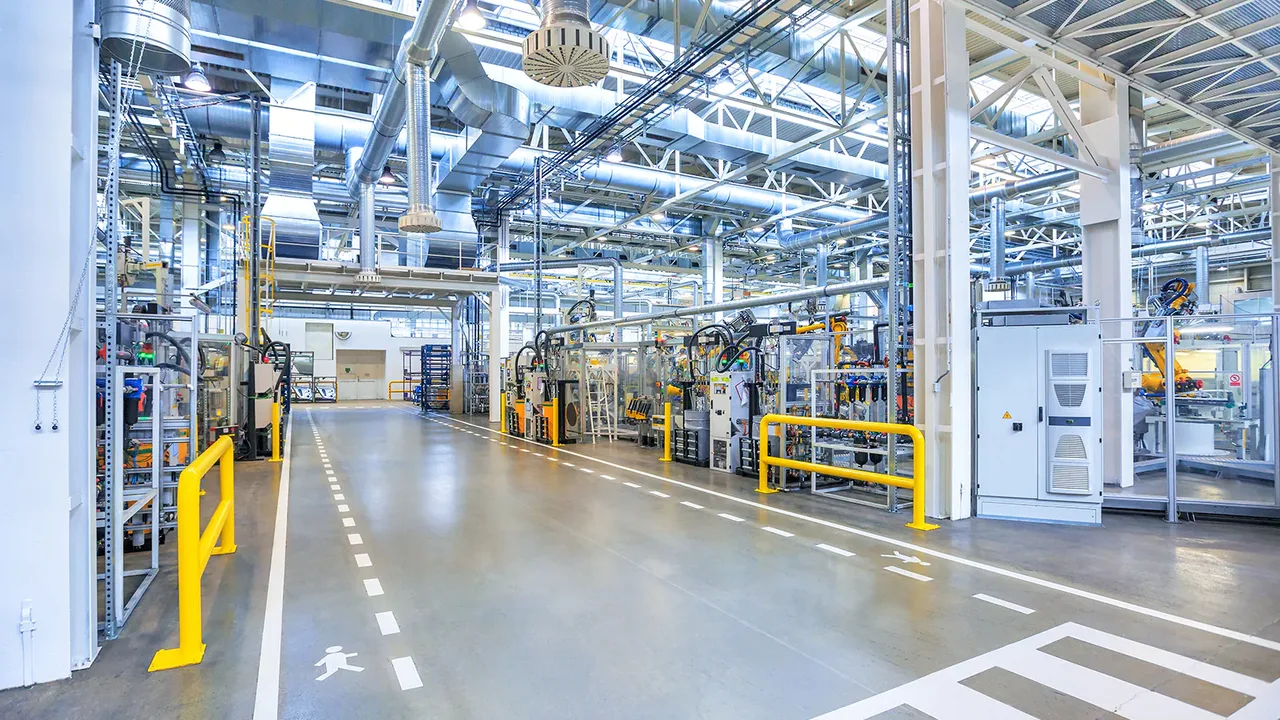
Manufacturing capital expenditure (capex) refers to investments in production assets such as machinery, automation systems, robotics, fabrication lines, energy systems, and process optimization technologies. Unlike real estate, manufacturing capex directly increases output, efficiency, or product quality.
Companies typically invest in manufacturing capex to:
- Expand production capacity
- Improve operational efficiency
- Reduce labor dependency through automation
- Enhance product quality and consistency
- Lower energy consumption
Manufacturing capex tends to carry higher operational complexity and execution risk. Equipment must be installed, integrated, and maintained. ROI depends on utilization rates and demand forecasts. Yet when properly deployed, it can significantly increase margins and competitive positioning.
This is where the tension emerges in the industrial real estate vs manufacturing capex conversation. One asset class generates yield through leasing. The other generates value through productivity.
Industrial Real Estate vs Manufacturing Capex: Core Differences
The contrast between these two allocation paths becomes clearer when examined across multiple factors:
| Factor | Industrial Real Estate | Manufacturing Capex |
|---|---|---|
| Risk Profile | Moderate (tenant-dependent) | Higher (demand & execution risk) |
| Liquidity | Tradable asset | Limited resale value |
| ROI Timeline | Rental yield-based | Productivity & margin-based |
| Operational Complexity | Lower | High |
| Strategic Impact | Portfolio diversification | Competitive advantage |
For financial investors, industrial real estate may appear safer and more predictable. For operating companies, manufacturing capex often determines long-term positioning and margin expansion.
Ultimately, the decision in the industrial real estate vs manufacturing capex debate reflects a company’s broader asset strategy. Is the organization prioritizing stable financial returns or long-term production capability?
Investment Allocation Trends in 2024–2026
Recent data suggests capital is flowing into both categories—but with regional variations. Industrial real estate has benefited from sustained logistics demand, particularly in North America and parts of Southeast Asia. At the same time, manufacturing capex has accelerated due to reshoring initiatives and automation investments.
In the United States, public infrastructure programs and semiconductor incentives have stimulated manufacturing investments. In Asia, industrial parks continue to expand alongside new production facilities. Europe, facing labor constraints and energy cost volatility, has increased automation-focused capex to protect margins.
According to recent global supply chain analysis published by CBRE Research, industrial and logistics property remains one of the most resilient asset classes amid shifting macroeconomic conditions. At the same time, industrial automation investment continues rising as manufacturers seek higher productivity and resilience.
This dual trend reinforces the complexity of industrial real estate vs manufacturing capex decisions. Capital is not exclusively favoring one side—it is responding to different strategic pressures.
ROI Comparison: Property Yield vs Productivity Gains
To understand capital flow, we must compare expected returns.
Industrial Real Estate ROI:
- Annual rental yield (often 5–8% depending on market)
- Capital appreciation potential
- Relatively stable cash flow if occupancy remains strong
Manufacturing Capex ROI:
- Efficiency gains (lower cost per unit)
- Output expansion
- Reduced labor costs
- Shorter production cycles
Consider a simplified example. A $50 million logistics asset yielding 6% annually produces $3 million in yearly gross rental income. A $50 million automation line that increases output by 20% and reduces labor cost by 10% could potentially generate significantly higher incremental profit—if demand supports utilization.
The difference lies in certainty. Property yield is contractual. Productivity gains are performance-dependent.
This is why the industrial real estate vs manufacturing capex question is deeply tied to risk-adjusted return. Conservative investors may prefer yield stability. Growth-oriented operators may prioritize margin expansion.
Strategic Drivers Behind Capital Decisions
Several macro factors influence where capital flows:
- Interest rates: Higher borrowing costs may slow property acquisitions.
- Labor shortages: Encourage automation investment.
- Supply chain resilience: Drives localized production and facility expansion.
- ESG pressures: Promote energy-efficient production upgrades.
- Digital transformation: Accelerates investment in smart manufacturing.
In many cases, the debate around industrial real estate vs manufacturing capex reflects differing priorities between CFOs and COOs. Finance leaders may emphasize capital preservation and portfolio stability. Operations leaders may push for productivity-driven expansion.
Where money ultimately flows depends on which strategic narrative dominates the boardroom.

Short-Term Stability vs Long-Term Competitive Advantage
When executives evaluate industrial real estate vs manufacturing capex, the debate often comes down to time horizon. Industrial real estate typically offers short- to medium-term stability through predictable lease income and relatively transparent valuation metrics. It can strengthen balance sheets and diversify portfolios.
Manufacturing capex, by contrast, aims at long-term competitive advantage. Investments in automation, robotics, and advanced production systems may not generate immediate financial yield, but they can expand margins, improve quality, and shorten delivery cycles over time.
From a CFO’s perspective, property assets may appear attractive because they generate visible and contractual cash flow. From a COO’s perspective, capex drives operational excellence and protects market share. The tension within the industrial real estate vs manufacturing capex decision often reflects these differing priorities.
Hybrid Strategy: Combining Asset Classes
In reality, many corporations do not choose exclusively between property and production assets. Instead, they pursue hybrid strategies aligned with broader investment allocation goals.
Examples include:
- Build-to-suit facilities that integrate both real estate ownership and advanced production lines.
- Sale-leaseback arrangements that free capital for manufacturing capex.
- Industrial park investments alongside strategic equipment upgrades.
This blended approach allows organizations to balance liquidity, ROI, and operational control. Property may provide collateral strength, while capex enhances productivity. The result is a more diversified asset strategy that mitigates risk across cycles.
Case Scenario: Allocating $200 Million
Imagine a manufacturing group with $200 million in deployable capital. The board evaluates two options:
- Option A: Develop three logistics parks generating stable rental yield.
- Option B: Build two highly automated production facilities to expand output capacity.
Option A – Industrial Real Estate:
- Projected rental yield: 6%
- Annual gross income: $12 million
- Moderate appreciation potential
- Lower operational complexity
Option B – Manufacturing Capex:
- Production capacity increase: 25%
- Labor cost reduction: 15%
- Estimated margin expansion: 4–6 percentage points
- Higher execution risk
If demand remains strong, Option B could generate returns exceeding those of property yield. However, if market conditions soften, underutilized capacity could depress ROI. This simplified comparison highlights the central challenge of industrial real estate vs manufacturing capex: certainty versus upside potential.
How Interest Rates and Capital Costs Influence the Decision
Macroeconomic conditions significantly affect capital allocation choices. Rising interest rates increase financing costs, potentially slowing large real estate acquisitions. Conversely, higher rates can also dampen speculative capex if projected ROI narrows.
Companies often evaluate projects using weighted average cost of capital (WACC). If expected returns from industrial property barely exceed WACC, manufacturing investments that promise higher productivity gains may appear more attractive. Conversely, during uncertain demand cycles, predictable property yield may seem safer.
Therefore, industrial real estate vs manufacturing capex decisions cannot be separated from the broader cost-of-capital environment.
Reshoring, Resilience, and Strategic Shifts
Recent supply chain disruptions have reshaped global thinking about resilience. Governments are incentivizing domestic production, and firms are re-evaluating global footprint risk.
This shift influences both sides of the allocation equation:
- New domestic plants require manufacturing capex.
- Expanded logistics networks increase demand for industrial real estate.
In many regions, industrial property expansion and production investment are occurring simultaneously. The debate around industrial real estate vs manufacturing capex therefore reflects a broader transformation of industrial strategy rather than a zero-sum contest.
Implications for Industrial Markets
Capital allocation trends ripple through multiple sectors. Increased property investment benefits developers, construction firms, and logistics operators. Accelerated manufacturing capex stimulates demand for machinery suppliers, automation integrators, and industrial materials.
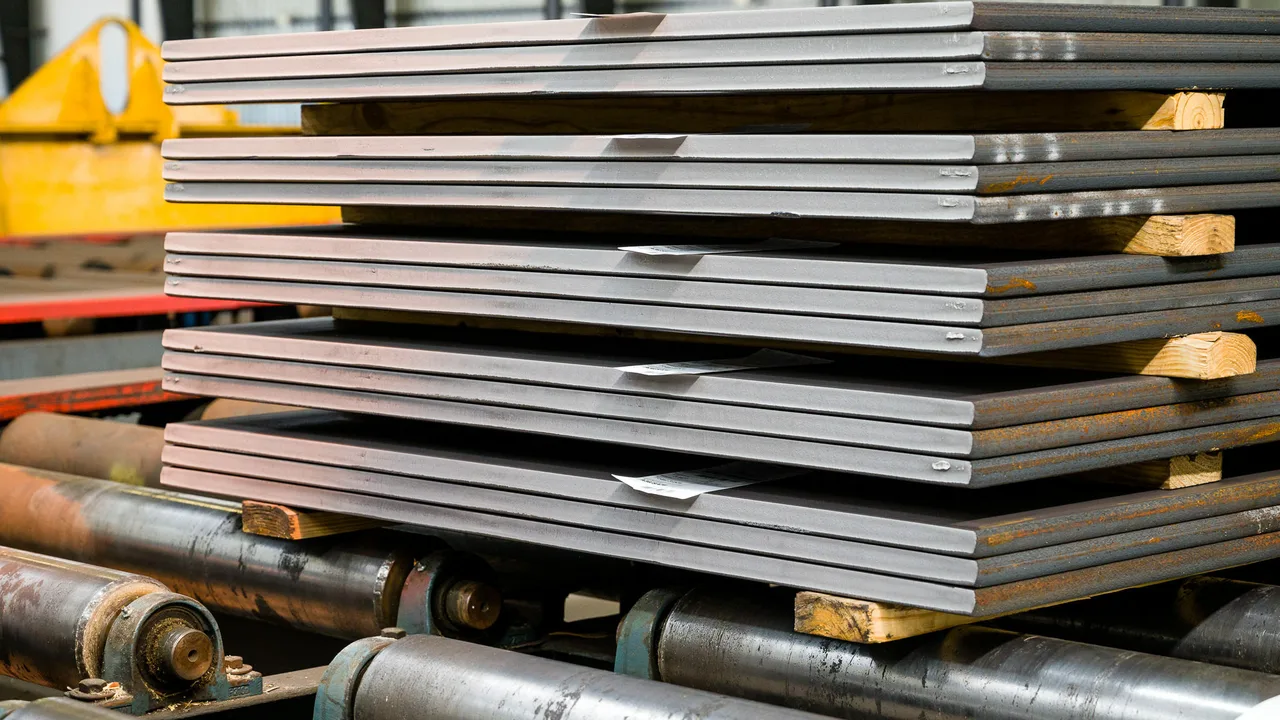
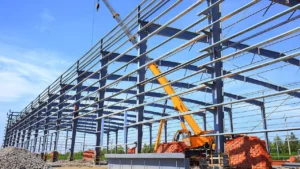
For steel producers and fabricators, both asset classes are significant demand drivers. Warehouse development consumes structural steel and panel systems, while production facility expansion drives machinery frames, platforms, and structural components. Understanding where capital is flowing helps anticipate downstream material demand.
Ultimately, the direction of industrial real estate vs manufacturing capex investment signals confidence in either financial yield or operational expansion.
Capital Reflects Confidence
The debate around industrial real estate vs manufacturing capex is not simply about property versus machinery. It is about how organizations define value creation. Industrial real estate offers income stability and portfolio diversification. Manufacturing capex offers productivity, margin expansion, and competitive positioning.
In periods of uncertainty, capital may lean toward predictable yield. In growth cycles, investment allocation may favor production capability and long-term ROI. Most resilient companies adopt balanced asset strategies that combine both.
Where money is going ultimately reflects where confidence lies—either in stable rental streams or in the power of productive capacity. Watching this allocation trend provides insight into the next phase of industrial market evolution.