The Global Warehouse Boom: What’s Driving Demand Beyond E-Commerce
Global warehouse demand drivers are reshaping logistics real estate in ways that go far beyond the rise of online retail. While e-commerce once dominated the narrative around warehouse growth, the current boom reflects deeper structural changes in how companies design supply chains, manage inventory risk, and allocate capital across regions.
By 2026, warehouses are no longer viewed as passive storage facilities. They have become strategic infrastructure—integral to resilience, speed, and market access. This shift explains why demand continues to rise even in markets where e-commerce growth has normalized.
Understanding today’s global warehouse demand drivers requires looking past consumer behavior and into the operational strategies of manufacturers, distributors, and logistics operators navigating a far more fragmented global economy.
Why E-Commerce Alone No Longer Explains Warehouse Growth
For much of the last decade, e-commerce was widely credited as the primary catalyst for warehouse expansion. Fulfillment centers, last-mile hubs, and urban distribution facilities proliferated to meet surging online demand.
However, by the mid-2020s, this explanation became incomplete. In several mature markets, e-commerce growth rates stabilized, yet warehouse absorption remained strong. This divergence highlights a critical insight: global warehouse demand drivers extend well beyond digital retail.
Warehouses now support a broader range of functions, including regional buffering, cross-border consolidation, and production-adjacent storage. These roles are increasingly central to corporate logistics strategies.
From Fulfillment Centers to Strategic Assets
The modern warehouse has evolved from a fulfillment endpoint into a strategic asset. Companies use warehousing networks to position inventory closer to demand centers, mitigate transportation disruptions, and maintain service levels during volatility.
This evolution redefines how decision-makers evaluate warehouse investments, shifting focus from short-term throughput to long-term network resilience—one of the most important global warehouse demand drivers today.
Global Supply Chain Reconfiguration as a Core Demand Driver
One of the strongest forces behind the warehouse boom is the reconfiguration of global supply chains. Nearshoring, friendshoring, and regionalization have reduced reliance on single, distant production hubs.
As supply chains fragment into more regional nodes, the number of required storage points increases. Instead of a few centralized warehouses serving global flows, companies now operate distributed networks that require additional facilities across multiple regions.
This structural shift is a foundational element of global warehouse demand drivers, particularly in industrial and trade-oriented economies.
Inventory Strategy Shifts: From Just-in-Time to Just-in-Case
Disruptions over the past few years have exposed the vulnerabilities of just-in-time inventory models. In response, many firms have adopted just-in-case strategies that emphasize buffer stock and redundancy.
These changes directly expand warehouse footprints. Higher safety stock levels and multi-location inventory strategies increase demand for space, reinforcing the long-term nature of global warehouse demand drivers.
The Rise of Logistics Parks and Integrated Distribution Zones
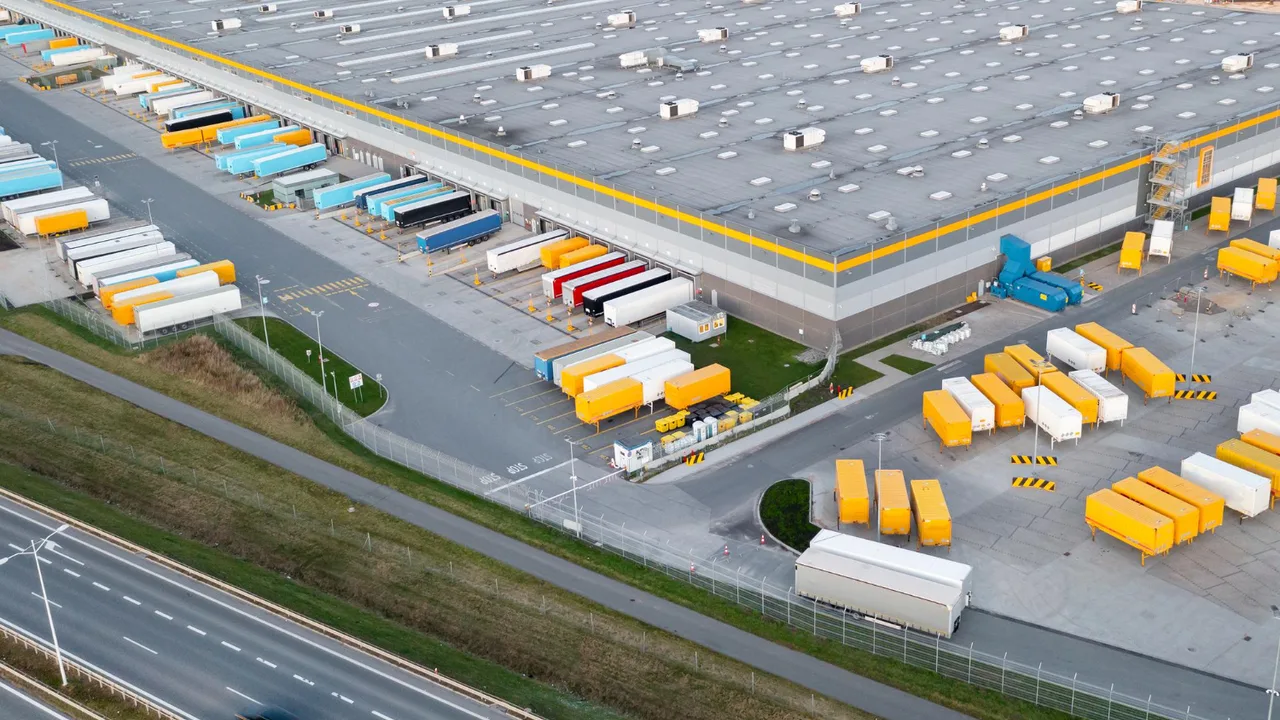
Another key contributor to warehouse growth is the rapid development of logistics parks—large, integrated zones that combine warehousing, transportation infrastructure, and value-added services.
Unlike standalone facilities, logistics parks benefit from shared infrastructure, proximity to highways and ports, and regulatory advantages. This clustering effect accelerates warehouse absorption and attracts diverse tenant profiles.
As logistics parks expand globally, they act as multipliers for global warehouse demand drivers, concentrating demand while increasing overall capacity requirements.
Why Logistics Parks Accelerate Warehouse Absorption
Logistics parks shorten leasing cycles by offering ready-to-operate environments. Tenants benefit from existing utilities, customs access, and multimodal connectivity.
This efficiency encourages faster decision-making and higher occupancy rates, reinforcing warehouse demand even during periods of broader economic uncertainty.
Cold Storage and Specialized Warehousing Fueling New Demand
Not all warehouse growth is generic. Specialized facilities—particularly cold storage—are emerging as powerful demand engines. Growth in food distribution, pharmaceuticals, and biotech requires temperature-controlled environments with strict compliance standards.
These facilities involve higher capital expenditure and technical complexity, creating barriers to entry and stabilizing demand. As a result, specialized warehousing has become a durable component of global warehouse demand drivers.
Temperature-Controlled Infrastructure as a Long-Term Asset
Cold storage facilities are rarely interchangeable. Regulatory requirements, validation processes, and switching costs create strong tenant stickiness.
This specialization transforms warehouses into long-term strategic assets rather than flexible short-term leases, further strengthening structural demand.
Inventory Strategy Becomes a Board-Level Decision
In the current environment, inventory strategy is no longer an operational afterthought—it is a board-level concern. Executives now evaluate inventory positioning as part of enterprise risk management.
These decisions have direct implications for warehouse networks. Companies increasingly maintain inventory across multiple regions to reduce exposure to disruptions, a trend that significantly amplifies global warehouse demand drivers.
Global institutions tracking trade and logistics trends, such as the World Bank, consistently highlight infrastructure capacity and logistics resilience as critical factors in economic competitiveness.
Emerging Markets and the Next Wave of Warehouse Demand
Beyond mature economies, emerging markets are becoming a major source of momentum for global warehouse demand drivers. Rapid industrialization, urban population growth, and rising domestic consumption are accelerating the need for modern logistics infrastructure across Asia, Africa, and Latin America.
In many of these regions, warehouse supply has historically lagged behind economic growth. As trade volumes expand and manufacturing footprints deepen, the resulting catch-up effect creates sustained demand for new facilities. This dynamic is particularly evident in markets investing heavily in ports, highways, and industrial corridors.
For developers and investors, emerging markets represent not just incremental growth, but an entirely new phase in the evolution of global warehouse demand drivers, where baseline logistics capacity is still being established.
Sustainability, Automation, and the Redefinition of Warehousing
Sustainability pressures are also reshaping warehouse demand. Governments, investors, and tenants increasingly expect logistics assets to meet environmental performance standards related to energy efficiency, emissions, and land use.
New warehouse developments are designed with improved insulation, optimized layouts, and automation-ready infrastructure. Older facilities often struggle to meet these requirements, leading to replacement demand rather than simple expansion.
This replacement cycle is an important but often overlooked component of global warehouse demand drivers. As standards evolve, obsolete warehouses are phased out, making room for modern, higher-spec assets.
Automation Requirements Create New Building Specifications
Automation is no longer optional in high-throughput logistics environments. Automated storage and retrieval systems, robotics, and advanced sorting technologies impose specific requirements on building height, floor flatness, and structural load capacity.
Warehouses that cannot accommodate these systems quickly lose competitiveness. As a result, automation readiness has become a decisive factor shaping global warehouse demand drivers, particularly in large logistics parks and distribution hubs.
Cold Storage Expansion as a Structural Demand Factor
Cold storage continues to expand as a distinct segment within the broader warehouse market. Growth in fresh food distribution, pharmaceuticals, and biologics requires specialized environments that support temperature control, traceability, and regulatory compliance.
Unlike general-purpose warehouses, cold storage facilities involve high capital intensity and long approval cycles. These barriers limit supply elasticity, creating a stable demand profile that reinforces global warehouse demand drivers over the long term.
As consumption patterns shift toward higher-value and time-sensitive goods, cold storage becomes an essential layer of logistics infrastructure rather than a niche category.
Why the Warehouse Boom Is Structural, Not Cyclical
One of the most important questions facing investors is whether the current warehouse boom represents a cyclical upswing or a structural transformation. Evidence increasingly points to the latter.
The forces shaping global warehouse demand drivers—supply chain reconfiguration, inventory risk management, sustainability requirements, and automation—are long-term in nature. They are embedded in how companies operate, not merely how markets fluctuate.
Even during periods of economic slowdown, these structural drivers continue to support baseline demand for warehousing, distinguishing the current cycle from past logistics expansions.
Capital Flows and the Institutionalization of Warehouse Assets
Warehouses have become institutional-grade assets. Pension funds, sovereign wealth funds, and infrastructure investors increasingly allocate capital to logistics real estate as part of diversified portfolios.
This institutional interest reinforces global warehouse demand drivers by supporting large-scale development, portfolio consolidation, and long-term leasing strategies. Warehouses are now evaluated alongside traditional infrastructure assets such as ports and utilities.
The result is a market where demand is supported not only by tenants, but also by sustained investment flows seeking stable, inflation-resistant returns.
Final Thoughts: Understanding Global Warehouse Demand Drivers in Context
The global warehouse boom cannot be explained by e-commerce alone. Instead, it reflects a convergence of structural shifts in supply chains, inventory strategy, sustainability standards, and capital allocation.
By viewing warehouses as strategic infrastructure rather than passive storage, companies and investors gain clearer insight into the true global warehouse demand drivers shaping the market.
As these forces continue to evolve, warehouse demand is likely to remain resilient—driven not by short-term cycles, but by the long-term reconfiguration of the global economy.