Optimizing Clear Span for Warehouses Without Overspending
In industrial construction, few design decisions impact both functionality and budget as much as the span of a warehouse. A well-planned clear span warehouse design provides wide, unobstructed interiors ideal for storage, logistics, and production lines. Yet many developers make the mistake of assuming that a wider span automatically equals better performance—often overlooking how span width directly affects steel weight, foundation loads, and cost.
This article explores how to achieve structural efficiency without overspending. By understanding the interplay between span width, bay spacing, and roof slope, builders can balance performance with budget and deliver a warehouse that’s cost-effective and future-ready.
Why Clear Span Matters in Modern Warehouses
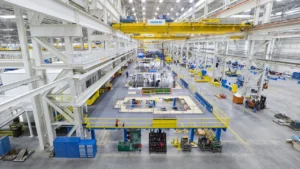
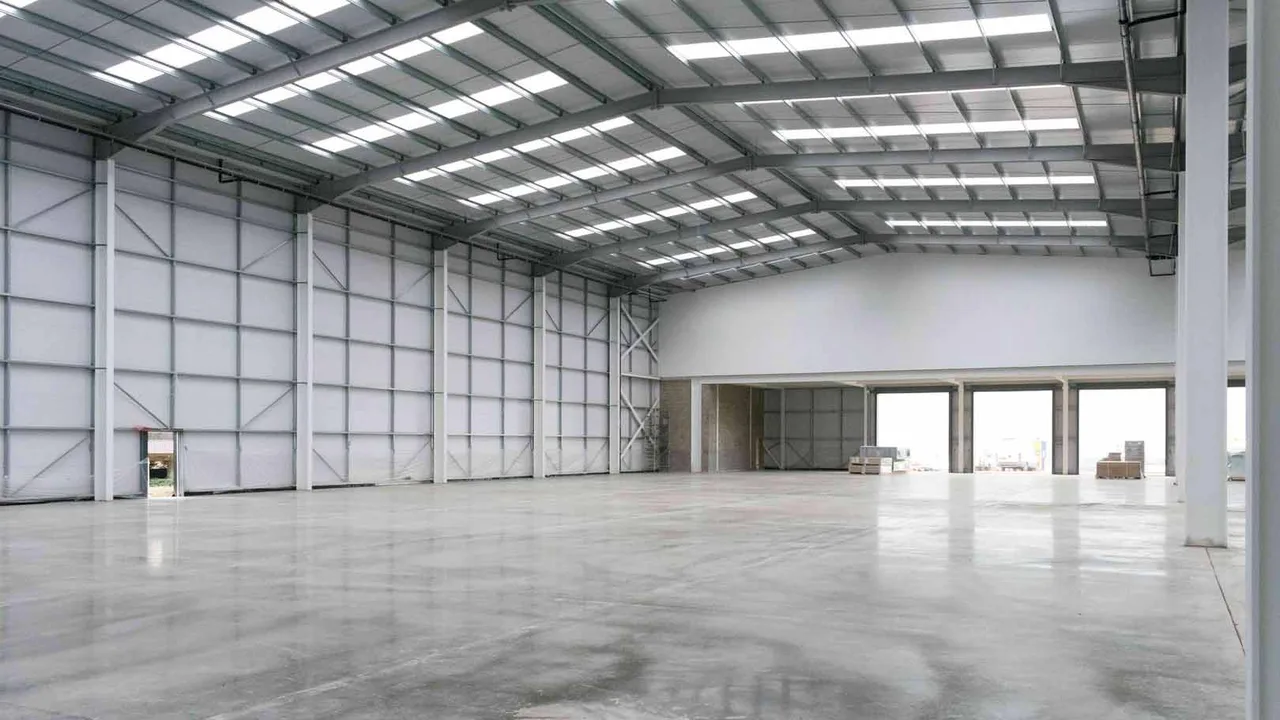
A clear span refers to the uninterrupted distance between two supports or columns in a building. In warehouses, this distance defines how much usable floor area is available for forklifts, racks, and machinery. The wider the span, the greater the flexibility for internal layout and operations. Logistics companies and manufacturers favor these designs because open space simplifies material handling and allows rapid reconfiguration of work zones.
However, larger spans require heavier steel sections to carry the roof loads. The additional material and fabrication effort can raise total costs significantly. The challenge is to find the “sweet spot” where the span delivers functional freedom without creating unnecessary structural expense. This balance is the essence of clear span warehouse design.
Understanding Clear Span Warehouse Design
A typical steel warehouse consists of frames spaced at regular intervals along the building’s length. Each frame supports roof purlins and wall girts, distributing loads to the foundations. In a conventional framed building, internal columns may appear every 6 to 8 meters. In contrast, a clear span structure eliminates these interior supports, achieving widths of 20, 30, or even 50 meters using rigid portal frames or truss systems.
The advantages are clear: improved circulation paths, simpler equipment movement, and flexible use of space. But design optimization is crucial. Every extra meter of span increases bending moments exponentially, requiring thicker rafters or stronger steel grades. Choosing the right combination of frame type, bay spacing, and roof slope helps offset these additional demands.
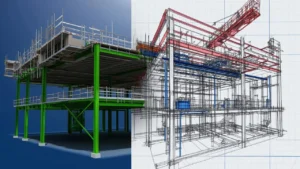
Modern engineers rely on digital modeling tools to simulate loads and material usage. By running several design iterations, they can pinpoint configurations that maintain strength while minimizing weight. It’s a method that merges structural precision with cost discipline—an approach adopted by many experienced contractors worldwide.
The Cost Equation: Structure vs. Space
Cost optimization in warehouse projects always begins with understanding the relationship between structure and space. Steel weight rises roughly with the cube of the span width. In practical terms, doubling the span can triple or quadruple the tonnage of steel required. Because steel constitutes 50–60% of a warehouse’s total cost, this effect is far from trivial.
Several variables influence the price curve:
- Building height: Taller structures increase lateral loads and require stiffer frames.
- Wind and snow loads: Regional climate conditions often dictate rafter sizing and bracing density.
- Roof type and slope: Steeper roofs increase surface area and therefore material consumption.
Sometimes, inserting a single interior column line in an extremely wide building can cut frame costs by 15–20% without sacrificing functionality. The key is to determine when full clear span truly adds value versus when a hybrid approach is more economical.
| Span Width (m) | Estimated Steel Usage (kg/m²) | Relative Cost Index |
|---|---|---|
| 20 | 25–30 | 1.00 |
| 30 | 35–40 | 1.25 |
| 40 | 45–55 | 1.50 |
| 50 | 60–70 | 1.80 |
This table shows how the cost index climbs with each increase in span. Beyond 40 meters, the rise accelerates sharply due to larger rafter depths and stronger connections. Designers must therefore evaluate not only the desired interior clearance but also how much added weight each additional meter demands.
Optimizing Bay Spacing for Structural Efficiency
Bay spacing—the distance between frames along the building’s length—plays a major role in both structural economy and buildability. Closer spacing adds more frames and foundations, increasing labor and concrete costs, while excessive spacing raises rafter and purlin sizes. Most engineers aim for an interval of 6–8 meters as the practical middle ground.
To illustrate, consider a 60-meter-long warehouse. With 6-meter bays, you need 11 frames; with 8-meter bays, only eight frames. The steel per frame increases with wider bays, but the total tonnage often decreases because fewer frames and connections are required. The optimal spacing is where total tonnage—and thus total cost—is at its minimum.
Computer-aided design tools now make this optimization quick and precise. Engineers can model multiple layouts and instantly compare weight, deflection, and cost outcomes. This data-driven approach avoids rule-of-thumb mistakes and ensures the final configuration matches both structural and budget targets.
How Roof Slope Affects Cost and Performance
Another often-overlooked parameter in clear span warehouse design is the roof slope. The pitch determines how efficiently rainwater drains, how much roofing material is used, and how high the ridge line becomes. Shallow slopes below 1:15 may create drainage problems, while steep slopes above 1:6 require more cladding and increase wind loads on the structure.
The ideal range for most warehouses lies between 1:10 and 1:8, balancing drainage efficiency with material economy. Slope also influences energy performance—steeper roofs allow better natural ventilation and daylighting, while gentler slopes simplify maintenance. Adjusting this single parameter can shift total project cost by several percent.
As a benchmark, fabricators such as steel structure warehouse specialists often fine-tune roof angles and bay spacing together to achieve optimal structural performance. This integrated design philosophy helps clients cut costs without sacrificing durability or aesthetics, proving that efficiency in design is more about intelligence than compromise.
Material Selection and Frame Type Considerations
Choosing the right frame system and steel grade can make or break a project’s budget. Most modern clear span warehouse design solutions rely on high-strength materials like Q355B, S355JR, or ASTM A36 for their balance between tensile capacity and fabrication ease. Each grade offers different advantages: Q355B for cost-effective strength, S355JR for consistent weldability, and ASTM A36 for global availability.
The frame configuration is equally important. Engineers usually choose between three main types:
- Rigid portal frame: The most common option for spans up to 40 meters. It uses tapered columns and rafters connected by moment joints to handle bending efficiently.
- Truss system: Ideal for extra-large spans exceeding 50 meters. Though fabrication is more complex, the truss achieves excellent stiffness with minimal material weight.
- Tapered frame: Combines the best of both worlds—optimized for moderate spans with reduced tonnage compared to uniform sections.
The table below compares these options by key performance metrics:
| Frame Type | Typical Span Range (m) | Steel Weight (kg/m²) | Cost Efficiency |
|---|---|---|---|
| Rigid Portal Frame | 20–40 | 30–45 | High |
| Tapered Frame | 30–45 | 35–50 | Moderate–High |
| Truss Frame | 45–60+ | 25–35 | Excellent (for large spans) |
The goal is not simply to minimize steel weight but to match the frame system to the project’s operational and architectural needs. For instance, a logistics hub requiring overhead cranes may favor portal frames for stability, while an aircraft hangar benefits from trusses for extended clear spans.
Design Optimization Techniques in Practice
Optimizing warehouse design involves iterating through several structural parameters to find the lowest possible cost per square meter without compromising strength. Advanced modeling tools like Tekla Structures, SAP2000, or Staad Pro allow engineers to simulate load distribution, wind pressure, and deflection patterns in detail.
A common workflow includes:
- Defining the site’s wind and snow loads based on local codes.
- Testing multiple bay spacing intervals (6m, 7m, 8m) and roof slopes (1:10, 1:8, 1:6).
- Analyzing resulting steel tonnage and cost impacts for each scenario.
- Choosing the most efficient configuration where cost and strength intersect optimally.
In many cases, small design changes yield large savings. For example, increasing bay spacing by just one meter can reduce the total number of frames by 10–15%, saving both fabrication and erection time. Similarly, reducing roof slope slightly can lower cladding area, cutting costs without affecting performance. These adjustments, when calculated precisely, can trim total project costs by up to 12%.
Energy and Environmental Considerations
Structural optimization doesn’t end with steel weight—energy and sustainability also matter. The open volume of a clear span warehouse design affects how air moves, how light enters, and how much energy is required to maintain temperature. Proper roof slope can facilitate natural ventilation, while translucent panels or skylights minimize reliance on artificial lighting.
Modern warehouses increasingly integrate solar panels, using the roof as an energy-generating surface. The chosen slope influences solar yield; angles around 8–10 degrees often balance both drainage and photovoltaic efficiency. This makes clear span structures ideal for energy-conscious industries seeking long-term operational savings.
Another sustainability factor lies in material reuse. Many steel structure projects are designed for disassembly, allowing components to be recycled or relocated. Fabricators that specialize in efficient designs incorporate modular elements that minimize waste and simplify maintenance. The result: lower embodied carbon, faster installation, and higher lifecycle value.
Case Example: Achieving Cost Efficiency in a 40m Clear Span Warehouse
Consider a 40-meter-wide logistics warehouse in a coastal region with moderate wind loads. The initial design used a 1:6 roof slope and 6-meter bay spacing, resulting in 55 kg/m² of steel weight. Through optimization, engineers adjusted the slope to 1:9 and widened the bay spacing to 7.5 meters. The new design required only 48 kg/m² of steel—a 13% reduction in material tonnage.
The impact on cost was immediate. The revised design reduced total steel tonnage by nearly 60 tons, saving approximately $45,000 in materials and fabrication. Because the structure still met all performance criteria, the client gained a lighter, cheaper, and faster-to-build facility.
This example shows that cost efficiency doesn’t come from cutting corners but from intelligent engineering decisions. Clear span optimization is about identifying where design precision translates into measurable savings.
Conclusion: Smarter Design for Long-Term Gains
Warehouse construction has evolved beyond standard templates. Today, success depends on balancing openness with efficiency, ensuring that every kilogram of steel delivers structural purpose. A well-optimized clear span warehouse design aligns bay spacing, roof slope, and frame type to minimize cost while maximizing usability.
Instead of overspending for unnecessary width or material, developers can achieve the same performance through smarter geometry and detailed analysis. From material selection to environmental integration, each design decision shapes the building’s economic and operational future.
Ultimately, efficiency in warehouse design isn’t just about saving money—it’s about creating adaptable, sustainable spaces that serve modern logistics and manufacturing for decades to come. Thoughtful planning today ensures lower lifecycle costs, better performance, and stronger returns tomorrow.