5 Common Erection Mistakes That Cause Rework on Steel Sites
Every steel construction project faces one constant challenge — precision. Even a small error during erection can lead to costly delays, compromised safety, and wasted materials. Across the industry, contractors estimate that rework consumes between 5% and 10% of total project costs. Yet most of these problems are preventable. By identifying the most common steel erection mistakes early, teams can save time, avoid unnecessary expenses, and maintain structural integrity from start to finish.
This article examines five recurring causes of rework on steel sites, along with proven strategies to eliminate them. From alignment errors to bolt torque inconsistencies, these issues often stem from overlooked details that snowball into major site complications.
1. Improper Alignment and Leveling of Steel Members
Alignment is the foundation of a safe and efficient erection process. When beams or columns are even a few millimeters off, the problem multiplies as the structure grows higher. Misaligned members can result in distorted frames, misfit connections, or compromised load distribution—all of which require expensive rework and safety checks.
The most common causes of alignment issues include poor site preparation, uncalibrated instruments, or inadequate communication between survey and erection teams. Many crews rely on manual plumb checks and tape measurements, which are vulnerable to cumulative error. As a result, connection plates may not meet correctly, forcing on-site adjustments or re-drilling.
Prevention begins with preparation. Teams should always verify benchmark elevations, confirm the accuracy of total stations, and establish a precise leveling grid before the first lift. Using digital alignment systems and laser-leveling tools dramatically reduces human error. Additionally, referencing manufacturer tolerances and documenting measurements daily ensures each phase remains within the approved QA/QC limits.
2. Incorrect Bolt Tightening and Torque Control
Bolted connections are the backbone of modern steel erection, yet improper tightening remains one of the most overlooked steel erection mistakes. Under-tightened bolts lead to joint slip and vibration, while over-tightened bolts can fracture threads and reduce tensile capacity. Both scenarios create structural weakness and often require re-torquing or bolt replacement after inspection.
The root causes typically involve uncalibrated torque wrenches, lack of training, or absence of a standardized tightening sequence. Operators may also skip quality checks due to schedule pressure, leaving bolts inconsistent across the structure. These inconsistencies can introduce load path imbalances that affect performance under dynamic conditions like wind or seismic forces.
To prevent these problems, teams should implement clear torque control procedures and maintain a log of every tightening operation. The “turn-of-nut” method, which specifies bolt rotation beyond snug-tight, is a reliable way to ensure uniform clamping force. Combining manual verification with digital logging devices that record real-time torque data further enhances traceability. Documenting these checks within the QA/QC process guarantees accountability during final inspection.
3. Poor Sequencing and Lifting Plan Errors
Erection sequencing is both an art and a science. A well-planned lifting order ensures structural stability and efficient crane usage, while poor sequencing can lead to dangerous site conditions, prolonged schedules, and rework. In many cases, teams mistakenly install secondary members before stabilizing primary frames, creating temporary instability that must later be corrected.
Another frequent issue arises from incomplete lifting simulations. Without visual modeling, planners may underestimate crane swing radius or interference between sections. The result: re-lifts, temporary supports, or even partial dismantling to correct sequence errors. Each adjustment means lost hours and increased risk exposure.
Today, digital sequencing tools such as 3D erection planning software help map every lift before construction begins. For instance, specialized platforms like Tekla Erection Planner and other BIM-based solutions simulate lifting paths, crane capacity, and collision zones to avoid such errors. Using these tools ensures the structure is erected logically—maintaining balance, safety, and speed without sacrificing alignment accuracy.
4. Inadequate Field Welding and Joint Preparation
Field welding is often where projects lose time and quality control. Unlike factory conditions, on-site environments expose joints to weather, dust, and inconsistent temperatures. Failing to prepare weld surfaces or skipping preheat/postheat procedures leads to cracking, porosity, or incomplete fusion. These defects not only weaken the joint but also necessitate rework under strict supervision, adding cost and delay.
Common causes of poor welding include insufficient training, lack of approved Welding Procedure Specifications (WPS), and poor inspection routines. In some cases, welders may deviate from approved positions to save time, increasing the chance of defects. Another major factor is surface contamination—paint, rust, or oil residues that prevent proper penetration.
Preventive measures begin with preparation. Every welder must be qualified under relevant standards, such as AWS D1.1 or EN ISO 5817. Proper cleaning, joint beveling, and verification of fit-up are mandatory before striking the first arc. Continuous inspection, including non-destructive testing (NDT) like ultrasonic or magnetic particle inspection, ensures hidden flaws are detected early. Regular calibration of welding machines and maintaining a clean work zone further improve consistency and safety.
5. Ignoring Tolerances and As-Built Verification
In fast-paced projects, site crews often prioritize progress over precision. However, ignoring dimensional tolerances can quickly spiral into major rework during cladding, MEP, or roof installation stages. Even slight deviations in column plumbness or beam camber can prevent prefabricated elements from fitting as designed.
As-built verification — the process of measuring erected steel against design coordinates — is critical to catching deviations before they escalate. Unfortunately, many projects treat this as an afterthought, only performing checks at project completion. By then, fixing a misaligned bay or column line could require partial dismantling or fabrication of new components.
Best practice involves integrating daily as-built surveys using laser scanning or total station data. Combining these readings with Building Information Modeling (BIM) platforms allows real-time deviation tracking. This proactive approach ensures that adjustments happen early, keeping overall geometry within tolerance and reducing final-stage conflicts.
Understanding the True Cost of Rework
Rework may appear minor at first—tightening a few bolts, adjusting a beam, or rewelding a joint—but the cumulative impact can devastate project schedules. Each hour spent correcting errors disrupts crane sequencing, manpower allocation, and subcontractor coordination. Financially, rework can consume up to 12% of a project’s direct labor budget, not counting penalties for late delivery or material waste.
The table below illustrates how different types of errors contribute to rework cost escalation:
| Error Type | Average Rework Time | Cost Impact (%) |
|---|---|---|
| Alignment Issue | 2 days | +5% |
| Bolt Torque Error | 1 day | +3% |
| Welding Defect | 3 days | +8% |
| Wrong Sequence | 2 days | +6% |
Understanding where these costs originate allows managers to invest in prevention—training crews, enforcing QC procedures, and deploying digital monitoring systems that ensure accuracy from the ground up.
How Technology and QA/QC Protocols Reduce Rework
Modern construction sites have powerful tools to combat steel erection mistakes. Advanced technologies such as Building Information Modeling (BIM), laser scanning, and digital QA/QC platforms make it easier to maintain control over accuracy and documentation throughout the erection process. Instead of relying on reactive inspections, these systems provide continuous verification at every stage.
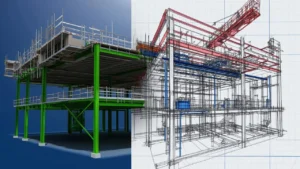
BIM integration allows project teams to simulate the erection sequence in 3D before stepping on site. By identifying conflicts virtually—such as crane access, alignment tolerance, or bolt sequencing—contractors can correct design issues long before physical work begins. When paired with cloud-based management platforms, field supervisors can record inspections, upload torque readings, and update alignment data in real time, ensuring that every member is installed within acceptable tolerances.
Laser scanning offers an additional layer of assurance. High-precision scanners capture the actual geometry of erected steel and compare it against the BIM model. Deviations are flagged instantly, helping crews fix issues while cranes and equipment are still on site. This approach significantly reduces the number of corrective lifts and eliminates guesswork during as-built verification. A 2024 case study by Construction Dive highlighted how integrating digital QA workflows reduced rework time by up to 25% across large industrial projects.
These methods also strengthen traceability. Digital torque tools, welding logs, and inspection photos provide a complete project record that can be audited at any time. This data-driven transparency builds confidence among owners, engineers, and regulatory bodies while preventing disputes over workmanship.
Building a Culture of Error Prevention on Steel Sites
Even the best tools and procedures are useless without a proactive site culture. Preventing rework starts with mindset. Supervisors must encourage open communication where workers can report potential alignment or torque issues without fear of blame. Many projects still hide errors until they escalate, resulting in costly late-stage fixes.
Creating a non-punitive feedback loop—where issues are logged, analyzed, and discussed during daily toolbox talks—helps everyone learn from near-misses. Companies that maintain shared rework databases gain insight into patterns, enabling them to design targeted training programs for recurring mistakes such as weld preparation or sequencing errors.
In parallel, regular QA/QC refreshers and short micro-trainings reinforce technical fundamentals. Crew leaders can use mobile apps to access welding procedures, torque charts, and inspection templates directly from the field. This immediacy eliminates ambiguity and ensures standardized practices across teams. Ultimately, culture determines whether precision becomes a consistent habit or an afterthought.
Case Example: Applying Error Prevention on a Mid-Rise Steel Project
Consider a mid-rise office building where alignment, bolt torque, and welding quality were tracked using digital tools from day one. The project team performed laser checks after every 10 columns, logged bolt torques with smart wrenches, and verified all welds through mobile QA software. When an alignment deviation appeared in the third floor frame, the team corrected it immediately before proceeding to the next tier—avoiding what could have been a multi-day rework later.
The results were measurable: zero major reworks, 7% faster erection cycle, and 12% lower crane idle time compared to previous projects. The key difference wasn’t just technology—it was the combination of disciplined QA/QC practices and communication across teams.
Managing Rework Cost Through Prevention
Cost management begins long before the first beam is lifted. Once rework occurs, even small errors can multiply expenses due to downtime and resource conflicts. To minimize rework cost, project managers should track three core factors:
- Frequency: How often errors occur per phase or per ton of steel erected.
- Severity: How much time and material each correction consumes.
- Recovery effort: Additional crane hours, scaffolding, or re-fabrication required.
Collecting this data helps teams identify where procedural weaknesses exist—whether in bolt torque control, alignment verification, or welding supervision. Over multiple projects, these insights feed into continuous improvement frameworks, gradually reducing both direct and indirect rework costs.
From a financial perspective, prevention pays dividends. Eliminating one major re-lift or bolt correction per week could save thousands of dollars in crane rental and labor expenses. When viewed across multiple projects, these efficiencies translate into stronger profit margins and safer, more predictable workflows.
Conclusion: Precision and Preparation Over Panic
Steel erection is as much about discipline as it is about strength. The most common steel erection mistakes—from poor alignment and torque inconsistencies to welding defects—share one root cause: inadequate preparation and verification. By adopting structured QA/QC protocols, leveraging BIM and laser scanning, and fostering a culture of accountability, contractors can nearly eliminate rework altogether.
In an industry where schedules are tight and budgets unforgiving, every millimeter matters. Preventing rework isn’t just about saving money—it’s about building safely, sustainably, and with confidence. A project that invests in accuracy from the ground up will always outperform one that rushes to correct errors after the fact.
As steel construction continues to evolve, technology and teamwork will define its future. The projects that thrive will be those where precision planning replaces reactive problem-solving—and where every bolt, weld, and beam aligns perfectly the first time.