How to Plan Maintenance Budgets for Large Industrial Facilities
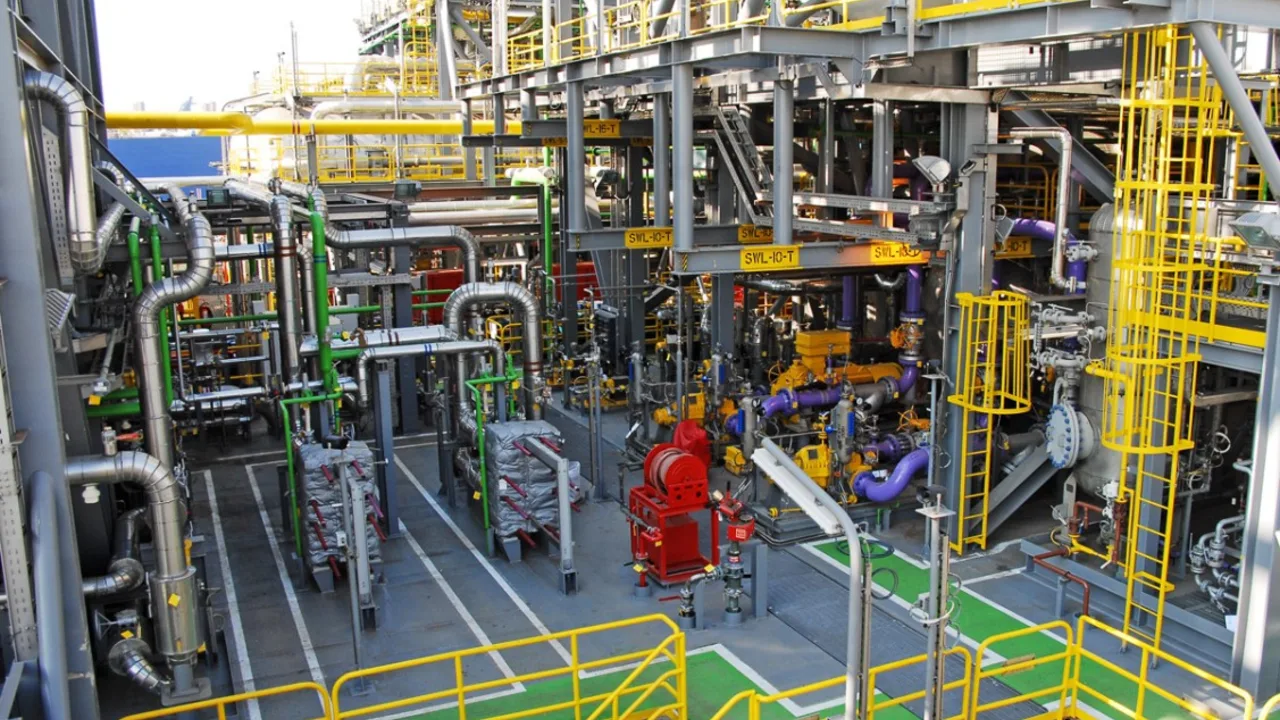
Large industrial business facilities operate in a constant balance between productivity and reliability. Whether it’s a manufacturing plant, logistics hub, processing facility, or energy installation, the performance of physical assets directly determines profitability. Yet many companies underestimate the financial discipline required to maintain these assets effectively. Industrial facility maintenance budgeting is not just an accounting exercise—it is a strategic framework that protects operations, extends asset lifecycle, and stabilizes long-term costs.
When maintenance budgets are poorly planned, facilities face unexpected downtime, inflated repair costs, and accelerated equipment failure. Conversely, structured budgeting allows managers to anticipate expenses, optimize preventive maintenance, and manage spare parts intelligently. The result is operational stability and predictable financial performance.
Understanding Industrial Facility Maintenance Budgeting
Industrial facility maintenance budgeting refers to the systematic planning and allocation of financial resources to maintain, repair, and optimize physical assets within an industrial environment. It encompasses both routine preventive maintenance and unplanned corrective actions, as well as labor, spare parts, service contracts, and technological systems.
Maintenance budgets typically fall into two categories:
- Operational Expenditure (OPEX): Recurring costs such as labor, routine inspections, lubrication, cleaning, and spare parts replacement.
- Capital Expenditure (CAPEX): Major overhauls, equipment upgrades, and asset replacement projects.
Balancing OPEX and CAPEX is critical. Underfunding preventive maintenance may temporarily reduce OPEX but often leads to larger CAPEX requirements later due to premature asset failure. Effective industrial facility maintenance budgeting ensures that spending aligns with the asset lifecycle of each component within the facility.
Mapping the Asset Lifecycle Before Setting the Budget
A fundamental step in industrial facility maintenance budgeting is understanding the asset lifecycle. Every machine, structural system, or utility component passes through stages:
- Acquisition and installation
- Stable operation
- Gradual degradation
- Major repair or overhaul
- Replacement
Budget planning must reflect these stages. Newly installed equipment generally requires lower corrective maintenance but consistent preventive maintenance. Aging equipment, on the other hand, demands higher allocations for spare parts and repairs.
Facilities often categorize assets by criticality:
| Asset Category | Operational Impact | Budget Priority |
|---|---|---|
| High-Critical | Production stops if failure occurs | High preventive allocation |
| Medium-Critical | Partial production disruption | Balanced preventive and corrective |
| Low-Critical | Minimal operational impact | Basic maintenance coverage |
By mapping asset lifecycle stages and criticality levels, managers can distribute maintenance funds strategically instead of evenly across all equipment. This targeted allocation improves overall efficiency and reduces unexpected breakdowns.
Preventive Maintenance vs Reactive Spending
One of the most significant cost drivers in industrial operations is unplanned downtime. Reactive maintenance—repairing equipment only after it fails—often appears cheaper in the short term but leads to higher total cost of ownership. In contrast, preventive maintenance reduces breakdown frequency and improves budget predictability.
Studies across industrial sectors consistently show that preventive maintenance programs can reduce equipment failure rates by 20–40%. This reduction directly lowers emergency repair expenses and overtime labor costs.
Consider a practical comparison:
- Reactive scenario: A production line failure halts operations for 48 hours, costing $50,000 in lost output and urgent repairs.
- Preventive scenario: Scheduled inspection and part replacement costing $8,000 prevents the breakdown entirely.
The difference illustrates why industrial facility maintenance budgeting must prioritize preventive maintenance rather than allocating disproportionate funds to emergency repairs. Over time, preventive programs stabilize annual budgets and extend asset lifecycle significantly.
Allocating Budget for Spare Parts and Inventory Control
Spare parts represent a substantial portion of maintenance spending. Poor spare parts management can either tie up capital in excess inventory or expose the facility to costly downtime due to shortages. A structured approach to spare parts planning is therefore central to industrial facility maintenance budgeting.
Facilities commonly apply ABC classification to categorize spare parts:
- A-Class: High-value, critical components essential for production continuity.
- B-Class: Moderate value and moderate impact components.
- C-Class: Low-cost items with minimal operational risk.
Budget allocation should prioritize A-Class components, ensuring availability without overstocking. Historical consumption rates help determine reorder thresholds and optimal stock levels.
For example, if a critical motor bearing has an average failure interval of 18 months, maintaining one or two units in inventory may be sufficient. Overstocking ten units unnecessarily increases carrying costs and affects cash flow. Conversely, understocking risks operational delays if replacement lead times are long.
Effective spare parts planning aligns directly with asset lifecycle analysis. Older equipment typically requires higher spare parts expenditure, which must be reflected accurately in maintenance forecasts.
Using Data and KPIs to Forecast Maintenance Costs
Modern industrial facility maintenance budgeting increasingly relies on data-driven forecasting. Key performance indicators (KPIs) provide measurable insights into equipment reliability and cost trends. Among the most important metrics are:
- MTBF (Mean Time Between Failures)
- MTTR (Mean Time to Repair)
- Maintenance cost per asset
- Downtime percentage
By analyzing three to five years of historical data, maintenance managers can identify recurring patterns and predict future expenses with greater accuracy. For example, if MTBF for a compressor declines steadily each year, the maintenance budget should reflect either increased repair allocation or planned replacement.
Computerized Maintenance Management Systems (CMMS) play a central role in collecting and organizing this information. According to research published by McKinsey on asset productivity transformation, companies that digitize maintenance processes can reduce overall maintenance costs by 10–20% while improving asset availability. Embedding such insights into industrial facility maintenance budgeting strengthens both operational reliability and financial control.
Predictive maintenance technologies, powered by IoT sensors and analytics, further refine cost forecasting. Instead of relying solely on fixed schedules, facilities can monitor vibration, temperature, and performance data to anticipate failures before they occur. This proactive approach supports more precise budgeting and reduces unexpected expenditure spikes.
Balancing Short-Term Cash Flow and Long-Term Asset Health
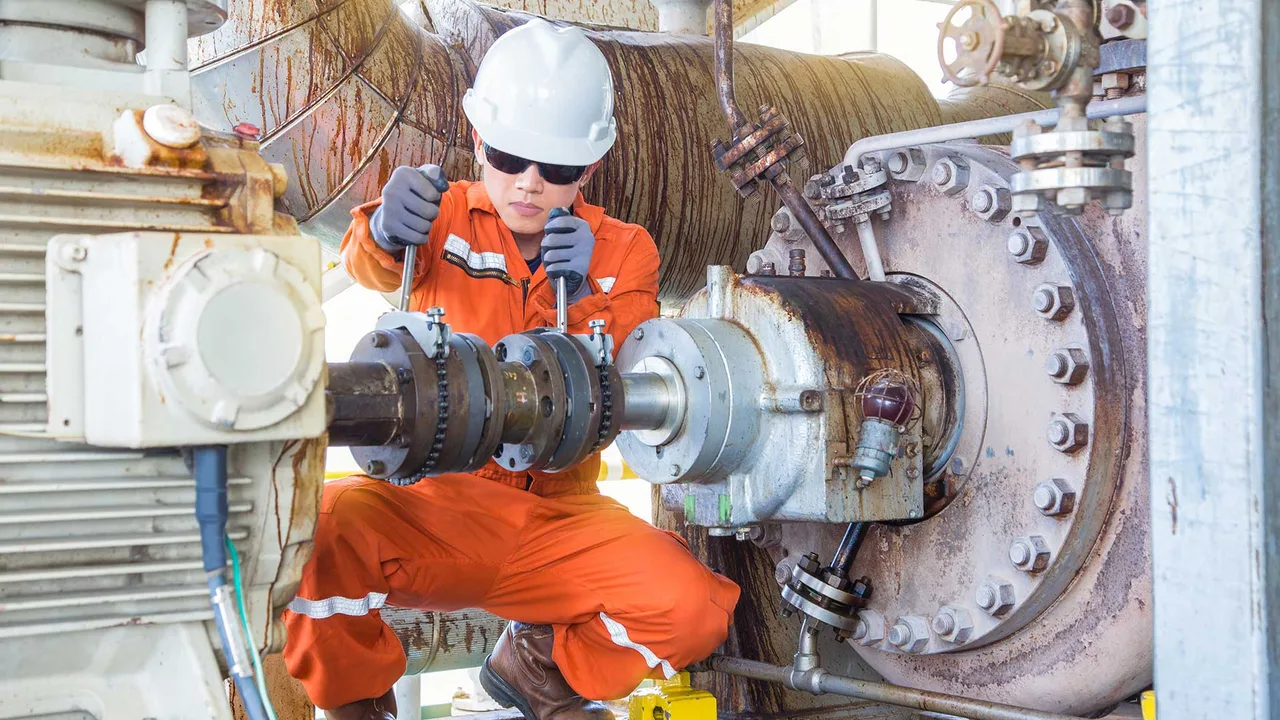
One of the most common mistakes in industrial facility maintenance budgeting is cutting preventive programs to improve short-term cash flow. While this may temporarily reduce visible expenses, it often accelerates asset deterioration and increases long-term costs. Maintenance deferrals typically compress the asset lifecycle, forcing earlier replacement or major overhaul.
Executives under financial pressure sometimes postpone inspections, lubrication cycles, or scheduled component replacements. However, reducing preventive maintenance spending rarely eliminates costs—it simply shifts them into future corrective repairs. In many industrial environments, deferred maintenance can increase total repair costs by 30–50% over a five-year period.
Effective industrial facility maintenance budgeting therefore requires balancing liquidity needs with the health of physical assets. Facilities that maintain consistent preventive schedules protect the asset lifecycle, stabilize downtime risk, and maintain predictable expenditure patterns. This stability strengthens long-term profitability more than reactive cost-cutting ever could.
Building a Structured Annual Maintenance Budget
A disciplined framework is essential for successful industrial facility maintenance budgeting. Rather than estimating costs broadly, managers should follow a structured planning process:
- Conduct a comprehensive asset audit.
- Classify assets by criticality and asset lifecycle stage.
- Develop a preventive maintenance calendar.
- Estimate annual spare parts consumption.
- Allocate contingency reserves for unexpected failures.
In practice, a typical annual allocation model might look like this:
| Budget Category | Suggested Allocation |
|---|---|
| Preventive Maintenance | 40% |
| Corrective Maintenance | 30% |
| Spare Parts Inventory | 20% |
| Contingency Reserve | 10% |
This distribution reinforces the principle that preventive maintenance and proactive spare parts planning should dominate annual budgets. By reserving funds specifically for spare parts, facilities reduce emergency procurement costs and prevent extended downtime.
Structured industrial facility maintenance budgeting also ensures that high-critical assets receive proportionally higher allocation. Equipment nearing the end of its asset lifecycle may require increased inspection frequency and higher spare parts spending, which must be reflected in forecasts.
Risk Management and Contingency Planning
No matter how detailed the planning process, unexpected failures remain possible. That is why risk assessment is a central element of industrial facility maintenance budgeting. Facilities must evaluate exposure to equipment breakdown, supply chain delays, and energy price volatility.
Supply chain disruptions, for example, can significantly impact spare parts availability. If critical components require long lead times, budgets must accommodate additional inventory or expedited shipping costs. Ignoring this factor can undermine otherwise solid preventive maintenance programs.
Energy-intensive assets—such as furnaces, compressors, or large HVAC systems—also present cost variability risks. Budget models should include sensitivity analysis scenarios, estimating how increased energy costs affect maintenance frequency and operating stress across the asset lifecycle.
Contingency funds, typically 5–10% of total maintenance allocation, act as financial shock absorbers. When integrated properly into industrial facility maintenance budgeting, these reserves protect operational continuity without disrupting long-term strategy.
Technology’s Role in Smarter Maintenance Budgeting
Digital tools are reshaping industrial facility maintenance budgeting. IoT sensors, predictive analytics, and advanced CMMS platforms provide real-time visibility into equipment performance. Instead of relying solely on calendar-based preventive maintenance, managers can schedule interventions based on condition monitoring.
This evolution improves both accuracy and efficiency. For example, predictive systems can extend the asset lifecycle of rotating equipment by identifying wear patterns early. Rather than replacing components prematurely, facilities optimize spare parts usage based on actual performance data.
Digitalization also enhances spare parts forecasting. By tracking failure intervals and usage rates, systems automatically calculate optimal reorder quantities for spare parts. This precision reduces excess inventory while safeguarding availability.
When predictive insights are embedded into industrial facility maintenance budgeting, facilities achieve greater alignment between spending and operational needs. Data replaces estimation, and budgeting becomes a strategic planning tool rather than a reactive financial document.
Case Scenario: Budget Planning for a 50,000 m² Industrial Facility
Consider a large industrial facility operating 200 major assets and 500 secondary equipment units across 50,000 square meters. The plant runs 6,000 operating hours annually and relies heavily on continuous production.
Without structured industrial facility maintenance budgeting, the facility experiences frequent breakdowns, inconsistent spare parts availability, and unpredictable emergency repair expenses. Annual maintenance costs fluctuate dramatically, ranging from $1.2 million to $1.8 million depending on failure severity.
After implementing structured preventive maintenance schedules and mapping each asset lifecycle stage, the facility reorganizes its budget:
- Expanded preventive maintenance coverage for high-critical assets.
- Improved spare parts classification and reorder planning.
- Condition-based monitoring for compressors and motors.
Within two years, downtime decreases by 25%, emergency repair incidents decline by 30%, and total maintenance costs stabilize at approximately $1.3 million annually. The improvement stems not from higher spending, but from disciplined industrial facility maintenance budgeting aligned with preventive maintenance and lifecycle planning.
The result is not only financial predictability but extended asset lifecycle performance. Equipment replacement timelines are optimized, spare parts costs become manageable, and executive teams gain greater confidence in operational forecasts.
Turning Maintenance into Strategic Investment
Large industrial operations cannot afford reactive decision-making when it comes to equipment reliability. Industrial facility maintenance budgeting transforms maintenance from a cost center into a structured investment strategy. By prioritizing preventive maintenance, aligning allocations with asset lifecycle stages, and managing spare parts intelligently, facilities reduce risk and improve profitability.
The core principles remain consistent: protect the asset lifecycle, invest in preventive maintenance, and control spare parts through disciplined forecasting. When these elements integrate into a cohesive financial plan, industrial facility maintenance budgeting becomes a driver of operational resilience.
In competitive industrial markets, stability and predictability are invaluable. Organizations that approach industrial facility maintenance budgeting with data, structure, and strategic foresight position themselves for sustained efficiency and long-term growth.