Industrial Printing and Labels: Small Upgrades With Big Impact
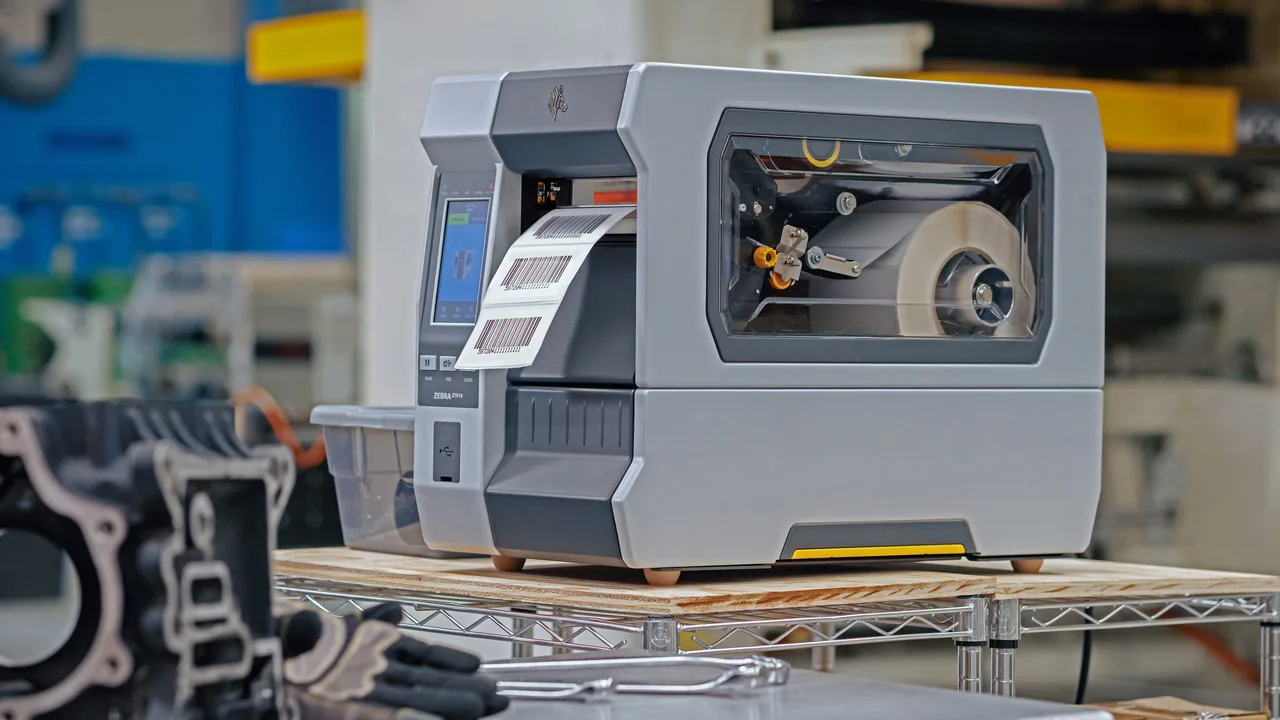
Industrial labels printing often looks like a minor operational detail, but in reality, it plays a central role in how industrial systems function day to day. Labels are not just identifiers—they are carriers of information that connect physical assets to digital systems. From manufacturing floors to warehouses, labeling accuracy influences tracking, compliance, and decision-making speed.
In many operations, labeling systems are implemented early and rarely revisited. Over time, processes evolve, software systems change, and production scales up—but the labeling approach stays the same. This mismatch creates inefficiencies that are easy to overlook but expensive to maintain.
Why Industrial Labels Printing Matters More Than It Seems
In industrial environments, labels sit at the intersection of physical workflows and data systems. Every pallet, component, or finished product often carries a label that represents its identity within a broader system. When that label fails—whether physically or digitally—the entire process can be disrupted.
What makes industrial labels printing important is not the label itself, but what it enables. A correctly printed and readable label ensures that systems such as inventory management, logistics tracking, and quality control can operate without interruption.
Many organizations underestimate labeling because it is a low-cost component. However, its impact is amplified across thousands or millions of items. A small inconsistency in label format or print quality can scale into operational friction across departments.
How Small Labeling Changes Affect Entire Operations
Minor adjustments in labeling systems can produce measurable improvements. For example, improving print clarity or switching to more durable materials can reduce scanning errors significantly. These small changes directly affect workflow speed and accuracy.
On the other hand, poor labeling leads to repeated issues:
- Items cannot be scanned quickly or accurately
- Workers must manually verify product information
- Inventory data becomes inconsistent across systems
- Delays occur in shipping and receiving processes
In high-volume operations, even a small percentage of labeling errors can create bottlenecks. This is why industrial labels printing should be viewed as part of the operational system, not just a supporting function.
Barcode Labels as the Backbone of Industrial Tracking
Barcode labels are the most widely used format in industrial environments because they allow fast, accurate data capture. Instead of manually entering product codes, workers can scan labels to retrieve information instantly.
Barcode systems are deeply integrated into inventory and logistics workflows. When a barcode is scanned, it can trigger updates in multiple systems at once—inventory levels, shipment status, and production tracking.
However, the effectiveness of barcode labels depends entirely on print quality and consistency. If a barcode is damaged, poorly printed, or misaligned, scanning errors increase. This slows down operations and introduces data inaccuracies.
In practice, reliable industrial labels printing ensures that barcode systems function as intended. Without consistent print quality, even the most advanced tracking systems lose effectiveness.
Durability: The Hidden Factor in Label Performance
Durability is often overlooked when selecting labeling solutions. In controlled environments, standard labels may perform well. But industrial conditions are rarely ideal. Heat, moisture, abrasion, and chemicals can quickly degrade labels that are not designed for such environments.
Common failure scenarios include:
- Labels fading due to heat exposure
- Adhesives weakening in humid conditions
- Surface damage making codes unreadable
- Labels detaching during handling or transport
When labels fail physically, the data they carry becomes inaccessible. This forces manual intervention and disrupts automated workflows. In sectors such as manufacturing and logistics, this can lead to delays and increased labor costs.
Improving durability does not always require major investment. In many cases, selecting the right material or printing method is enough to prevent recurring issues.
Standardization and Why It Reduces Operational Friction
Standardization in labeling refers to using consistent formats, layouts, and data structures across an organization. When labels follow a uniform design, workers can interpret them quickly, and systems can process them reliably.
Without standardization, different departments may use different label formats. This creates confusion and increases the risk of errors. For example, if product codes are placed in different positions on labels, scanning workflows become less efficient.
Standardization also supports integration with digital systems. When data is structured consistently, it can move between systems more easily. This is particularly important in operations that rely on multiple platforms.
As highlighted in global supply chain studies such as GS1 standards documentation, consistent labeling formats improve interoperability and reduce friction across organizations.
For companies looking to scale, investing in standardized industrial labels printing is often one of the simplest ways to improve operational consistency.
Common Problems in Industrial Label Systems
Despite their importance, labeling systems are often implemented without long-term planning. Over time, this leads to a range of recurring problems:
- Different label formats used across departments
- Inconsistent print quality due to outdated equipment
- Manual processes that slow down production
- Lack of integration with digital systems
These issues are usually not critical on their own, but together they create inefficiencies that affect the entire operation. Because labeling problems are distributed across processes, they are often difficult to identify as a single root cause.
Addressing these challenges requires a shift in perspective. Instead of treating labels as consumables, companies need to view labeling as part of a broader system that supports data flow and operational efficiency.
Printing Technology Choices and Their Trade-Offs
Choosing the right printing technology is a key part of improving industrial labels printing. Different technologies offer different advantages depending on the application.
| Technology | Advantages | Limitations |
|---|---|---|
| Thermal Transfer | High durability, resistant to heat and chemicals | Requires ribbon, higher operating cost |
| Direct Thermal | Simple, no ribbon needed | Lower durability, sensitive to heat/light |
| Inkjet | Flexible printing on various surfaces | Ink maintenance required |
| Laser | High precision and clarity | Less suitable for certain materials |
Each option has its place depending on the environment and application. Selecting the wrong technology can lead to recurring issues that affect both durability and readability.
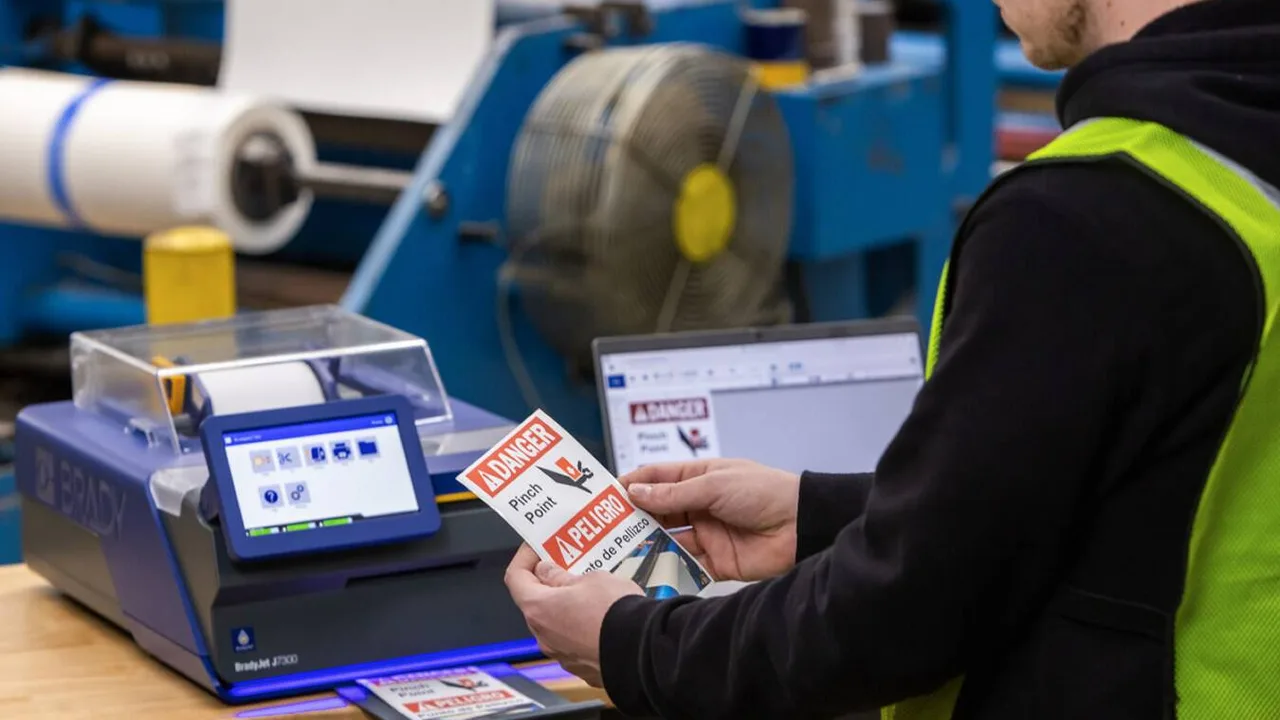
Integration Between Labels and Digital Systems
Labels are not isolated elements—they function as entry points into digital systems. When a label is scanned, it often triggers updates in ERP, WMS, or MES platforms. This makes industrial labels printing a critical bridge between physical operations and digital data.
Without proper integration, labels lose much of their value. A barcode that cannot connect to a system is simply a visual marker. The real benefit comes when label data flows seamlessly into software platforms, enabling real-time tracking and decision-making.
Many companies face challenges in this area because labeling systems are implemented separately from software systems. Over time, this creates gaps where data must be manually transferred. Fixing these gaps often requires both technical integration and process redesign.
In practical terms, effective integration depends on three elements:
- Consistent data structure across systems
- Reliable scanning and input devices
- Software platforms that can process incoming data automatically
When these elements are aligned, labels become a powerful tool for maintaining accurate and up-to-date information across the entire operation.
Where Industrial Labels Printing Impacts the Most
The impact of industrial labels printing is not uniform across all areas—it is most visible in environments where speed and accuracy are essential.
On manufacturing floors, labels are used to track components, monitor production stages, and ensure quality control. A missing or incorrect label can interrupt production or lead to incorrect assembly.
In warehouses, labels drive inventory management. Every movement—receiving, storage, picking, and shipping—depends on accurate scanning. If labels are unreadable or inconsistent, the entire workflow slows down.
Logistics operations also rely heavily on labeling systems. Shipments must be identified quickly and routed correctly. Errors in labeling can lead to delays, misdelivery, or additional handling costs.
Even maintenance and asset tracking depend on durable and reliable labels. Equipment identification, inspection records, and service history are often linked to labeled assets.
Scaling Operations Without Fixing Labeling = Hidden Risk
As operations grow, small inefficiencies in labeling systems become more visible. What works at a small scale may not work when volume increases. This is where industrial labels printing becomes a hidden risk if not properly optimized.
Scaling amplifies existing problems:
- More items → more labeling errors
- More data → higher chance of inconsistency
- Faster workflows → less tolerance for manual correction
In growing operations, labeling issues often appear as symptoms rather than root causes. Delays, mismatched data, and workflow interruptions may all trace back to labeling inefficiencies.
Addressing labeling systems early allows companies to scale without carrying hidden operational problems into larger volumes.
Practical Upgrades That Deliver Immediate Results
Improving labeling systems does not always require a complete overhaul. In many cases, targeted upgrades can deliver immediate benefits. Companies often start with small changes that reduce recurring issues.
- Material upgrade → improves durability in harsh environments
- Printer upgrade → increases print clarity and consistency
- Format standardization → reduces confusion across teams
- Print-on-demand systems → eliminates pre-printed label errors
These adjustments may seem simple, but their impact compounds over time. When applied across large volumes, even small improvements can significantly increase efficiency.
Organizations that treat industrial labels printing as part of process optimization often achieve faster returns compared to more complex system upgrades.
Why Companies Underestimate Label Systems
One reason labeling systems are often overlooked is that they are considered low-cost components. Compared to machinery, software platforms, or infrastructure, labels seem insignificant. However, their influence extends across multiple processes.
Another factor is ownership. Labeling systems often fall between departments—operations, IT, procurement, or logistics. Without clear responsibility, improvements are delayed or ignored.
In many cases, issues are only addressed when they become visible problems. By that time, inefficiencies may already be embedded in workflows. Recognizing the strategic role of labeling helps companies avoid these situations.
The Future of Industrial Labels Printing
The future of industrial labels printing is closely linked to broader trends in digital transformation. As industries move toward real-time tracking and connected systems, labels are evolving beyond simple identification tools.
New developments include smart labels, RFID technology, and integrated tracking systems. These solutions allow data to be captured automatically without direct scanning, further improving efficiency.
Digital traceability is also becoming more important. Companies need to track products across the entire supply chain, from raw materials to final delivery. Advanced labeling systems support this level of visibility.
As discussed in industry research on traceability systems, including resources from GS1 global standards, consistent labeling and data structures are essential for building connected supply chains.
While technology continues to evolve, the core principle remains the same: labels are a key link between physical operations and digital systems. Companies that invest in better labeling practices are better positioned to handle increasing complexity and scale.
Ultimately, industrial labels printing is not just about printing labels—it is about enabling reliable data flow, reducing operational friction, and supporting efficient industrial processes at every stage.