How B2B Buyers Assess Total Cost of Ownership in Facilities
Total cost of ownership has become one of the most important frameworks in business decision-making, especially for industrial facilities, warehouses, and manufacturing plants. Instead of focusing only on initial construction cost, buyers now evaluate how much a facility will cost over its entire lifecycle. This includes operation, maintenance, energy use, and even downtime. A project that looks affordable at the beginning can become expensive over time if these factors are not considered.
For B2B buyers, the shift toward lifecycle thinking is driven by risk management and long-term profitability. Facilities are long-term assets, and decisions made during design and procurement affect performance for decades. Because of this, companies rely on structured approaches such as a TCO model to compare options and avoid hidden costs.
Why Total Cost of Ownership Matters in B2B Decisions
Industrial investments are rarely short-term. A factory, warehouse, or processing facility is expected to operate for many years, often with continuous production. In this context, choosing based only on initial price can create long-term problems. A lower upfront cost may result in higher maintenance, higher energy use, or lower reliability.
This is why total cost of ownership is now part of most procurement decisions. Buyers want to understand the full financial impact of a facility before committing to the project. This includes both visible costs, such as construction and equipment, and less visible costs, such as repairs or operational inefficiencies.
Another reason TCO matters is competition. Companies that manage cost effectively over time can operate more efficiently and remain competitive. A better facility design may cost more at the beginning but provide lower operating expenses over its lifecycle.
For this reason, many organizations treat total cost of ownership as a strategic factor rather than just a financial calculation.
What Total Cost of Ownership Really Includes
A complete TCO evaluation includes several categories of cost that extend beyond the initial investment. These categories help buyers understand how a facility performs over time.
The first category is the initial cost, which includes construction, materials, labor, and equipment. This is the most visible part of the budget, but it is only one component of the total picture.
Operating cost is another major factor. This includes energy consumption, staffing, utilities, and day-to-day expenses required to keep the facility running. In many cases, operating cost over time exceeds the original construction cost.
Maintenance cost is also critical. Facilities require regular inspections, repairs, and replacement of parts. A strong maintenance forecast helps estimate these expenses over the lifecycle of the building.
Other elements include downtime cost, which represents the financial impact of production interruptions, and indirect costs such as inefficiencies or reduced productivity. Together, these components define the total cost of ownership for a facility.
The Difference Between Price and Lifecycle Cost
One of the most common misunderstandings in project evaluation is the difference between price and lifecycle cost. Price is the amount paid at the beginning, while lifecycle cost represents the total expense over time.
A facility with a lower price may seem attractive at first, but it can become more expensive if it requires frequent repairs or uses more energy. On the other hand, a higher initial investment may lead to lower operating cost and better performance.
For example, choosing higher-quality materials or more efficient equipment can reduce long-term expenses. In this case, the lifecycle cost is lower even if the initial price is higher. This is why total cost of ownership is a more reliable measure for decision-making.
B2B buyers often compare multiple scenarios to understand this difference. By analyzing both upfront and long-term costs, they can choose the option that provides the best overall value.
How B2B Buyers Build a TCO Model
A TCO model is used to calculate and compare the total cost of different options. The model usually starts by defining all relevant cost categories, including construction, operation, maintenance, and risk.
Next, the buyer defines a time horizon. This may be 10, 20, or even 30 years depending on the type of facility. Costs are then estimated for each year within that period.
Once the data is collected, the model combines all costs into a single framework. This allows decision-makers to compare different designs, suppliers, or construction methods using the same criteria.
Some companies also include sensitivity analysis in their TCO model. This means testing how changes in variables, such as energy price or maintenance frequency, affect the total cost. This approach provides a more complete view of potential risks.
Building a reliable model requires accurate data and realistic assumptions. Without these, the result may not reflect actual conditions.
Maintenance Forecast as a Key Input
A detailed maintenance forecast is one of the most important parts of TCO analysis. Maintenance costs can vary significantly depending on design, materials, and operating conditions. Ignoring this factor often leads to underestimating long-term expenses.
Typical maintenance considerations include:
- Scheduled inspections and servicing
- Replacement of worn components
- Labor cost for maintenance work
- Availability of spare parts
- Impact of maintenance on production
Facilities that require frequent repairs or specialized parts tend to have higher lifecycle cost. On the other hand, systems designed for durability and easy maintenance can reduce long-term expenses.
Because of this, B2B buyers often evaluate maintenance requirements when comparing suppliers. A slightly higher initial investment may be justified if it reduces maintenance needs over time.
The relationship between maintenance and total cost of ownership is strong, which is why this factor is always included in serious cost analysis.
Energy and Operational Efficiency in TCO
Energy consumption is another major component of lifecycle cost. Industrial facilities often operate continuously, which means even small improvements in efficiency can produce significant savings over time.
Energy-efficient systems may require higher upfront investment, but they reduce operating cost year after year. Over the lifecycle of the facility, these savings can exceed the initial cost difference.
Operational efficiency also affects labor and productivity. A well-designed facility allows smoother workflows, reduces delays, and improves output. These benefits may not always appear in simple cost calculations, but they contribute to the overall value of the investment.
For this reason, total cost of ownership analysis often includes energy modeling and operational studies. These tools help buyers understand how the facility will perform under real conditions rather than relying only on initial specifications.

Downtime and Productivity Loss in Cost Evaluation
Downtime is one of the most underestimated elements in total cost of ownership. When a facility stops operating due to maintenance, equipment failure, or system issues, the financial impact can be significant. Lost production, delayed orders, and disrupted supply chains all contribute to hidden costs that are not always visible in the initial estimate.
In high-throughput facilities, even a few hours of downtime can represent substantial losses. Because of this, B2B buyers include reliability and uptime performance in their TCO model. Systems that reduce failure rates or allow faster recovery may justify higher upfront costs.
Some organizations quantify downtime as a cost per hour and include it directly in lifecycle calculations. This makes comparisons clearer when evaluating different designs or suppliers.
How Different Stakeholders Evaluate TCO
Assessing total cost of ownership is rarely done by a single department. Different stakeholders focus on different aspects of the facility, and their priorities influence the final decision.
The finance team usually focuses on capital expenditure, operating cost, and return on investment. They want to understand how the project affects long-term profitability.
Engineering teams evaluate technical performance, durability, and integration with existing systems. They often contribute data for the maintenance forecast and performance assumptions.
Operations teams focus on usability, efficiency, and reliability. Their experience helps estimate real-world performance, including downtime and maintenance requirements.
When these perspectives are combined, the total cost of ownership analysis becomes more balanced and realistic.
Comparing Suppliers Using Total Cost of Ownership
Supplier selection in industrial projects is increasingly based on lifecycle value rather than initial price. Two vendors may offer similar solutions, but differences in durability, efficiency, and service support can lead to very different long-term costs.
Using total cost of ownership, buyers compare suppliers across multiple dimensions, including:
- Initial price and installation cost
- Expected maintenance frequency
- Energy consumption over time
- Availability of spare parts
- Service and support capabilities
- Reliability and performance history
This approach allows decision-makers to see beyond short-term savings. A higher-priced supplier may still be the better option if the lifecycle cost is lower.
Practical procurement guidance on lifecycle evaluation is often discussed in resources like
CIPS TCO guidance,
which explains how organizations compare suppliers using long-term cost models.
Common Mistakes in TCO Analysis
Although the concept is straightforward, mistakes in TCO analysis can lead to incorrect decisions. One common error is using a time horizon that is too short. If the evaluation only considers a few years, it may not capture the full lifecycle cost of the facility.
Another mistake is underestimating maintenance. Without a realistic maintenance forecast, the model may show lower costs than what actually occurs. This can result in unexpected expenses after the project is completed.
Some analyses also ignore indirect costs such as downtime or reduced productivity. These factors are harder to measure, but they can have a large impact on the total result.
Finally, inconsistent data can reduce accuracy. If different assumptions are used for different options, the comparison may not be fair. A consistent framework is essential for reliable total cost of ownership evaluation.
Tools and Methods Used in TCO Evaluation
Companies use a range of tools to perform TCO analysis, from simple spreadsheets to advanced cost modeling software. The choice depends on project complexity and available data.
| Tool Type | Main Use |
|---|---|
| Spreadsheets | Basic lifecycle cost calculation |
| Cost modeling software | Detailed scenario analysis |
| Simulation tools | Testing operational performance |
| Energy modeling tools | Estimating energy consumption |
More advanced methods include sensitivity analysis, where key variables are adjusted to see how they affect the total cost. This helps identify which factors have the greatest impact on the project.
Regardless of the tool used, the goal remains the same: to create a clear and consistent view of total cost of ownership over the life of the facility.
Total Cost of Ownership in Industrial Facilities
Industrial facilities present unique challenges for TCO analysis because of their scale and complexity. Manufacturing plants, warehouses, and infrastructure projects often involve continuous operation, which increases the importance of efficiency and reliability.
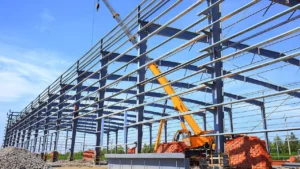
In steel structures, for example, design choices can affect maintenance frequency, durability, and future expansion capability. A structure that is easier to maintain may reduce lifecycle cost even if it requires a higher initial investment.
Similarly, equipment selection can influence energy consumption and downtime. Choosing systems that perform reliably under real operating conditions helps reduce unexpected costs.
Because of these factors, total cost of ownership is widely used in industrial planning to evaluate long-term value rather than short-term savings.
Why TCO Is Now a Standard in B2B Procurement
Over time, TCO has become a standard approach in B2B procurement because it supports better decision-making. Instead of focusing only on price, companies evaluate how each option performs over its lifecycle.
This approach reduces risk by identifying hidden costs early. It also improves transparency, because decisions are based on structured data rather than assumptions.
For companies managing large investments, using total cost of ownership helps align financial, technical, and operational priorities. The result is a more balanced decision that supports long-term performance.
As facilities become more complex and competitive pressure increases, lifecycle thinking is likely to remain an essential part of procurement strategy. Organizations that understand and apply TCO effectively are better positioned to manage cost, improve efficiency, and achieve sustainable growth.