Industrial Ventilation Planning: Louvers, Ridge Vents, and Airflow
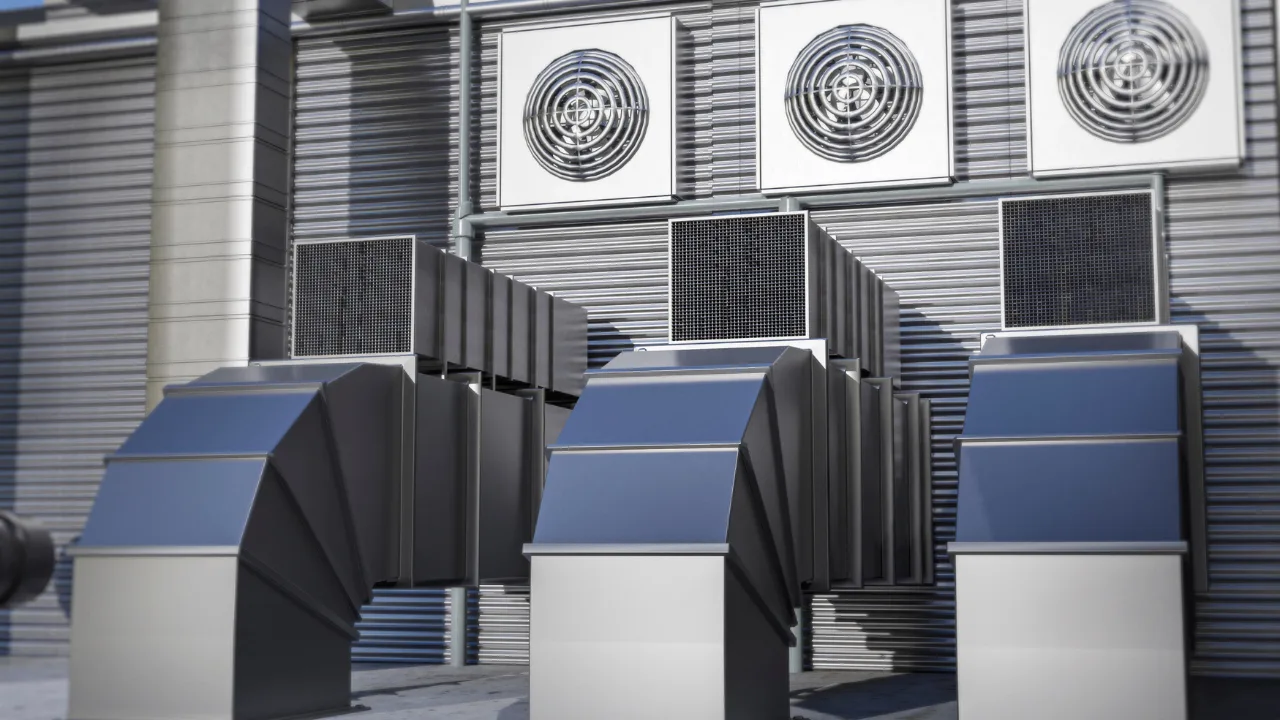
Industrial ventilation design is one of the most important factors in factory and warehouse construction. Large industrial buildings generate heat, dust, fumes, and humidity that must be controlled to keep the environment safe and efficient. Without proper ventilation, indoor temperature can rise quickly, equipment may overheat, and working conditions can become uncomfortable or even dangerous. Because of this, ventilation planning should always be part of the building design stage, not something added after construction.
Unlike residential buildings, factories often have large open spaces, high roofs, and heavy machinery that produce continuous heat. Air must move correctly from intake to exhaust, otherwise hot air becomes trapped near the roof while fresh air never reaches the working area. A good industrial ventilation design considers airflow direction, vent placement, and the balance between air entering and leaving the building.
Why Industrial Ventilation Design Matters
The main purpose of industrial ventilation design is to control temperature, remove contaminants, and maintain stable air circulation inside the building. In industrial facilities, ventilation is not only about comfort. It directly affects safety, productivity, and equipment performance.
Factories often produce heat from multiple sources. Machines, welding processes, furnaces, lighting systems, and even the sun can raise the temperature inside the building. If hot air cannot escape, the indoor environment becomes difficult to work in, especially in large steel structure buildings where heat can accumulate under the roof.
Humidity is another concern. When warm air meets cooler surfaces, condensation may appear. Over time, this can cause corrosion, damage insulation, and reduce the lifespan of the structure. Proper airflow helps keep moisture levels under control.
Air quality also depends on ventilation. Dust, smoke, and chemical fumes must be removed quickly to protect workers and maintain safe operating conditions. Without planned airflow, these particles remain inside the building and spread to other areas.
Because of these factors, industrial ventilation design should always be coordinated with structural design, roof layout, and equipment arrangement.
Common Problems Caused by Poor Ventilation
When ventilation is not planned correctly, industrial buildings often experience overheating, poor air circulation, and uncomfortable working conditions. These problems can reduce efficiency and increase maintenance costs.
One of the most common issues is excessive indoor temperature. Heat rises naturally, so in large buildings it accumulates near the roof. Without proper exhaust openings, this hot air stays trapped and gradually raises the temperature of the entire space. This makes heat reduction difficult even when the outside weather is not extreme.
Condensation is another problem, especially in humid environments. When airflow is weak, moisture cannot escape and collects on steel surfaces. Over time, this may lead to rust, mold, or damage to electrical systems.
Worker safety can also be affected. Poor air movement allows dust and fumes to remain in the breathing zone. In some industries, this can create serious health risks.
Typical signs of poor ventilation include:
- High temperature near the roof
- Stale air inside the building
- Condensation on steel members
- Frequent overheating of machines
- Strong odors or smoke staying indoors
These problems usually appear when the building has insufficient air intake, poor exhaust layout, or incorrect vent placement.
Basic Principles of Airflow Planning in Industrial Buildings
Good ventilation starts with proper airflow planning. Air must enter the building at one point and leave at another, creating continuous movement. If intake and exhaust are not balanced, air may circulate only in one area while other zones remain hot and stagnant.
There are two main types of ventilation used in industrial buildings: natural ventilation and mechanical ventilation. Natural ventilation uses wind and temperature difference to move air, while mechanical ventilation uses fans or blowers. In many cases, both methods are combined.
Air intake openings are usually placed on the side walls, while exhaust openings are located near the roof. This follows the natural movement of hot air, which rises to the highest point of the building. When the design is correct, cooler air enters from below and pushes warm air out from the top.
Pressure difference is another important concept. When air leaves the building through roof vents, new air must enter from outside to replace it. If there are not enough intake openings, airflow becomes weak and ventilation efficiency drops.
Because of this, proper airflow planning always considers building height, width, wind direction, and internal heat load.
Louvers: Controlling Air Intake the Right Way
Louvers are one of the most common components used in industrial ventilation design. They are installed on walls or roofs to allow air to enter the building while protecting the interior from rain and debris. Correct louver placement is essential for balanced airflow.
Wall louvers are usually located at lower levels so that fresh air can enter the working area. When hot air rises and escapes through roof vents, these openings supply the replacement air needed to maintain circulation.
Different types of louvers are used depending on the environment:
- Fixed louvers for constant airflow
- Adjustable louvers for controlled ventilation
- Weatherproof louvers for outdoor exposure
- Large wall louvers for high airflow demand
Position and size must be calculated carefully. If the intake area is too small, airflow will not be strong enough. If it is too large, wind and rain may enter the building. Proper balance between intake and exhaust is the key to effective ventilation.
Ridge Ventilator Systems and Why They Work
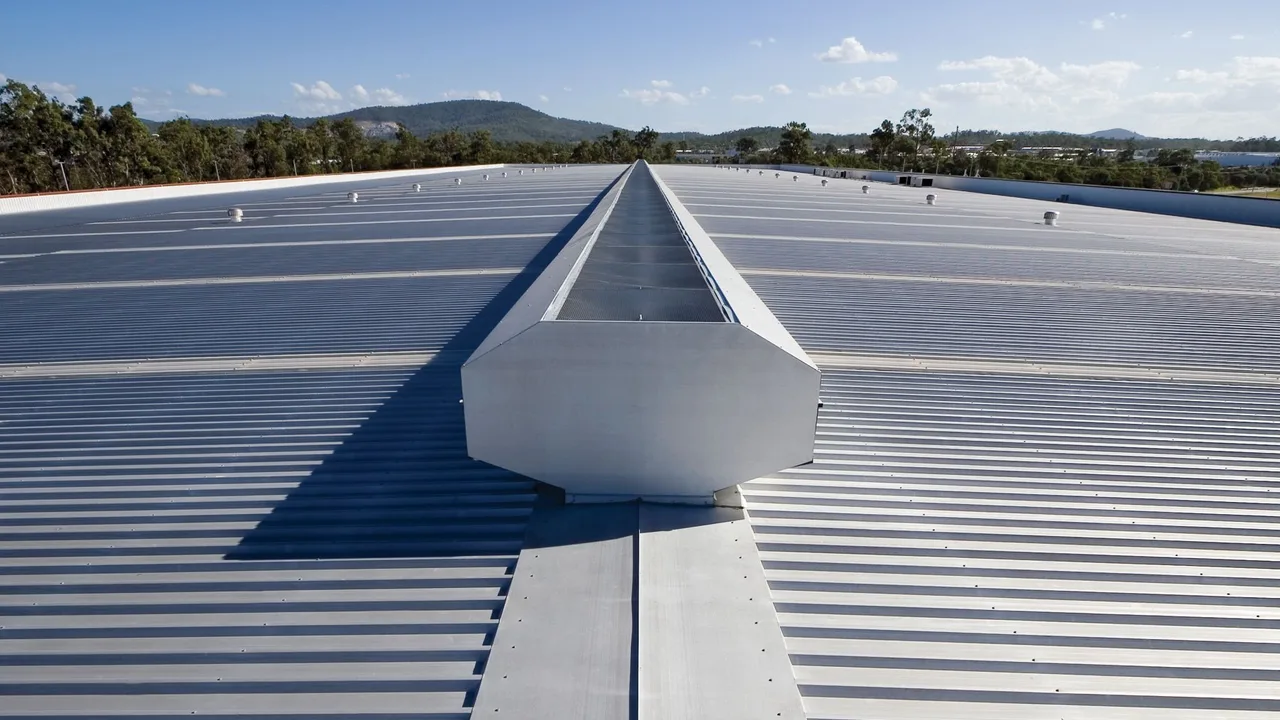
A ridge ventilator is one of the most efficient ways to remove hot air from large industrial buildings. It is installed along the highest point of the roof, allowing warm air to escape naturally. Because heat rises, the ridge is the best location for exhaust openings.
Continuous ridge ventilators are often used in factories and warehouses with long-span roofs. Instead of using small individual vents, a continuous opening runs along the roof ridge, creating steady airflow across the entire building.
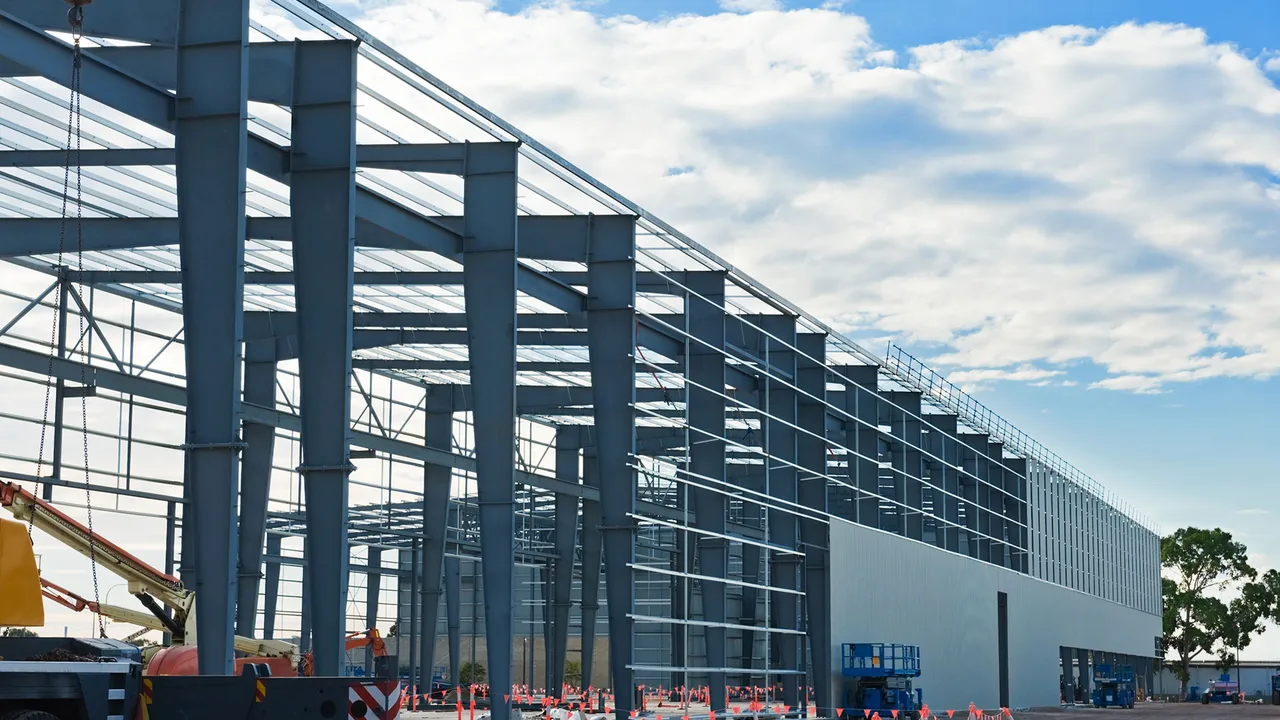
This system works well in steel structure buildings where the roof height is large and heat tends to collect at the top. When combined with wall louvers, ridge vents create a natural airflow path from the sides of the building to the roof.
Compared with mechanical ventilation, ridge systems require less energy because they use natural air movement. This makes them a popular choice for industrial projects where long-term operating cost is important.
Designing for Heat Reduction in Large Industrial Buildings
One of the main goals of industrial ventilation design is effective heat reduction. Large factories generate heat from many sources, and without proper planning the temperature inside the building can become much higher than outside. This not only affects workers but can also reduce the performance and lifespan of equipment.
Heat in industrial buildings usually comes from three main sources. The first is solar radiation. Roof surfaces receive direct sunlight for many hours each day, and metal roofs can transfer this heat into the building quickly if insulation and ventilation are not designed correctly.
The second source is machinery. Production lines, welding equipment, furnaces, and motors release heat continuously during operation. In facilities that run all day, the heat load can become very high.
The third source is indoor air accumulation. When warm air cannot escape, it stays near the roof and gradually raises the temperature of the entire space. This is why ventilation and insulation must work together.
Good heat reduction planning often includes:
- Roof insulation to reduce solar heat
- Ridge ventilators to release hot air
- Wall louvers for fresh air intake
- High roof height to allow heat to rise
- Proper building orientation to use natural wind
When these elements are combined, the indoor temperature can be reduced significantly without using large mechanical cooling systems.
Natural Ventilation vs Mechanical Ventilation
Choosing between natural and mechanical systems is an important decision in industrial ventilation design. Each method has advantages depending on the size of the building, the type of production, and the local climate.
Natural ventilation uses wind and temperature difference to move air through the building. Louvers, ridge vents, and roof openings allow hot air to escape while cooler air enters from outside. This method is simple, energy efficient, and requires little maintenance.
Mechanical ventilation uses fans or blowers to control airflow. This is necessary when natural airflow is not strong enough, such as in very wide buildings or facilities with heavy smoke and fumes. Mechanical systems can provide more precise control, but they also increase operating cost.
In many factories, the best solution is a combination of both. Natural ventilation removes most of the heat, while mechanical fans are used only when needed. This approach reduces energy consumption and keeps the system reliable.
Engineering guidelines for industrial air systems often recommend balancing intake and exhaust areas to maintain proper airflow. Technical references on building ventilation, such as those discussed by organizations like ASHRAE, emphasize that correct airflow balance is more important than simply adding more fans.
Layout Factors That Affect Industrial Ventilation Design
The layout of the building has a strong influence on industrial ventilation design. Even with good equipment, airflow will not work properly if the structure itself blocks air movement. For this reason, ventilation planning must be coordinated with architectural and structural design.
Building width is one of the most important factors. Very wide buildings may require additional roof vents or mechanical assistance because air cannot travel long distances easily. Narrow buildings are easier to ventilate naturally.
Roof height also affects airflow. Higher roofs allow hot air to rise above the working area, which improves comfort and safety. In industrial buildings with overhead cranes, the roof must be high enough to allow both equipment operation and proper ventilation.
Roof slope can help guide hot air toward the ridge ventilator. Steeper slopes make it easier for warm air to move upward, improving natural exhaust performance.
Wall openings must be placed carefully. Intake louvers should not be blocked by storage, machinery, or internal walls. If fresh air cannot reach the center of the building, ventilation becomes uneven.
Wind direction is another factor that should not be ignored. Buildings designed with the prevailing wind in mind can achieve better airflow without increasing cost.
Mistakes in Industrial Ventilation Planning
Many ventilation problems come from design mistakes made early in the project. Once the building is finished, correcting these errors can be expensive and difficult. Careful planning at the beginning is the best way to avoid long-term issues.
A common mistake is installing too few vents. Designers sometimes underestimate the amount of heat produced inside the building, especially in factories with heavy machinery. When the exhaust area is too small, hot air cannot leave fast enough.
Incorrect vent location is another problem. If ridge vents are not placed at the highest point, hot air will remain trapped. If louvers are too high, fresh air will not reach the working level.
Some projects rely only on fans without providing enough intake openings. Fans cannot move air effectively if there is no path for air to enter the building. Balanced airflow is always required.
Ignoring airflow direction inside the building can also cause trouble. Storage racks, partitions, or large machines may block air movement, creating hot zones in certain areas.
Another mistake is designing ventilation without calculating heat load. Every factory produces a different amount of heat, so the system must be sized according to real conditions, not only building size.
Better Ventilation Means Better Factory Performance
Good industrial ventilation design improves more than temperature control. It affects productivity, equipment life, and overall operating cost. When airflow is correct, workers feel more comfortable and can maintain better concentration. This leads to fewer errors and higher efficiency.
Equipment also benefits from proper ventilation. Motors, control panels, and production machines last longer when they operate in stable temperatures. Overheating can shorten the lifespan of many components, increasing maintenance cost.
Energy savings are another advantage. Natural ventilation systems with louvers and ridge ventilators reduce the need for air conditioning or large fans. This lowers electricity consumption and keeps operating cost predictable.
Safety is improved as well. Removing dust, fumes, and excess heat creates a healthier environment for workers. In some industries, proper airflow is required to meet safety regulations.
For these reasons, ventilation should never be treated as a secondary feature. A well-planned system with correct airflow planning, properly sized louvers, and an efficient ridge ventilator can make a major difference in the performance of any industrial building.