Automation Roadmaps: Sequencing Upgrades Without Disruption
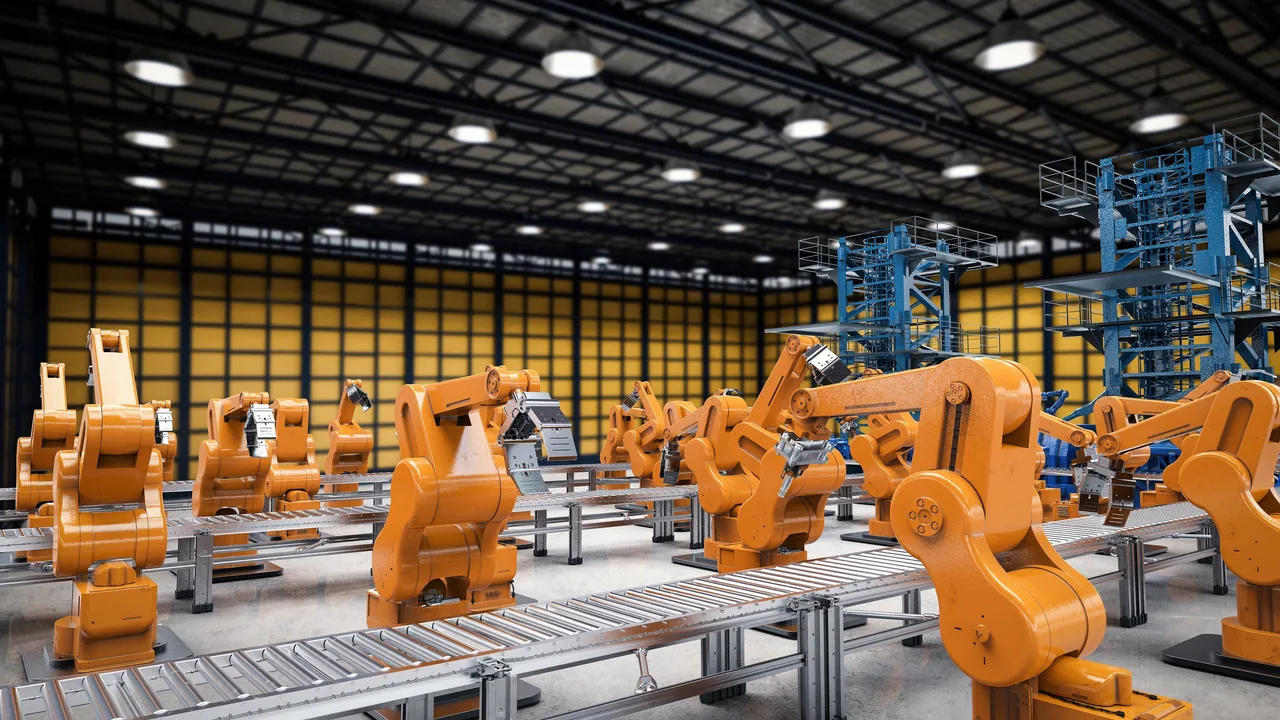
Factory automation is no longer optional. Rising labor costs, supply chain volatility, and competitive pressure have pushed manufacturers to modernize their operations. Yet many automation initiatives fail—not because the technology is flawed, but because the sequencing is wrong. Companies often rush into robotics or AI-driven systems without a structured automation roadmap for factories, creating disruption instead of efficiency.
Instead of pursuing dramatic “big-bang” transformations, successful manufacturers build phased strategies that prioritize return on investment, minimize downtime, and manage organizational change carefully. Automation is not a single project—it is a long-term evolution. This article explores how to design an automation roadmap that aligns upgrades with operational stability and financial discipline.
What Is an Automation Roadmap for Factories?
An automation roadmap for factories is a strategic framework that sequences technology investments over time. It defines what to automate, when to automate it, and how to integrate each upgrade without disrupting production. Unlike isolated automation projects—which focus on a single machine or process—a roadmap connects all initiatives to broader business objectives.
At its core, an automation roadmap typically includes five components:
- Baseline assessment: Understanding current performance, bottlenecks, and manual processes.
- ROI prioritization: Ranking automation opportunities by financial return and operational impact.
- Phased upgrades: Implementing automation in structured stages rather than all at once.
- Change management: Preparing teams for operational shifts and skill upgrades.
- KPI tracking: Measuring productivity, cost savings, and system performance over time.
This structured approach ensures that automation supports business growth rather than destabilizing workflows. Without a roadmap, companies risk investing heavily in equipment that does not integrate well or generate measurable value.
Step 1: Assess the Current State Before Upgrading
Before investing in robotics or smart machines, factories must understand their current operational baseline. Many organizations skip this step and jump directly to purchasing technology. However, effective automation begins with data—not hardware.
A thorough assessment should examine:
- Production bottlenecks and throughput constraints
- Machine downtime frequency and root causes
- Manual intervention rates in critical processes
- Labor-intensive steps that reduce scalability
- Data visibility gaps across departments
Tools such as value stream mapping and lean manufacturing audits help identify inefficiencies. For example, a plant may discover that packaging—not machining—is the true bottleneck. Automating the wrong stage first would yield limited returns.
By quantifying inefficiencies, management can identify areas where automation provides immediate impact. This baseline forms the foundation of any credible automation roadmap for factories.
Step 2: ROI Prioritization — Invest Where It Pays First
Automation budgets are rarely unlimited. Therefore, ROI prioritization is essential. Instead of asking “What can we automate?”, companies should ask “What should we automate first?”
Consider a simplified comparison:
| Upgrade Area | Investment Level | Estimated ROI Period | Operational Risk |
|---|---|---|---|
| Automated Packaging Line | Medium | 12–18 months | Low |
| ERP System Integration | Medium | 18–24 months | Medium |
| Full Robotics Assembly | High | 30–36 months | High |
Quick-win upgrades—those with short ROI cycles and lower risk—often generate internal confidence and fund later, more ambitious phases. This staged approach strengthens financial resilience while maintaining production continuity.
ROI calculations should include not only direct labor savings but also improvements in throughput, quality consistency, scrap reduction, and energy efficiency. A data-backed prioritization process ensures that every phase of the automation roadmap for factories delivers measurable gains.
Step 3: Phased Upgrades Instead of Big-Bang Transformation
Large-scale, simultaneous automation upgrades often create operational shock. Machines may be incompatible, teams may lack training, and production targets may suffer during transition periods. That’s why phased upgrades are safer and more sustainable.
A typical phased automation strategy might look like this:
- Phase 1: Improve data visibility with sensors and real-time monitoring dashboards.
- Phase 2: Automate repetitive manual tasks with programmable machinery or collaborative robots.
- Phase 3: Integrate advanced robotics, predictive maintenance, and AI-driven optimization.
This sequencing reduces disruption while building organizational capability step by step. Each phase prepares the factory for the next level of automation. For example, without reliable production data from Phase 1, advanced AI optimization in Phase 3 may produce inaccurate results.
Phased upgrades also protect cash flow. Instead of committing capital to a massive overhaul, management can evaluate performance after each stage before proceeding further. This flexibility is one of the defining strengths of a well-structured automation roadmap for factories.
Managing Disruption: The Role of Change Management
Technology rarely fails on technical grounds alone. More often, automation projects struggle because of human resistance or insufficient training. Change management is therefore a central pillar of successful factory modernization.
Operators may fear job displacement, while supervisors may resist process transparency. Addressing these concerns requires clear communication and structured training programs. Companies that embed change management within their automation roadmap tend to experience smoother transitions and higher adoption rates.
Effective change management strategies include:
- Transparent communication about the purpose of automation
- Pilot programs before full-scale implementation
- Upskilling initiatives to transition employees into technical roles
- Leadership alignment to reinforce long-term vision
Automation should enhance human capability—not replace it entirely. When employees understand that new systems improve safety, reduce repetitive strain, and create technical career opportunities, resistance declines significantly.
As highlighted in global Industry 4.0 research by organizations such as the World Economic Forum, successful digital transformation depends as much on people strategy as on technology investment. This reinforces why change management must be embedded directly within any comprehensive automation roadmap.

Technology Stack Alignment: From ERP to Smart Machines
Automation does not happen in isolation. A robotic arm on the production floor delivers limited value if it cannot communicate with planning systems, inventory databases, or quality control software. For this reason, technology stack alignment is a critical component of any automation roadmap for factories.
Modern factories typically operate across multiple digital layers:
- ERP (Enterprise Resource Planning): Manages orders, procurement, and financial tracking.
- MES (Manufacturing Execution Systems): Controls production scheduling and monitors shop-floor performance.
- IoT Sensors: Provide real-time equipment and performance data.
- Smart Machines and Robotics: Execute automated tasks with precision and repeatability.
When these systems operate independently, data silos emerge. A well-designed automation roadmap for factories ensures interoperability—allowing machines to receive instructions from ERP systems, report performance metrics to MES dashboards, and feed data into predictive maintenance tools.
For example, if ERP detects a surge in customer orders, MES can adjust scheduling dynamically while automated production lines increase throughput accordingly. This synchronized workflow reduces human intervention and enhances agility.
Without integration, automation may create fragmented workflows rather than streamlined operations. Sequencing upgrades to prioritize system connectivity early in the roadmap often prevents costly rework later.
Building a 3–5 Year Automation Roadmap
An effective automation roadmap for factories typically spans three to five years. This time horizon balances ambition with realism, allowing organizations to align capital planning, workforce development, and operational continuity.
A simplified roadmap may look like this:
Year 1: Digital Visibility and Data Foundation
- Install sensors and monitoring systems.
- Implement centralized dashboards.
- Integrate ERP with production reporting.
This phase focuses on transparency. Without accurate data, ROI prioritization and phased upgrades lack direction.
Year 2: Process Automation and Semi-Autonomous Systems
- Automate repetitive manual operations.
- Deploy collaborative robots (cobots).
- Standardize workflows to reduce variability.
These phased upgrades increase productivity while limiting operational shock.
Year 3–5: Advanced Optimization and Intelligent Systems
- Introduce AI-driven predictive maintenance.
- Expand robotics to complex assembly lines.
- Leverage analytics for continuous improvement.
At this stage, automation evolves from mechanization to intelligence. Decision-making becomes increasingly data-driven, and performance metrics improve systematically.
Common Mistakes in Factory Automation
Despite the growing maturity of industrial technologies, many automation efforts still fall short. Common pitfalls include:
- Over-automation without demand alignment: Installing advanced robotics in low-volume facilities may delay ROI.
- Ignoring ROI prioritization: Investing heavily in prestige projects rather than high-impact upgrades.
- Skipping phased upgrades: Attempting simultaneous transformation that overwhelms teams.
- Lack of change management: Failing to prepare employees for operational shifts.
- No structured automation roadmap for factories: Treating automation as a collection of isolated initiatives.
Each of these errors increases the likelihood of disruption and financial strain. Conversely, disciplined sequencing and strategic oversight build long-term resilience.
Case Simulation: A Mid-Sized Factory Transformation
Consider a mid-sized manufacturing plant with 200 employees and annual revenue of $50 million. The factory struggles with inconsistent throughput, high labor costs in packaging, and frequent machine downtime.
Management decides to implement a structured automation roadmap for factories over three years.
| Metric | Before Automation | After 3 Years |
|---|---|---|
| Overall Equipment Effectiveness (OEE) | 62% | 78% |
| Labor Cost per Unit | $4.80 | $3.60 |
| Unplanned Downtime | 12% | 6% |
| Operating Margin | 11% | 17% |
Year 1 focused on data visibility and predictive maintenance tools. Year 2 introduced automated packaging lines with quick ROI prioritization. Year 3 expanded robotics and integrated MES analytics. By sequencing these phased upgrades, the company avoided major production interruptions while steadily improving profitability.
This example demonstrates how structured planning transforms automation from a risky overhaul into a controlled evolution.
Automation as Strategy, Not Reaction
Automation should never be a reactive response to market pressure. Instead, it must function as a deliberate, long-term strategy. A carefully designed automation roadmap for factories aligns investments with business objectives, sequences upgrades responsibly, and embeds change management into every stage.
By prioritizing ROI, adopting phased upgrades, and ensuring technology stack integration, manufacturers can modernize without disruption. The result is not only higher productivity but also stronger organizational adaptability.
In an era defined by rapid technological advancement, factories that plan their transformation thoughtfully will outperform those that automate impulsively. Sequencing matters more than speed. With a disciplined automation roadmap, factories move forward confidently—turning modernization into measurable advantage rather than operational risk.