Industrial Mezzanines: Load Ratings, Columns, and Future Expansion
Modern factories and warehouses face one constant challenge: space. As production grows, companies often need more floor area without expanding the building footprint. That’s where industrial mezzanines come in — structural platforms that create an additional level within existing facilities. Yet behind their convenience lies a critical engineering question: what is the correct industrial mezzanine load rating and how can it ensure long-term performance?
This article explores how mezzanine load ratings, column grids, and expansion-ready designs define both safety and flexibility in industrial facilities. Whether used for storage, offices, or production areas, a properly designed mezzanine maximizes space while maintaining the same strength and durability expected of a steel building structure.
What Is an Industrial Mezzanine?
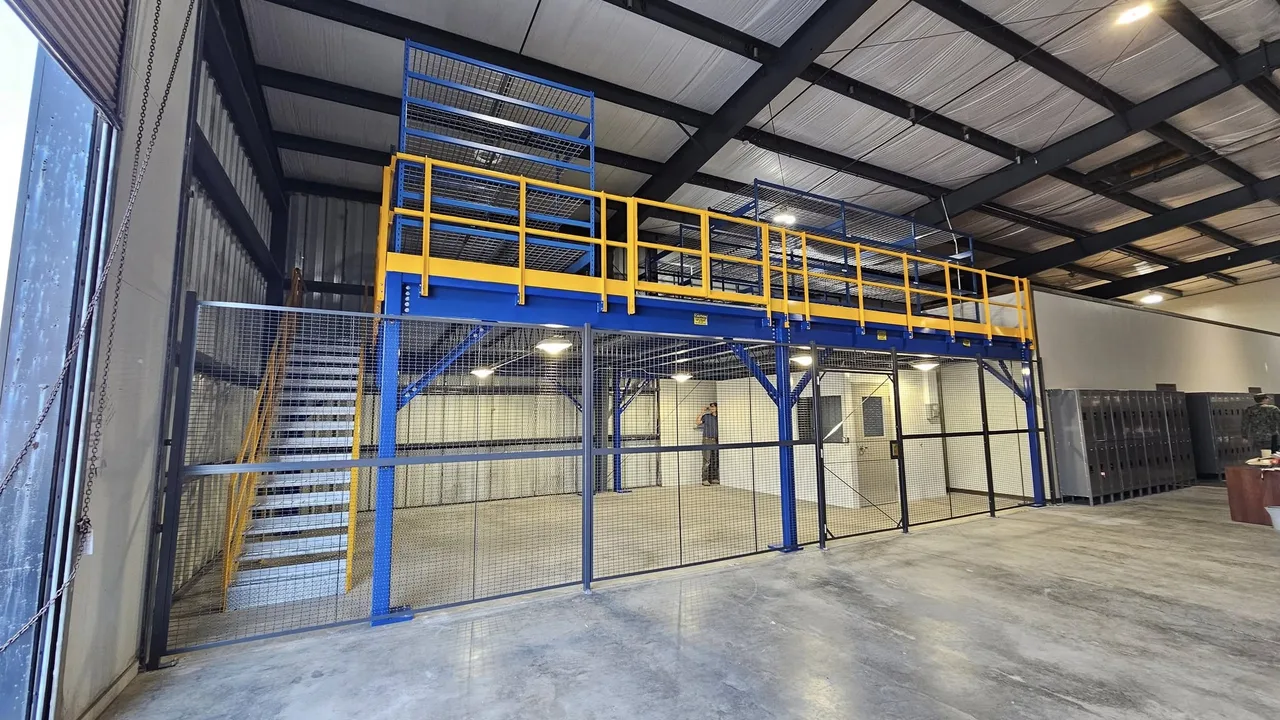
An industrial mezzanine is an intermediate floor constructed within a building, designed to expand usable space vertically. Unlike office mezzanines or light-duty platforms, industrial types support heavy loads such as palletized goods, machinery, or conveyor systems. They’re often built using prefabricated steel beams, decking, and columns, allowing modular installation and modification.
There are several categories of mezzanines based on structural integration:
- Structural steel mezzanines: Free-standing and designed as independent frameworks that carry their own loads.
- Rack-supported mezzanines: Integrated into pallet racking systems, often used in logistics centers.
- Shelving-supported mezzanines: Common in warehouses with high-volume inventory and smaller load demands.
Each type offers different load capacities and installation flexibility. The selection depends largely on how the mezzanine will be used — for storage, assembly, or workflow separation — and how much live and dead load the structure must carry.
Understanding Industrial Mezzanine Load Rating
The industrial mezzanine load rating defines how much weight the mezzanine can safely support per square meter (or per square foot). Engineers calculate it based on material strength, beam span, column spacing, and expected usage. The rating determines not only structural safety but also compliance with building regulations and insurance requirements.
Typical factors influencing load rating include:
- Uniform live load (ULL): The evenly distributed weight from equipment, workers, or stored goods.
- Concentrated loads: Heavy objects like pallet jacks, forklifts, or machinery placed on specific points.
- Dead loads: The self-weight of the mezzanine, including beams, decking, and finishes.
- Dynamic forces: Movement-related impacts from conveyors, lifting operations, or vibration.
Load ratings vary depending on intended use:
| Application | Typical Load Rating | Equivalent Unit |
|---|---|---|
| Light-duty (office or inspection) | 250–350 kg/m² | ≈ 50–70 psf |
| Medium-duty (assembly or storage) | 400–600 kg/m² | ≈ 80–120 psf |
| Heavy-duty (pallet racking or production) | 750–1,000+ kg/m² | ≈ 150–200+ psf |
These ratings are not arbitrary; they must be verified through structural analysis. A mezzanine that’s too light for its purpose risks excessive deflection or collapse under load, while over-designing can result in unnecessary cost.
Calculating Floor Loading for Industrial Mezzanines
Accurate load calculation is essential before fabrication begins. Engineers use formulas that account for total applied weight divided by area, expressed as:
Load (kN/m²) = Total Weight (kN) / Floor Area (m²)
For example, if a mezzanine measures 10 × 20 meters and holds 80 pallets each weighing 400 kg, the total live load equals 32,000 kg. Dividing that by 200 m² results in a uniform load of 160 kg/m². However, engineers apply safety factors — typically 1.5 to 2.0 — to account for uneven distribution and dynamic activity, bringing the design rating closer to 300–350 kg/m².
Loads are divided into two main categories:
- Dead load: Constant weight from the structure itself (steel members, flooring, guardrails).
- Live load: Variable weight from occupancy, inventory, or machinery.
Understanding this distinction is vital because live loads fluctuate over time, while dead loads remain constant. Local building codes such as EN 1991 (Europe) or ASCE 7 (U.S.) specify minimum required values for both types of loads depending on usage type.
The Role of Column Grid and Spacing
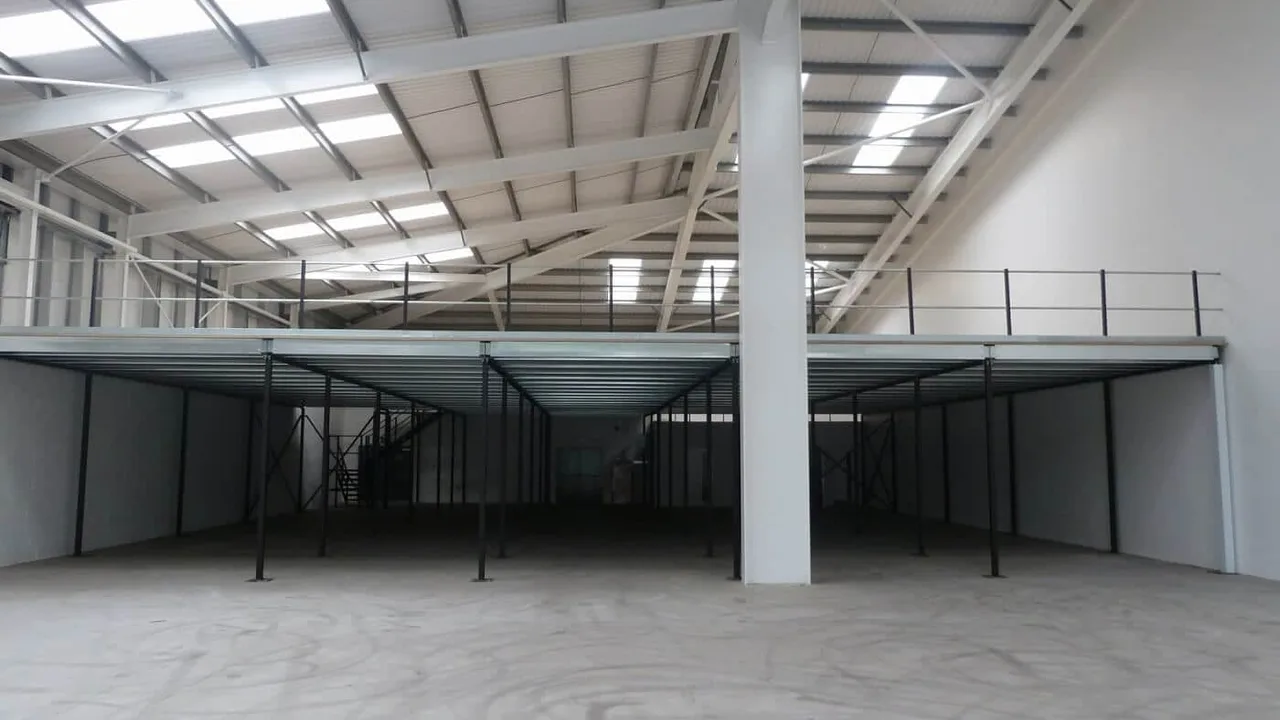
Column layout is one of the most underestimated yet important aspects of mezzanine design. The column grid directly affects both load distribution and usable floor space below the platform. Engineers aim for an efficient balance: too many columns reduce operational space, while too few increase beam spans and material costs.
Typical column grid layouts include 4 × 4 m, 5 × 5 m, and 6 × 6 m configurations. The optimal spacing depends on the desired load rating and the available steel section sizes. Here’s a general comparison:
| Column Grid | Typical Beam Size | Load Rating Capacity | Efficiency |
|---|---|---|---|
| 4 × 4 m | H-Beam 250 mm | 1,000 kg/m² | High load, limited space below |
| 5 × 5 m | H-Beam 300 mm | 750 kg/m² | Balanced for most warehouses |
| 6 × 6 m | H-Beam 350 mm | 600 kg/m² | Maximum clearance, higher material cost |
A well-planned column grid can dramatically improve the building’s functionality. For example, aligning mezzanine columns directly above ground-floor columns simplifies load transfer, while offset grids may require larger beams or bracing to maintain stability. The design choice ultimately depends on workflow priorities — whether maximizing open space or minimizing steel tonnage.
Designing for Expansion: Future-Ready Mezzanine Systems
One of the smartest decisions in mezzanine planning is preparing for future expansion. Many facilities outgrow their mezzanines within a few years, especially as production lines or storage demands increase. Building with an expansion-ready design means anticipating those needs without major structural modification later.
Expansion-ready mezzanines use modular bolted connections instead of welding. Columns and beams feature pre-drilled flanges or sleeves that allow new bays to be added laterally or vertically. This flexibility minimizes downtime and eliminates the need for full re-certification of the existing structure.
Another advantage is scalability — companies can expand section by section, aligning with budget cycles or operational growth. For example, a logistics center may start with a 200 m² mezzanine and later double the space by adding prefabricated modules that bolt directly to the original frame.
Integration with steel building structure systems ensures the mezzanine remains compatible with existing columns and load paths. That means easier alignment, consistent load distribution, and predictable performance as the facility expands.
Safety and Compliance: Meeting Industrial Standards
Safety regulations play a central role in designing and maintaining mezzanine structures. Every industrial mezzanine load rating must comply with local building codes and occupational safety standards such as OSHA (United States), EN 1993 (Europe), or GB 50017 (China). These codes specify minimum loading requirements, deflection limits, and guardrail or stairway configurations to ensure personnel protection.
Proper signage of load limits is mandatory in many regions. A clearly visible plate should display the maximum load capacity in kilograms or pounds per square meter. This prevents operators from exceeding the design limits, particularly in high-traffic environments like warehouses or production floors. Regular inspection and maintenance are equally vital, ensuring that fasteners, beams, and decking remain free of corrosion or fatigue.
Another key safety factor is vibration control. Heavy machinery and moving equipment can generate cyclic stress over time. Engineers often include cross-bracing or additional joists to minimize resonance and prevent long-term structural fatigue. This engineering attention ensures that mezzanines perform reliably for decades with minimal maintenance costs.
Integration with Existing Facilities
Integrating a mezzanine into an existing industrial building can be complex. The structure below must be capable of supporting additional loads, and the new mezzanine needs sufficient headroom and clearance for movement beneath. Many companies retrofit mezzanines into older factories without disrupting operations, but this requires careful coordination among structural engineers, architects, and project managers.
Before installation, engineers evaluate the building’s foundation and load-bearing columns to verify they can handle the added vertical forces. If not, reinforcement such as additional footings or base plates may be required. Utilities—like lighting, sprinkler systems, or HVAC ducts—must also be rerouted around the new platform to maintain safety compliance. These logistical challenges highlight why detailed site assessment is critical before fabrication begins.
In multi-shift operations, modular mezzanine systems allow partial installation during off-hours, keeping production running with minimal downtime. The flexibility of prefabricated steel members makes it possible to assemble entire mezzanine sections over a weekend, immediately restoring operational flow on Monday morning.
Cost Considerations and ROI of Mezzanine Projects
Cost is a decisive factor for most facility owners considering mezzanine construction. The total price depends on size, load rating, material grade, and complexity of column grids. Typically, steel mezzanines range between $150–$300 per square meter for standard configurations, with heavier designs or special finishes commanding higher costs.
While stronger beams and wider column spacing increase the budget, they also improve functionality and reduce long-term congestion on the factory floor. For example, a mezzanine rated at 1,000 kg/m² can accommodate palletized storage and heavy machinery, creating new production zones that would otherwise require new construction.
From an investment perspective, the return on investment (ROI) of mezzanine projects is significant. By adding usable area without extending the building, companies save land, permitting, and construction time. The ROI period typically ranges from 18 to 36 months, depending on productivity gains and rental cost savings. Furthermore, modular mezzanines can be relocated or expanded as operations evolve, extending their service life far beyond initial payback.
Conclusion: Building Smarter Industrial Spaces
Designing a mezzanine involves far more than installing an extra floor—it’s a technical balance of strength, functionality, and foresight. Understanding industrial mezzanine load rating is central to ensuring that every square meter of elevated space is safe, efficient, and ready for future growth. Choosing the right column grid, planning for expansion, and following regulatory standards guarantee a structure that grows with the business.
In today’s industrial landscape, efficiency means vertical thinking. A well-designed mezzanine transforms unused airspace into productive area without expanding outward. Whether for storage, manufacturing, or logistics, it remains one of the most cost-effective ways to scale operations intelligently. With proper engineering and foresight, every mezzanine can become a foundation for tomorrow’s productivity.