When Your Site Is Soft Soil: Foundation Strategies for Steel Buildings
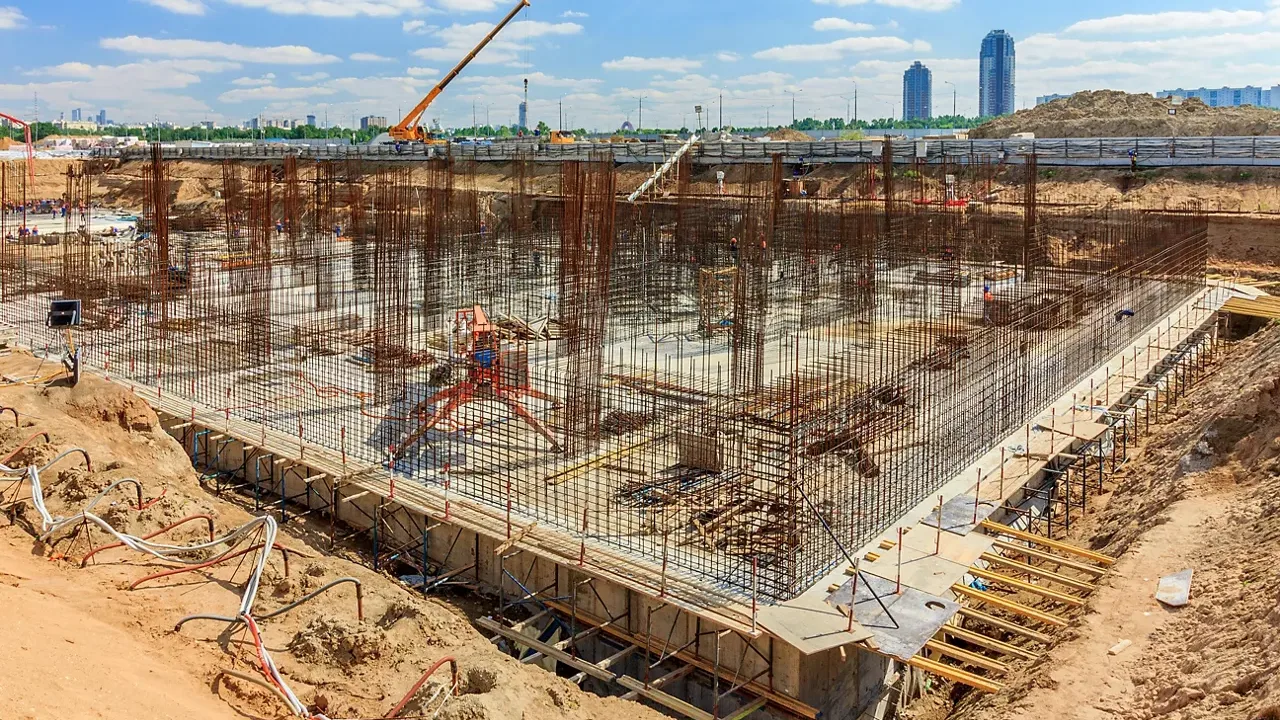
Before any steel column rises into the sky, the ground beneath it decides the project’s fate. Many structural failures or costly retrofits occur not because of poor design above ground, but because the foundation was mismatched to the site’s soil conditions. In particular, soft or compressible soils—such as clay, silt, or peat—pose unique challenges to stability and longevity. To build safely and efficiently, engineers must master the science of designing the right foundation for steel buildings on soft soil.
Unlike concrete or masonry structures, steel buildings concentrate heavy loads on relatively small column bases. On firm ground, these loads are easily distributed. But on soft soil, differential settlement or bearing failure can distort frames, misalign crane rails, or even cause structural cracking. The solution lies in combining precise geotechnical understanding with appropriate foundation strategies—an approach that transforms unstable land into a safe platform for industrial growth.
Understanding the Behavior of Soft Soils
Soft soils are characterized by low shear strength, high compressibility, and significant moisture content. Common examples include marine clay, organic silt, and peat. When loaded, these soils compress and expel water slowly, leading to settlement over time. This phenomenon is critical in steel structures, where even small differential movements can misalign connections or distort frames.
For engineers, the first step is to quantify the problem. Parameters such as the soil’s undrained shear strength, unit weight, and consolidation coefficient determine how it will behave under load. Poorly consolidated soils may continue to settle for years after construction, resulting in costly maintenance or operational disruptions. Understanding these parameters allows designers to choose between soil improvement and deep foundation systems.
In one industrial case, a warehouse built on reclaimed clay experienced 90 mm of differential settlement within a year, enough to jam sliding doors and misalign gantry crane rails. Post-analysis revealed that bearing capacity had been overestimated and water table effects ignored. Such cases reinforce why soil investigation and correct foundation design are non-negotiable.
Geotechnical Investigation: The First Line of Defense
Designing the right foundation for steel buildings on soft soil begins with a detailed geotechnical investigation. Site testing determines the nature, depth, and consistency of soil layers and groundwater levels. Common methods include the Standard Penetration Test (SPT) and the Cone Penetration Test (CPT), both of which provide data for calculating bearing capacity and expected settlement.
Results from these tests are compiled into a geotechnical report, which becomes the foundation of every structural decision. Engineers analyze key parameters such as:
- Allowable bearing pressure of each soil layer.
- Depth of compressible strata.
- Groundwater fluctuation and drainage conditions.
- Potential for lateral or slope instability.
A simplified sample of soil investigation data might look like this:
| Depth (m) | Soil Type | SPT (N value) | Allowable Bearing (kPa) |
|---|---|---|---|
| 0–2 | Soft clay | 4 | 70 |
| 2–5 | Silty clay | 8 | 100 |
| 5–10 | Dense sand | 25 | 250 |
From this, engineers can identify whether shallow improvement methods are viable or whether loads must be transferred to deeper, denser layers. Without such data, foundation design becomes a guessing game—an expensive one.
Foundation Design Principles for Steel Buildings
Steel buildings impose concentrated loads through column bases that connect directly to the foundation via base plates and anchor bolts. The main goal of any foundation system is to transfer these loads safely into the soil without excessive settlement or rotation. On soft soil, achieving this requires understanding both the structural and geotechnical interactions.
Three primary design factors govern performance:
- Load distribution: Spreading concentrated column loads across a larger area to reduce bearing pressure.
- Differential settlement control: Ensuring uniform stiffness between supports to prevent frame distortion.
- Uplift and lateral resistance: Providing stability against wind, crane loads, or seismic action.
In steel fabrication facilities, where cranes and heavy equipment cause dynamic loading, special attention must be given to vibration control and cyclic load resistance. Base plates often require thick reinforcement or grout leveling layers to ensure full contact with concrete footings.
Table: Typical foundation types and suitability on soft soil conditions.
| Foundation Type | Soil Condition | Advantages | Limitations |
|---|---|---|---|
| Spread Footing | Soft clay (after improvement) | Economical, easy to construct | Limited to moderate loads |
| Raft Foundation | Uniform soft deposits | Reduces differential settlement | Needs well-controlled soil improvement |
| Pile Foundation | Very weak surface strata | Transfers load to deeper layers | Costly and time-consuming |
Shallow Foundations: When Soft Soil Can Be Improved
In some cases, engineers can make shallow foundations viable by improving soil performance. Techniques like soil improvement modify weak layers to increase strength and stiffness. When done properly, it allows steel structures such as warehouses, hangars, or factories to use cost-effective raft or spread footings rather than deep piles.
Common soil improvement methods include:
- Preloading and surcharging: Applying temporary loads to compress soil before construction, accelerating settlement.
- Prefabricated Vertical Drains (PVD): Speeds up drainage of pore water to reduce consolidation time.
- Dynamic compaction: Using heavy tampers to densify granular soils.
- Stone columns: Installing compacted gravel columns to improve bearing capacity and drainage.
- Grouting or deep soil mixing: Injecting cementitious materials to create reinforced soil zones.
For light industrial steel buildings, a combination of vertical drains and controlled preloading is often the most cost-effective. The improved soil behaves like a semi-rigid layer, allowing the use of raft foundations that spread loads evenly. However, engineers must ensure proper monitoring during improvement to confirm design assumptions.
Pile Foundations: Transferring Loads to Deeper Strata
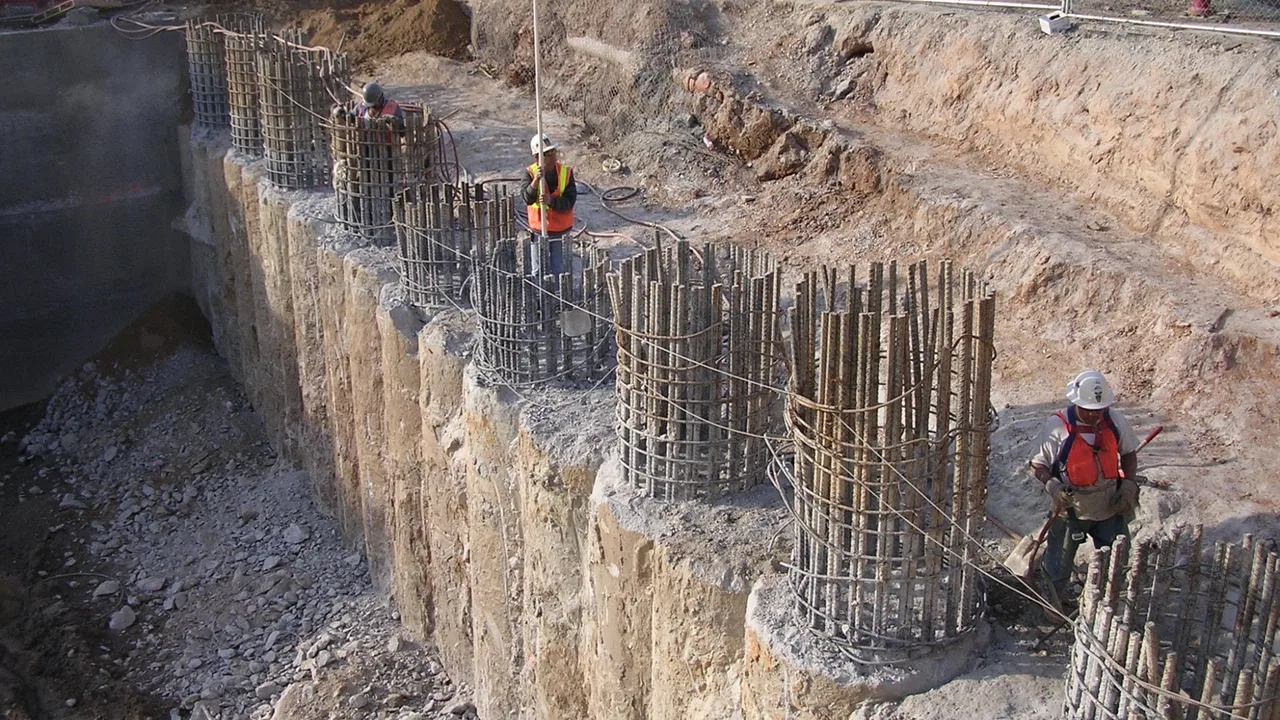
When surface improvement isn’t enough, deep foundations such as piles become essential. Pile foundations transfer loads from the superstructure through soft layers down to stronger strata below. The selection between driven, bored, or screw piles depends on soil characteristics, load intensity, and project economics.
Driven piles—such as precast concrete or steel H-piles—are commonly used in industrial steel structures because they can carry heavy concentrated loads and provide excellent settlement control. Bored piles are preferred when vibration from driving must be minimized. Screw piles offer quick installation for lighter frameworks or modular buildings.
The design must balance skin friction (load along the shaft) and end bearing (load at the tip). For example, in marine clays, most capacity comes from skin friction, while in sandy soils, end bearing dominates. Proper pile spacing and group efficiency considerations are critical to avoid overstressing soil between piles.
In many industrial projects handled by an experienced steel structure manufacturer, hybrid systems combining piles and rafts have proven especially effective. This pile–raft approach reduces total settlement while optimizing material usage, blending strength with economy.
Settlement Control Strategies
Even with strong foundations, soft soils remain dynamic and prone to long-term deformation. That’s why engineers emphasize settlement control—the process of predicting, managing, and minimizing vertical movements in the structure over time. Settlement can be categorized into three types: immediate, consolidation, and differential. Each must be addressed through specific design strategies.
Immediate settlement occurs as soon as the load is applied, mainly in sandy or non-cohesive soils. It’s usually small but can be significant for heavy steel columns. Consolidation settlement happens over months or years as pore water drains from cohesive soils, causing slow compression. The most dangerous type is differential settlement, where varying soil conditions or uneven loading cause different parts of the structure to move at different rates—resulting in cracks or misalignment.
Common settlement control measures include:
- Preloading: Applying a temporary surcharge load to accelerate soil compression before the actual structure is built.
- Hybrid pile–raft systems: Combining shallow raft foundations with piles to distribute loads and limit total settlement.
- Thicker raft bases: Increasing stiffness to bridge soft spots and distribute loads more evenly.
- Instrumentation and monitoring: Using settlement gauges, inclinometers, and piezometers to track movements during and after construction.
For large industrial facilities such as warehouses and manufacturing plants, long-term monitoring is crucial. Small settlements may seem harmless at first but can accumulate, especially where heavy machinery or cranes operate on precise alignments. Early detection through monitoring systems allows engineers to implement corrective grouting or re-leveling before major issues develop.
Special Considerations for Steel Industrial Structures
Steel industrial buildings are uniquely sensitive to foundation performance because of their light superstructure and concentrated column loads. Unlike reinforced concrete frames, which have more mass to resist deformation, steel structures transfer loads sharply at discrete points. As a result, foundation design must account for load eccentricity, vibration, and uplift.
When designing foundation for steel buildings on soft soil, engineers must also consider operational loads such as those from overhead cranes, moving vehicles, and mechanical vibrations. Pile caps and pedestals often require additional reinforcement and anchorage to resist cyclic loads. In areas with a high groundwater table, waterproofing and corrosion control become essential, especially around anchor bolts and base plates.
Portal frame structures and trussed roofs, common in warehouses and hangars, exert horizontal thrust at the column bases. This lateral action must be resisted through tie beams or rigid pile caps. Ignoring these interactions can cause unwanted horizontal movement, even if vertical settlement is under control.
Industrial engineers increasingly rely on integrated modeling software that couples structural and geotechnical design. These tools simulate soil–structure interaction in real time, optimizing pile layout and raft thickness simultaneously. The result: safer, more economical foundations tailored to real-world site behavior.
Case Study: Foundation Redesign for a Soft-Soil Factory Project
Consider a factory project built on reclaimed land with 6 meters of marine clay overlaying dense sand. The initial design used shallow raft foundations based on limited soil data. Within the first year, uneven settlement of up to 50 mm was recorded across the building grid, causing misalignment of machinery bases and hairline cracks in partition walls.
A full geotechnical reassessment revealed low shear strength and slow consolidation rates. The engineering team decided to switch to a pile–raft hybrid foundation—introducing driven steel H-piles beneath the heaviest columns while maintaining a raft slab for uniform load distribution. Monitoring instruments confirmed a dramatic improvement: total settlement reduced by 65%, and differential movement fell below 10 mm.
Though this redesign increased upfront cost by 12%, it saved far more in long-term maintenance and avoided production downtime. The case highlights an essential principle: understanding the interaction between soil and structure is an investment in stability, not an expense.
Balancing Cost, Time, and Safety
Choosing the right foundation on soft soil involves balancing three critical factors—cost, time, and safety. While deep piles offer unmatched performance, they may exceed project budgets or schedules. Conversely, relying solely on soil improvement without proper testing can lead to long-term settlement and repair costs. The optimal solution often lies between these extremes.
For example, using soil improvement under lighter areas and deep piles under heavy columns can optimize performance while minimizing costs. Engineers must collaborate closely with geotechnical consultants and structural designers to refine these decisions. Coordination between disciplines ensures that neither overdesign nor underdesign occurs.
Effective communication during the design phase also prevents costly misunderstandings. A clear, data-backed geotechnical report shared with the fabrication and erection teams helps align expectations and reduces the risk of foundation mismatch. When timelines are tight, design-build contractors often stage foundation work in parallel with steel fabrication to maintain progress without compromising quality.
Conclusion: Strong Foundations for Long-Term Stability
Soft soil sites demand respect, not avoidance. With the right combination of investigation, design, and monitoring, even weak ground can safely support massive steel structures. The key lies in understanding the principles behind foundation for steel buildings on soft soil and applying them through disciplined engineering.
From soil improvement and pile systems to settlement control and vibration management, every step must be data-driven. The strength of a steel structure isn’t just defined by its frame or roof—it begins deep below, where the foundation quietly holds everything together.
Ultimately, success in building on soft soil comes from balance: engineering precision, economic efficiency, and respect for the earth itself. By embracing that balance, steel construction companies can ensure that their projects stand tall for decades, no matter how soft the ground beneath them may be.