Laser vs Plasma vs Oxy-Fuel: Choosing the Right Cutting Method
Laser vs plasma vs oxy fuel cutting is one of the most critical comparisons in modern metal fabrication, especially as manufacturers face increasing pressure to balance cut quality, production speed, and cost efficiency in 2026. Choosing the wrong cutting method does not only affect edge finish—it directly impacts downstream processes, operational cost, and overall manufacturing competitiveness.
As fabrication environments become more automated and production timelines continue to shrink, cutting technology is no longer a secondary workshop decision. It has become a strategic choice that shapes workflow efficiency, labor requirements, and even equipment investment planning.
This article examines laser vs plasma vs oxy fuel cutting as a practical decision guide. Rather than focusing on textbook definitions, it breaks down how each method performs in real-world industrial conditions—where thickness ranges, cost per meter, and cut quality determine profitability.
Why Cutting Method Selection Matters More Than Ever
In today’s fabrication landscape, cutting is the first physical transformation of raw material. Any inefficiency, inconsistency, or error introduced at this stage will be amplified in later processes such as welding, machining, and assembly.
Manufacturers evaluating laser vs plasma vs oxy fuel cutting are no longer asking which method is “better” in general. Instead, they are asking which method aligns best with their specific production goals.
Several factors make cutting method selection more critical in 2026:
- Higher quality expectations that reduce tolerance for rework.
- Rising labor costs that penalize excessive post-processing.
- Compressed lead times requiring predictable and repeatable cuts.
- Diversified material thickness ranges within the same facility.
Each cutting method introduces different trade-offs. Understanding these trade-offs is essential to building a cutting strategy that supports both productivity and cost control.
How Cutting Choice Affects Total Production Cost
Cutting cost is often evaluated in isolation, measured only by machine operating expense. In reality, the true cost per meter includes secondary factors such as edge cleanup, dimensional correction, and welding preparation.
A method that appears cheaper at the cutting stage may increase total production cost if poor cut quality leads to additional grinding or slower assembly. This is why the laser vs plasma vs oxy fuel cutting decision must be viewed as part of a complete manufacturing system.
Understanding Laser Cutting Technology
Laser cutting is widely associated with precision and automation. The process uses a concentrated laser beam to melt or vaporize material along a programmed path, producing clean and highly accurate cuts.
In the context of laser vs plasma vs oxy fuel cutting, laser technology is typically chosen for applications where cut quality and dimensional accuracy are prioritized over raw cutting thickness.
Modern fiber laser systems offer several operational advantages:
- Extremely narrow kerf width
- Minimal heat-affected zone
- High repeatability for complex geometries
- Reduced need for secondary finishing
These characteristics make laser cutting particularly attractive for components that require tight tolerances or will be directly assembled without extensive post-processing.
Strengths and Limitations of Laser Cutting
The primary strength of laser cutting lies in cut quality. Edges are smooth, precise, and consistent, which simplifies downstream welding and fitting operations.
However, laser cutting also has limitations that influence its role in the laser vs plasma vs oxy fuel cutting comparison. Thickness ranges are typically limited to thin and medium plates, and capital investment costs are higher than alternative methods.
For manufacturers working primarily with heavy plates, laser cutting may offer more precision than necessary, without delivering proportional economic benefits.
Plasma Cutting: The Balanced Workhorse
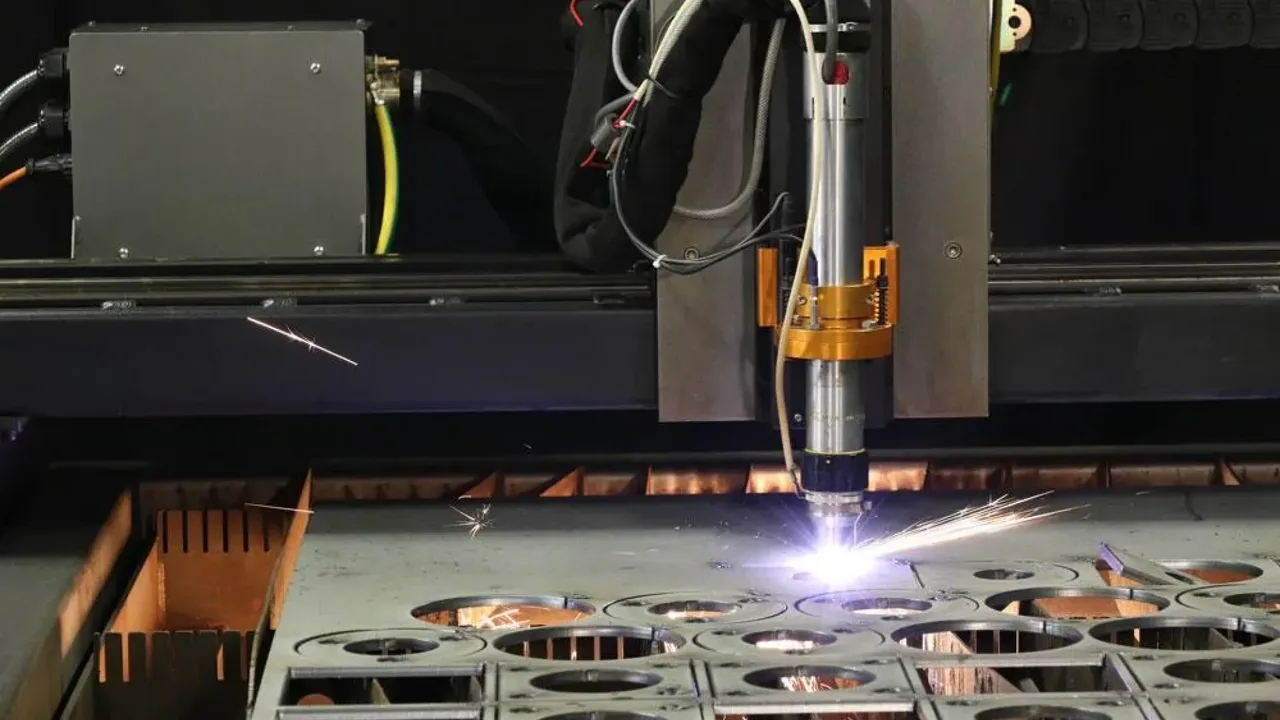
Plasma cutting occupies the middle ground between laser and oxy-fuel technologies. It uses an electrically charged gas to cut through conductive metals, offering a balance between speed, flexibility, and cost.
In many workshops, plasma systems serve as the default solution when evaluating laser vs plasma vs oxy fuel cutting, particularly for mixed production environments.
Plasma cutting is well-suited for:
- Medium thickness ranges
- Structural steel components
- High-volume industrial fabrication
While plasma cut quality does not match laser precision, advances in high-definition plasma technology have significantly narrowed the gap, making it a competitive option for many applications.
According to technical analysis published by The Fabricator, plasma cutting remains a cost-effective solution for manufacturers seeking flexibility without the high investment threshold of laser systems.
Where Plasma Cutting Performs Best
Plasma cutting performs best in environments where material thickness varies and production speed is prioritized over ultra-fine edge quality. It offers faster cutting speeds than oxy-fuel and lower operational costs than laser for many industrial applications.
This makes plasma an important reference point in any serious evaluation of laser vs plasma vs oxy fuel cutting.
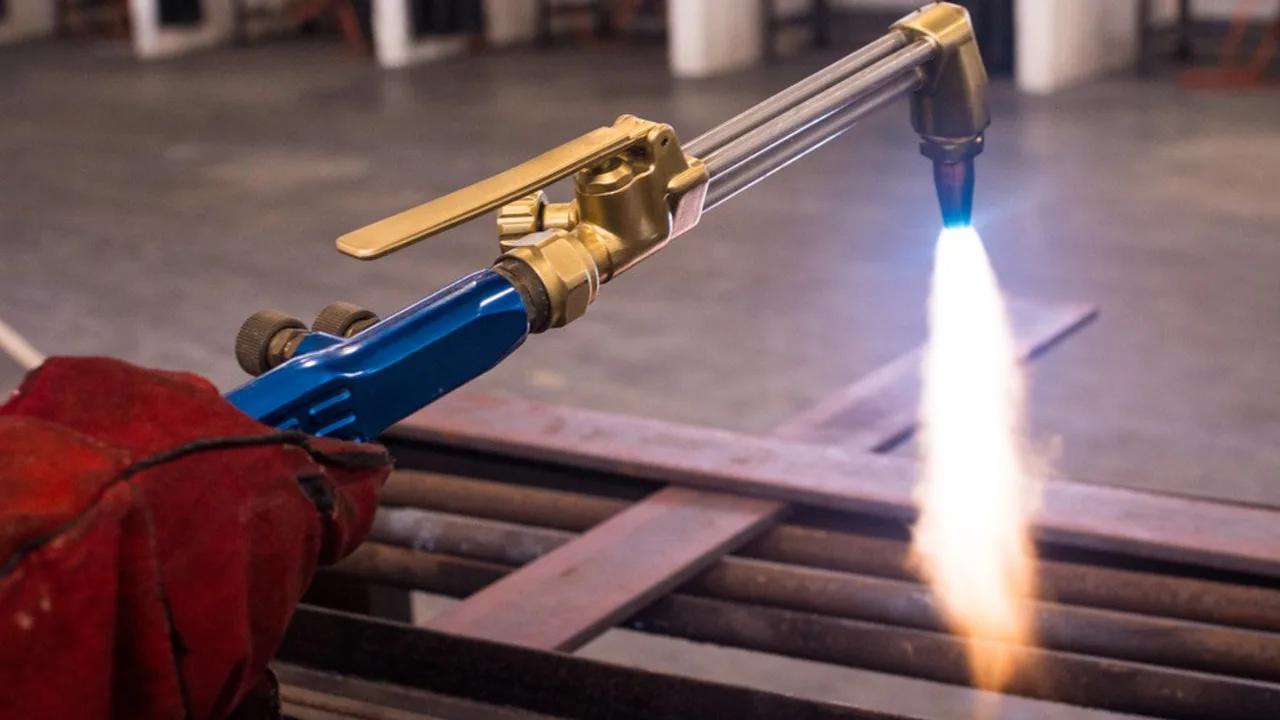
Oxy-Fuel Cutting: Still Relevant for Heavy Steel
Despite being the oldest of the three technologies, oxy-fuel cutting continues to play a critical role in modern fabrication. In the discussion of laser vs plasma vs oxy fuel cutting, oxy-fuel remains unmatched when it comes to cutting very thick carbon steel efficiently.
Oxy-fuel cutting relies on a chemical reaction between oxygen and heated steel. Once the metal reaches ignition temperature, a stream of oxygen oxidizes and removes material along the cut line. This process makes oxy-fuel particularly effective for thick plates where melting-based methods become less efficient.
In heavy fabrication environments, oxy-fuel cutting is often selected not for speed or precision, but for its ability to handle extreme thickness ranges with relatively low equipment cost.
Thickness Ranges Where Oxy-Fuel Dominates
Oxy-fuel cutting excels in thickness ranges where laser and plasma systems face practical or economic limitations. Plates exceeding medium-to-heavy thickness thresholds can be cut reliably without requiring high electrical power or complex automation.
However, this advantage comes with trade-offs. Cut quality is generally lower, heat-affected zones are wider, and secondary processing is often required. These factors must be considered carefully when comparing laser vs plasma vs oxy fuel cutting for production planning.
Laser vs Plasma vs Oxy Fuel Cutting: Direct Comparison
To make an informed decision, manufacturers must evaluate how each cutting method performs across key operational dimensions. Rather than focusing on a single metric, a holistic comparison reveals where each technology delivers the most value.
Cut Quality Comparison
- Laser cutting delivers the highest cut quality, with smooth edges, minimal taper, and tight dimensional tolerances.
- Plasma cutting offers acceptable edge quality for most structural applications, though minor cleanup may be required.
- Oxy-fuel cutting produces rougher edges and larger heat-affected zones, making post-processing more common.
When cut quality directly affects downstream welding or assembly, laser cutting often provides measurable efficiency gains within the laser vs plasma vs oxy fuel cutting comparison.
Cost per Meter Comparison
Cost per meter varies significantly depending on material thickness, energy consumption, and production volume.
- Laser cutting typically has higher operating and capital costs but reduces secondary processing expenses.
- Plasma cutting offers a balanced cost profile, making it suitable for high-volume industrial production.
- Oxy-fuel cutting maintains low equipment costs but may increase total cost due to slower speed and post-cut cleanup.
Evaluating cost per meter without considering post-processing can lead to misleading conclusions in the laser vs plasma vs oxy fuel cutting decision.
Thickness Ranges Comparison
| Cutting Method | Typical Thickness Range | Best Use Case |
|---|---|---|
| Laser | Thin to medium plates | High-precision components |
| Plasma | Medium thickness | Structural and general fabrication |
| Oxy-Fuel | Heavy and very thick plates | Heavy steel fabrication |
This comparison highlights why no single method dominates all scenarios within laser vs plasma vs oxy fuel cutting.
Matching Cutting Methods to Industrial Applications
Choosing the right cutting technology requires aligning production requirements with technical capabilities. Manufacturers working with varied materials and order profiles often rely on multiple cutting systems rather than a single solution.
For example:
- Laser cutting is favored for precision parts and automated production lines.
- Plasma cutting supports flexible, high-throughput fabrication environments.
- Oxy-fuel cutting serves heavy industries dealing with thick structural steel.
Understanding how these methods complement each other is essential when evaluating laser vs plasma vs oxy fuel cutting at a facility level.
Common Mistakes in Cutting Method Selection
One frequent mistake is over-specifying cutting technology—choosing laser systems where plasma or oxy-fuel would meet requirements at lower cost. Another is underestimating post-processing time, which can offset apparent savings at the cutting stage.
Ignoring production volume and material mix can also lead to inefficiencies, reinforcing the need for a structured decision framework.
Decision Framework: How to Choose the Right Cutting Method
A practical decision framework considers multiple variables rather than focusing on a single performance metric. When evaluating laser vs plasma vs oxy fuel cutting, manufacturers should assess:
- Material type and thickness ranges
- Required cut quality and tolerances
- Production volume and batch size
- Target cost per meter
- Downstream processing requirements
This approach reframes cutting technology selection as a business decision, balancing technical capability with long-term operational efficiency.
Final Thoughts: Technology Choice as a Competitive Advantage
The comparison of laser vs plasma vs oxy fuel cutting remains highly relevant in 2026 because manufacturing environments are becoming more diverse and cost-sensitive.
Rather than seeking a universally superior method, successful manufacturers focus on alignment—matching cutting technology to application requirements, production goals, and cost structure.
When chosen correctly, cutting technology becomes more than a workshop tool. It becomes a competitive advantage that supports quality, efficiency, and long-term manufacturing resilience.