Why Industrial Parks Keep Choosing Fast-Track Steel Buildings in 2026
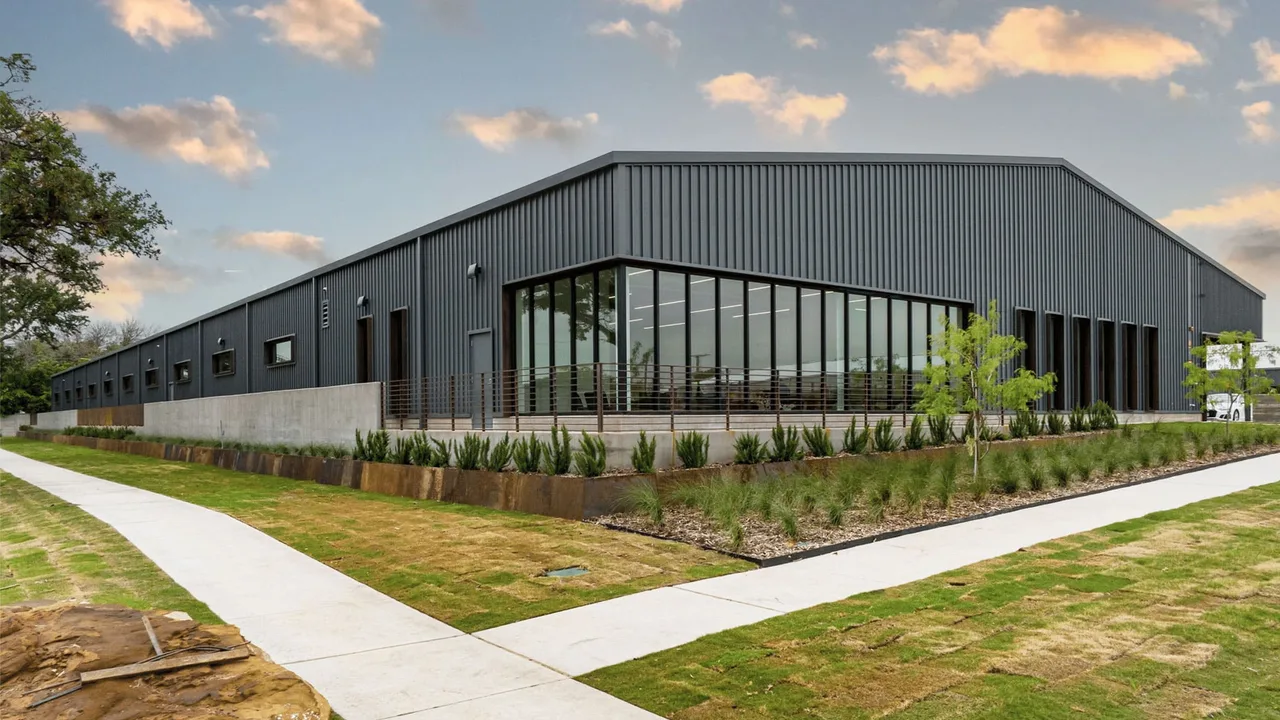
Industrial park building solutions have become a defining factor in how modern industrial developments are planned, financed, and delivered in 2026. Across global markets, industrial park operators are no longer evaluating buildings as isolated assets, but as scalable infrastructure systems that must support speed, flexibility, and long-term operational certainty.
This shift explains why fast-track steel buildings continue to dominate new industrial park projects worldwide. Faced with compressed timelines, volatile supply chains, and increasingly demanding tenants, developers are prioritizing construction strategies that reduce uncertainty while accelerating time-to-operation.
Rather than treating speed as a secondary benefit, fast-track steel construction is now embedded within broader industrial park building solutions—integrated approaches that align structural systems with site planning, expansion logic, and investment strategy.
The New Reality of Industrial Park Development in 2026
Industrial park development in 2026 operates under conditions fundamentally different from those of the previous decade. Demand cycles are shorter, tenant requirements evolve rapidly, and capital deployment is scrutinized more closely than ever.
Several structural forces are reshaping how industrial parks are built:
- Accelerated market entry requirements, where delays directly impact tenant revenue.
- Higher land and infrastructure costs, increasing pressure to optimize space utilization.
- Frequent factory expansion requests driven by nearshoring and regional manufacturing shifts.
- Greater regulatory and ESG oversight affecting permitting and financing.
Under these conditions, traditional construction models—often sequential, rigid, and slow to adapt—create friction. Industrial park operators increasingly recognize that effective industrial park building solutions must address speed and adaptability simultaneously, not as trade-offs.
Time-to-Operation Is Now the Core KPI
In 2026, the most critical metric for industrial park success is no longer completion date alone, but time-to-operation. Buildings that are structurally complete but not operational-ready represent idle capital and delayed returns.
Fast-track steel buildings shorten this gap by overlapping design, fabrication, and erection phases. This allows infrastructure delivery to align more closely with tenant commissioning schedules, reducing non-productive downtime.
What Fast-Track Steel Buildings Really Mean (Beyond Speed)
Fast-track construction is often misunderstood as a simple acceleration of traditional workflows. In reality, fast-track steel buildings represent a different execution logic—one that restructures how decisions are made and risks are managed.
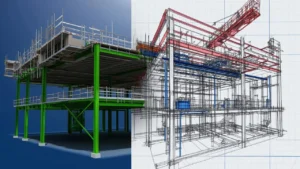
Steel enables this approach because structural systems can be engineered early with high precision. Once core parameters are fixed, fabrication proceeds in parallel with site preparation, eliminating the delays associated with late-stage design changes.
This predictability is essential to modern industrial park building solutions, where multiple buildings may be developed simultaneously or in closely sequenced phases.
Why Steel Enables Parallel Construction Workflows
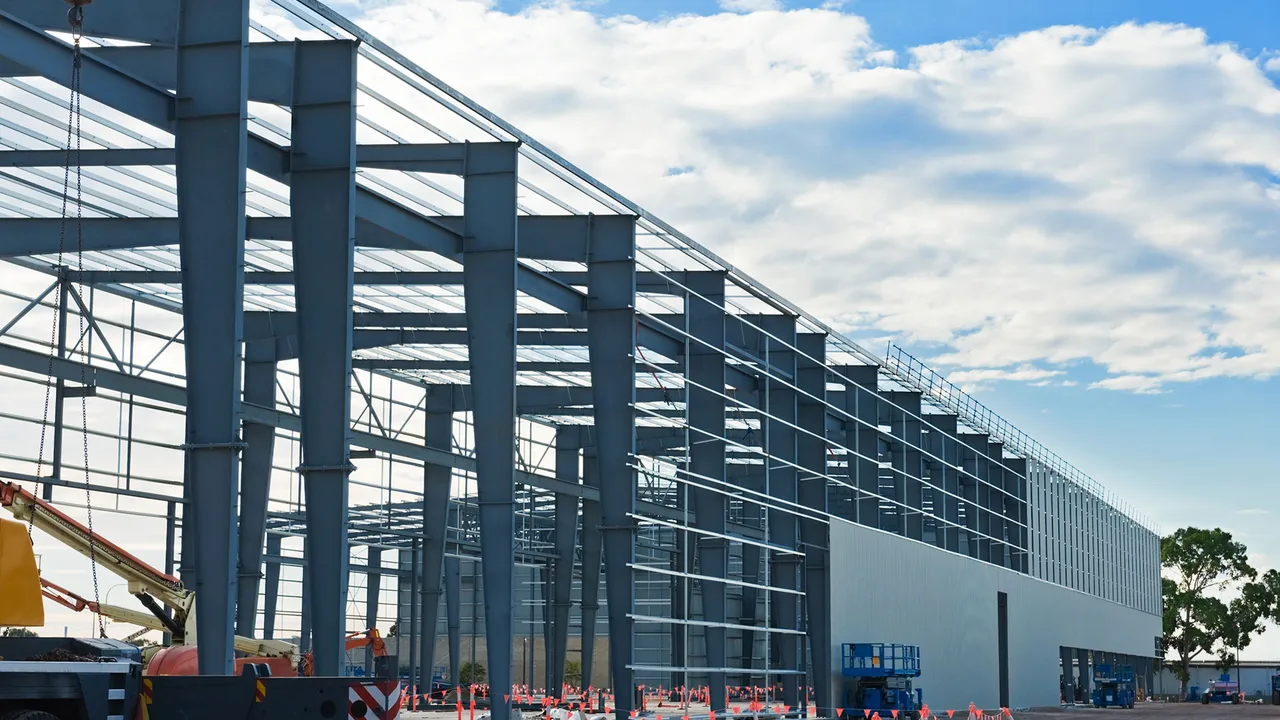
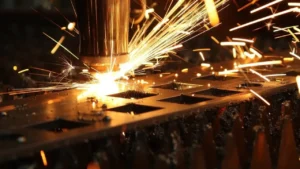
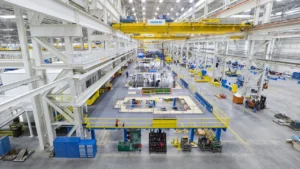
Steel construction supports parallel workflows by separating fabrication from on-site constraints. Structural members are produced in controlled environments, while foundations and utilities are prepared on site.
This division reduces weather risk, labor variability, and scheduling conflicts—key concerns for large industrial parks managing multiple contractors and stakeholders.
Industrial Park Building Solutions as a System-Level Strategy
As industrial parks increase in scale, developers are moving away from single-building optimization toward system-level thinking. Industrial park building solutions now encompass structural frameworks, circulation logic, utility planning, and future expansion pathways.
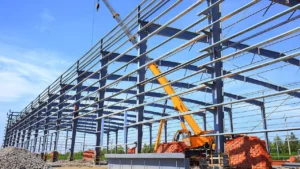
Fast-track steel buildings fit naturally into this model because they rely on standardized grids and modular components. These features allow buildings to be replicated, extended, or reconfigured without redesigning the entire park.
This system-level approach mirrors broader trends in industrial real estate, where flexibility and resilience are prioritized over bespoke, one-off designs. According to global construction industry analysis published by McKinsey, productivity gains in construction are increasingly tied to standardization and off-site fabrication.
Aligning Building Systems with Park-Level Planning
When structural systems align with master planning from the outset, industrial parks gain long-term adaptability. Steel buildings can be expanded laterally or vertically with minimal disruption, supporting factory expansion without compromising adjacent tenants.
This alignment reduces future redevelopment costs and strengthens the long-term competitiveness of the industrial park as a whole.
Speed Versus Control: The Hidden Advantage of Fast-Track Steel Projects
A common concern among developers is that fast-track delivery reduces control. In practice, the opposite is often true. Fast-track steel projects require early coordination, forcing stakeholders to resolve key decisions upfront.
This early alignment improves visibility over cost, scope, and schedule—critical components of effective industrial park building solutions. Standardized steel components further reduce on-site variability, enabling smoother execution and fewer surprises during erection.
Managing Risk Through Design Standardization
Risk management is a central concern for industrial park developers operating at scale. Standardized steel systems reduce engineering uncertainty, simplify approvals, and improve safety outcomes.
By minimizing improvisation on site, fast-track steel construction creates a controlled environment where timelines and budgets are easier to defend—an increasingly important advantage in 2026’s risk-sensitive market.
Factory Expansion Without Interrupting Operations
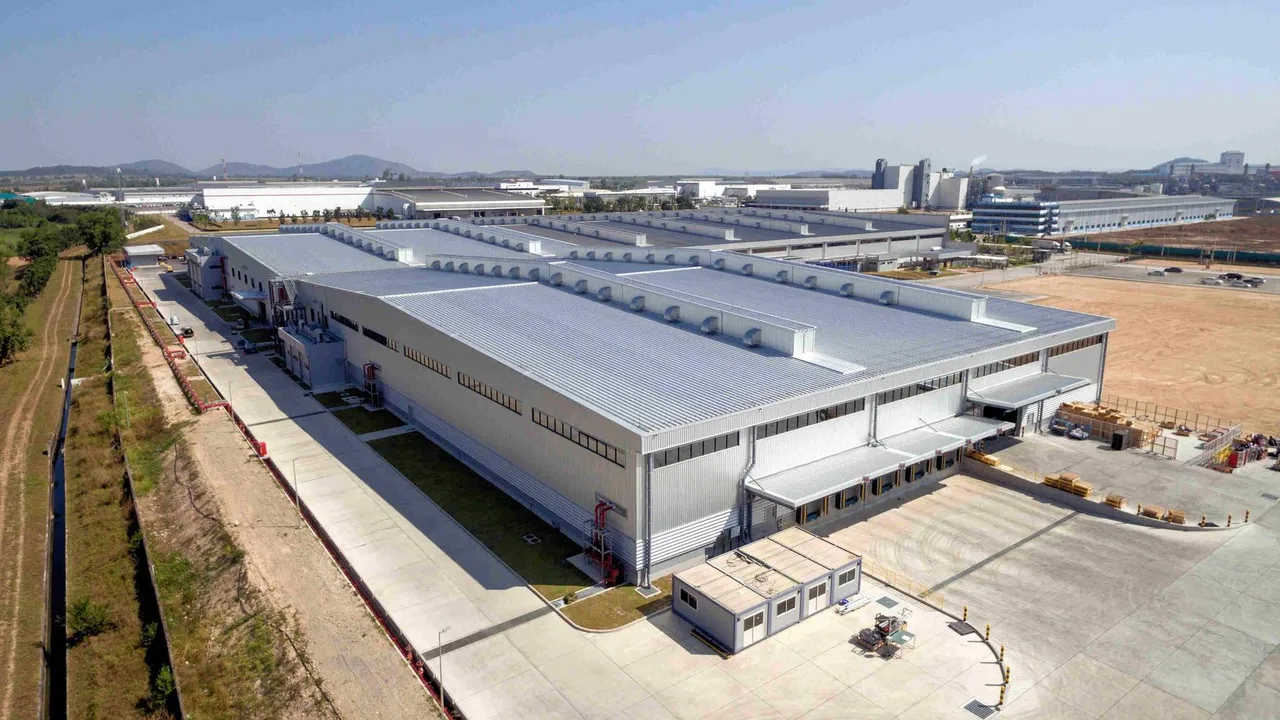
For many developers, the real test of industrial park building solutions begins after the first phase is complete. Once tenants start operating, expansion requests inevitably follow. In 2026, factory expansion is no longer a long-term plan—it is an ongoing operational reality.
Fast-track steel buildings allow industrial parks to respond to expansion demands without disrupting existing operations. Structural systems can be designed with future bays, load allowances, and connection points already integrated, making later extensions faster and less invasive.
This approach transforms expansion from a disruptive construction event into a controlled, pre-planned process. As a result, industrial park building solutions based on steel frameworks provide a clear advantage in active, fully occupied parks.
Minimizing Downtime for Existing Tenants
Downtime is one of the most expensive risks in industrial environments. Even limited shutdowns can cascade through supply chains, delaying production and eroding tenant confidence.
Fast-track steel expansion minimizes downtime by relying on off-site fabrication and rapid on-site assembly. Construction work can be isolated to specific zones, scheduled around operational hours, and completed with minimal interference. For industrial park operators, this capability strengthens tenant retention and reinforces the long-term value of their industrial park building solutions.
Site Planning Advantages of Fast-Track Steel Buildings
Effective site planning is essential to the long-term performance of any industrial park. Roads, loading areas, utilities, and safety corridors must operate as a unified system across the entire site.
Fast-track steel buildings support adaptive site planning by using standardized structural grids and clear-span layouts. These characteristics allow planners to align buildings precisely with logistics flows while preserving flexibility for future changes.
Because steel structures impose fewer internal constraints, developers can prioritize operational efficiency rather than structural compromise—an important principle in scalable industrial park building solutions.
Designing for Unknown Future Tenants
In many industrial parks, buildings are developed before tenant profiles are fully defined. This uncertainty requires structures that can support a wide range of industrial uses.
Steel buildings excel in this role. Clear spans, adaptable floor loads, and modular envelopes allow facilities to transition between manufacturing, warehousing, and hybrid functions. This adaptability reduces vacancy risk and enhances the long-term resilience of industrial park building solutions.
Cost Visibility and Budget Discipline in Fast-Track Projects
Cost certainty has become a strategic priority for industrial park developers in 2026. Rising material prices and financing constraints leave little margin for error.
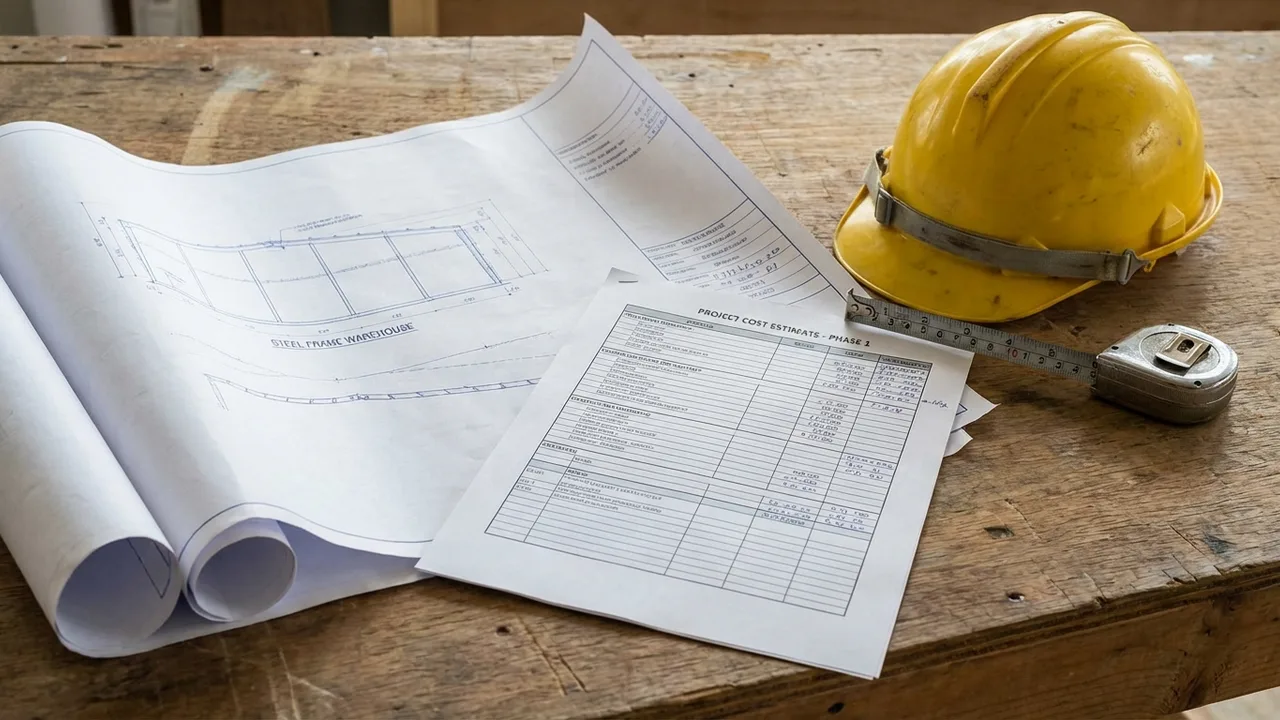
Fast-track steel construction improves cost visibility by front-loading structural decisions. Material quantities, fabrication timelines, and erection sequences are defined early, allowing developers to forecast expenditures with greater confidence.
This transparency is a key reason why industrial park building solutions increasingly favor steel systems over more variable construction methods.
CapEx Predictability Versus Long-Term OpEx
Beyond initial capital expenditure, developers must also consider long-term operational costs. Steel buildings offer advantages in maintenance efficiency, adaptability, and upgrade potential.
For industrial parks intended to operate over decades, this balance between predictable CapEx and optimized OpEx reinforces the strategic value of steel-based industrial park building solutions.
Sustainability Pressures and Regulatory Alignment
Sustainability has become a functional requirement rather than a marketing feature. Industrial parks are now evaluated on environmental performance, resource efficiency, and regulatory compliance.
Steel construction supports these objectives through recyclability, efficient material use, and reduced on-site waste. Fast-track methodologies further lower environmental impact by shortening construction timelines and minimizing disruption.
As regulations tighten, industrial park building solutions that align sustainability with operational efficiency are better positioned to attract long-term tenants and institutional investment.
Why 2026 Marks a Tipping Point for Industrial Park Construction
The convergence of speed requirements, expansion pressure, and sustainability expectations has reshaped how industrial parks are built. By 2026, slow and rigid construction models have become increasingly incompatible with market realities.
Fast-track steel buildings represent a structural response to this shift. They enable industrial parks to scale quickly, adapt continuously, and operate with greater certainty.
As a result, industrial park building solutions are no longer evaluated building by building, but as repeatable systems capable of supporting long-term growth.
Final Thoughts: Building Industrial Parks for Speed, Scale, and Certainty
The continued preference for fast-track steel buildings reflects a deeper transformation in industrial development. Industrial parks are no longer static assets—they are evolving platforms that must respond to changing markets and tenant demands.
By adopting steel-based industrial park building solutions, developers gain speed without sacrificing control, flexibility without losing predictability, and sustainability without compromising performance.
In 2026 and beyond, the most successful industrial parks will be those built not just for today’s requirements, but for continuous adaptation over time.