What Makes a Manufacturer “Export-Ready” for Steel Structures
In today’s global construction market, the phrase “export-ready” is often used casually. Many steel fabricators claim they can ship overseas, but very few truly operate as an export ready steel structure manufacturer in a systematic and professional sense. Export readiness is not just about loading steel components into containers and arranging freight. It is a comprehensive capability that combines quality control, documentation discipline, export packaging expertise, logistics coordination, and compliance with international standards.
For global buyers investing in warehouses, factories, industrial plants, or infrastructure projects, choosing the right supplier is not simply about price—it is about reliability across borders. This article explores what genuinely defines an export-ready manufacturer and why the distinction matters in international steel structure projects.
Defining an Export Ready Steel Structure Manufacturer
An export ready steel structure manufacturer is not merely a company that has completed one or two overseas orders. It is a fabrication enterprise structured to meet international compliance requirements, manage cross-border logistics, and maintain traceable quality systems suitable for global audits.
Export readiness involves multiple interconnected systems:
- Standard compliance: Ability to fabricate according to ASTM, EN, or other international codes.
- Structured quality control: Documented inspection and testing procedures.
- Documentation management: Accurate and complete export documentation.
- Export packaging capability: Protection designed specifically for long-distance sea freight.
- Logistics coordination: Understanding of Incoterms, customs clearance, and vessel scheduling.
Without these integrated elements, a manufacturer may still complete overseas shipments—but inconsistently, inefficiently, and with elevated risk.
Quality Control as the Foundation of Export Capability
At the heart of any export ready steel structure manufacturer lies a rigorous quality control system. International buyers demand traceability, structural integrity, and compliance documentation before installation begins. Unlike domestic projects, export contracts often require third-party inspection and formal quality records.
A professional quality control system typically includes:
- Incoming raw material inspection with mill test certificates (MTC).
- Welding Procedure Specifications (WPS) and Procedure Qualification Records (PQR).
- Non-Destructive Testing (NDT) such as ultrasonic or magnetic particle inspection.
- Dimensional tolerance checks aligned with project drawings.
- Final pre-shipment inspection reports.
Traceability is especially critical. Each steel component should be identifiable by batch number, heat number, or marking system, ensuring that every element can be traced back to its material origin. This level of discipline builds trust and reduces disputes during installation.
In global projects, third-party inspection agencies are frequently involved. An export ready steel structure manufacturer must be comfortable working under independent supervision and maintaining complete documentation transparency.
Compliance with International Standards and Certifications
International buyers rarely accept products fabricated solely under local building codes. Instead, they require compliance with globally recognized standards such as ASTM (American Society for Testing and Materials), EN standards in Europe, or AWS welding standards. Certification frameworks such as ISO 9001 for quality management also play a critical role.
An export ready steel structure manufacturer understands that compliance is not a one-time effort but an ongoing process. Fabrication methods, welding procedures, inspection records, and even staff qualifications must align with the target country’s regulatory framework.
For example, a steel warehouse project destined for the Middle East may require different structural load calculations compared to one built in Southeast Asia due to variations in wind or seismic conditions. Therefore, export-ready manufacturers often maintain engineering teams capable of adapting designs to meet local compliance requirements.
Certification audits are also common before contract finalization. Buyers may conduct factory inspections to verify production capacity, quality control systems, and documentation processes. Being export-ready means being audit-ready at any time.
Documentation: The Silent Backbone of Export Success
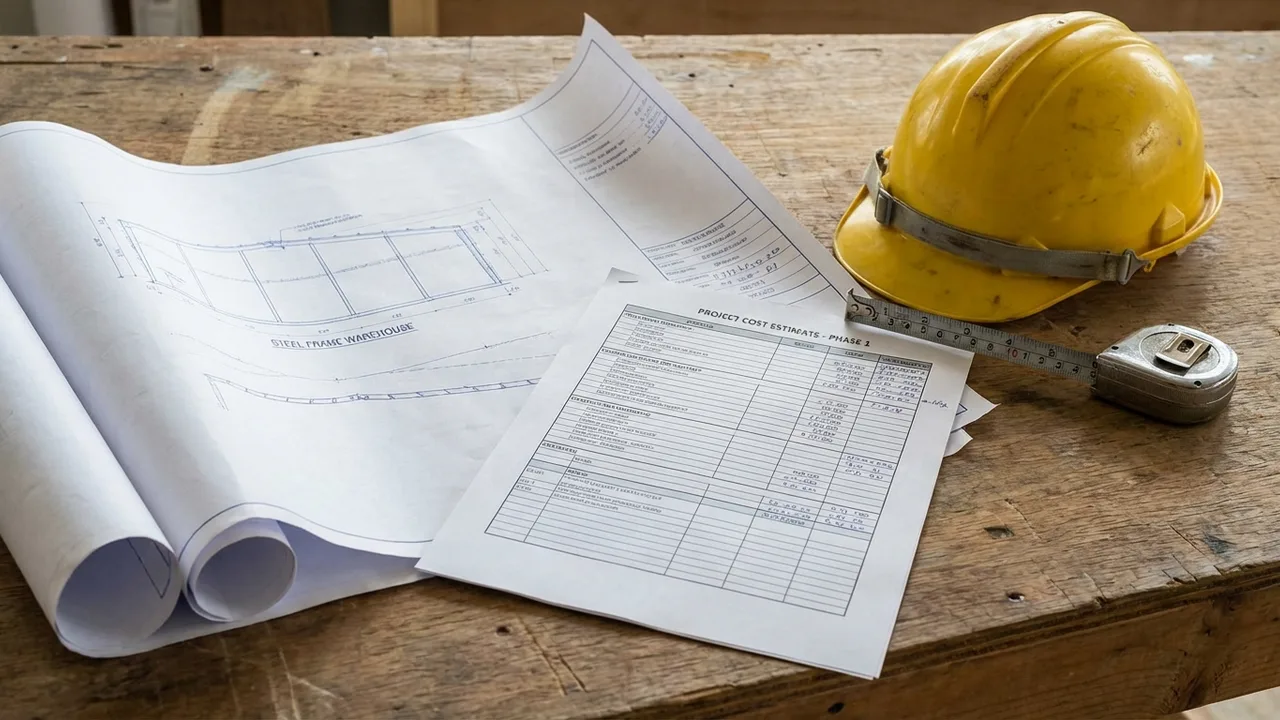
If quality control forms the technical backbone of export readiness, documentation forms its administrative backbone. International trade requires precise and complete paperwork. A missing certificate or incorrect invoice can delay customs clearance, disrupt project schedules, and increase costs.
Key documentation typically includes:
- Commercial invoice
- Packing list
- Bill of lading
- Material test certificates
- Welding inspection reports
- Certificate of origin
An export ready steel structure manufacturer establishes standardized documentation procedures to ensure consistency across every shipment. Digital document management systems often support this process, linking material traceability, quality inspection records, and export paperwork in a unified platform.
Incomplete documentation is one of the most common reasons export shipments are delayed at ports. For large-scale steel structure projects, such delays can cascade into significant financial penalties. Export-ready manufacturers mitigate this risk through systematic record-keeping and verification before goods leave the factory.
Export Packaging: Protecting Steel Across Borders
Steel structures destined for international markets often travel thousands of kilometers by sea. During transit, they are exposed to humidity, salt air, mechanical vibration, and loading stress. This is where export packaging becomes critical.
Unlike domestic delivery, export packaging must account for long-term corrosion risks and handling variability at ports. Proper export packaging may include:
- Application of anti-rust coatings or protective oil.
- Sealed wrapping to reduce moisture exposure.
- Reinforced bundling for structural stability.
- Clear labeling for identification and installation sequencing.
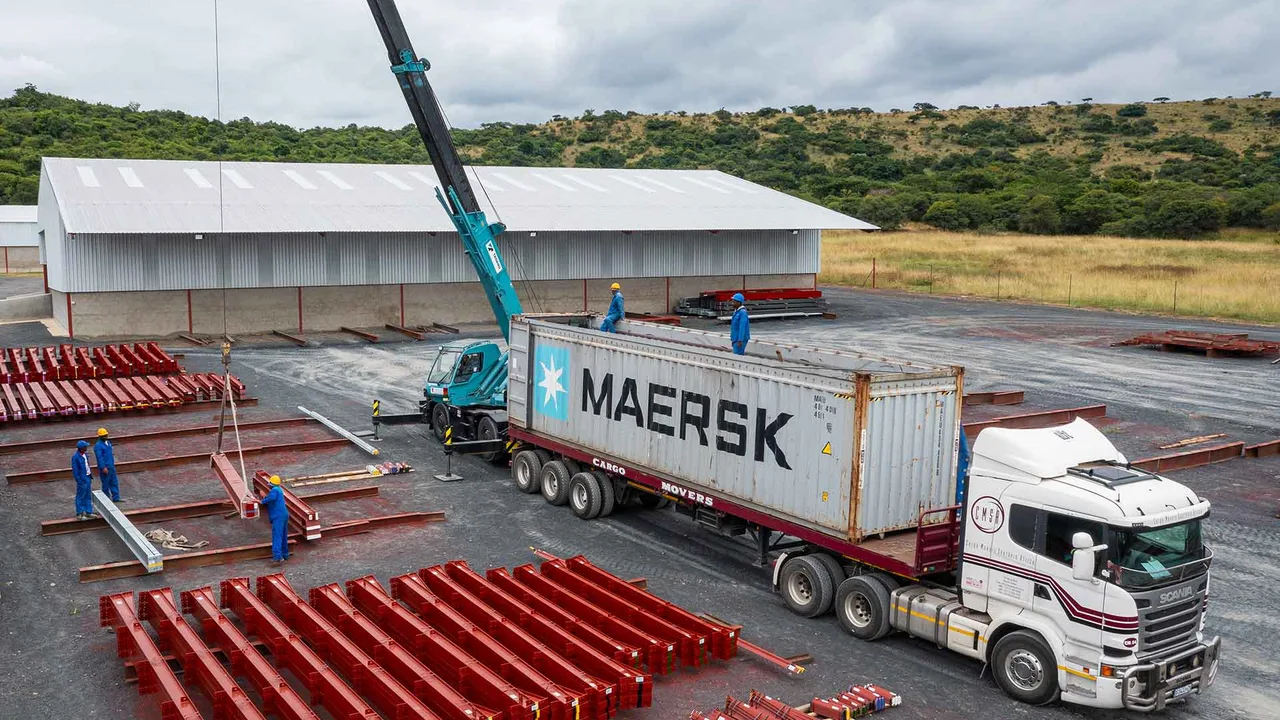
Container loading optimization is another vital component. Efficient packing reduces freight costs and minimizes component movement during transit. An export ready steel structure manufacturer plans packaging layouts based on container dimensions, weight distribution, and unloading efficiency at the destination.
Improper packaging can result in corrosion, surface damage, or deformation—issues that harm both project timelines and supplier reputation. Export readiness therefore requires not just fabrication expertise, but logistics-oriented engineering thinking.
Production Capacity and Scalability
An export ready steel structure manufacturer must demonstrate not only technical competence but also scalable production capacity. International projects often involve large volumes, strict delivery schedules, and phased shipments. A supplier that can fabricate 200 tons per month for domestic clients may struggle when a 2,000-ton export order requires structured batching and milestone-based dispatch.
Scalability depends on several operational factors:
- Multiple fabrication lines with parallel processing capability.
- CNC cutting, drilling, and welding automation to ensure precision and speed.
- Dedicated project management teams coordinating engineering and production.
- Structured workflow systems to manage simultaneous export contracts.
Production planning is critical. Export projects often require staggered shipments aligned with overseas construction timelines. An export ready steel structure manufacturer must synchronize fabrication output with vessel schedules to avoid port storage penalties or project delays.
Supply Chain and Logistics Coordination
Export readiness extends beyond the factory floor into supply chain management. Steel structures are not lightweight goods—they require specialized freight handling, port coordination, and customs clearance processes. A manufacturer operating internationally must understand shipping frameworks such as those defined by the International Chamber of Commerce Incoterms rules, which clarify responsibilities between buyer and seller in global trade.
Incoterms such as FOB (Free on Board), CIF (Cost, Insurance, and Freight), or DDP (Delivered Duty Paid) significantly affect risk allocation and financial planning. An export ready steel structure manufacturer must know how to structure contracts accordingly and collaborate effectively with freight forwarders and customs brokers.
Logistics coordination includes:
- Container booking and scheduling.
- Weight distribution calculations to comply with port regulations.
- Preparation of export customs declarations.
- Insurance coverage for long-haul transportation.
Any misalignment between production completion and shipping schedules can lead to unnecessary storage costs or delayed installation at the project site. Export-ready manufacturers mitigate these risks through close coordination between production managers and logistics teams.
Financial and Contractual Readiness
International projects introduce financial complexities that domestic suppliers may never encounter. Payment mechanisms such as Letters of Credit (LC), milestone-based payments, or performance guarantees require administrative experience and financial discipline.
An export ready steel structure manufacturer understands how to review LC terms carefully, ensuring that documentation requirements align with production and shipping realities. Even small discrepancies in paperwork can delay payment release under LC agreements.
Currency risk management also plays a role. Fluctuations in exchange rates can erode margins if contracts are not structured strategically. Professional exporters often hedge currency exposure or negotiate payment schedules that reduce volatility impact.
Additionally, contractual clarity is essential. Export-ready manufacturers ensure that scope definitions, delivery milestones, inspection terms, and dispute resolution mechanisms are clearly documented. International arbitration clauses are often part of large export agreements, requiring legal literacy beyond basic sales contracts.
Digital Systems and Transparency
Modern export readiness increasingly depends on digital infrastructure. An export ready steel structure manufacturer integrates ERP systems, digital drawing management, and real-time production tracking to enhance transparency for overseas clients.
Digital systems enable:
- Centralized management of engineering revisions.
- Live tracking of fabrication progress by component.
- Automated documentation generation.
- Traceability dashboards accessible to project stakeholders.
Transparency builds trust. Overseas buyers cannot visit the factory daily; instead, they rely on structured reporting and visual evidence of progress. Export-ready manufacturers often provide weekly production reports, inspection summaries, and container loading photos to maintain confidence throughout the project lifecycle.
Case Comparison: Local Supplier vs. Export-Ready Manufacturer
To illustrate the distinction clearly, consider the following comparison:
| Criteria | Local Supplier | Export Ready Steel Structure Manufacturer |
|---|---|---|
| Quality Control | Basic visual checks | Structured, documented, third-party audited system |
| Documentation | Minimal paperwork | Complete export documentation with traceability |
| Export Packaging | Standard domestic protection | Moisture-controlled, reinforced, container-optimized |
| Compliance | Local building codes only | Multi-standard compliance (ASTM, EN, ISO) |
| Logistics | Buyer-managed | Coordinated shipping and Incoterms expertise |
The differences are not cosmetic—they determine project reliability. While a local supplier may successfully deliver within a domestic framework, only an export ready steel structure manufacturer systematically addresses the layered complexities of international trade.
Why Global Buyers Prioritize Export-Ready Partners
For global developers and EPC contractors, risk mitigation is paramount. Selecting an export ready steel structure manufacturer reduces exposure to quality disputes, shipping delays, and compliance failures.
Buyers prioritize partners who:
- Provide consistent quality control documentation.
- Understand export packaging requirements for long-distance shipping.
- Offer transparent production tracking.
- Manage documentation without errors or omissions.
In large infrastructure or industrial projects, even minor shipment delays can disrupt entire construction schedules. Therefore, international clients often conduct rigorous supplier evaluations before awarding contracts.
Export Readiness as a Strategic Advantage
Becoming an export ready steel structure manufacturer is not about marketing language—it is about building integrated systems that connect quality control, documentation accuracy, export packaging reliability, logistics coordination, and financial discipline.
True export readiness requires investment in people, processes, and digital infrastructure. It demands compliance with international standards, the ability to withstand audits, and the operational maturity to handle complex cross-border contracts.
In an increasingly globalized construction market, export readiness is no longer optional for ambitious steel fabricators. It is a competitive advantage that signals reliability, professionalism, and long-term partnership potential. Manufacturers that cultivate these capabilities position themselves not just as suppliers—but as trusted international collaborators.