How BIM Coordination Prevents On-Site Steel Clashes
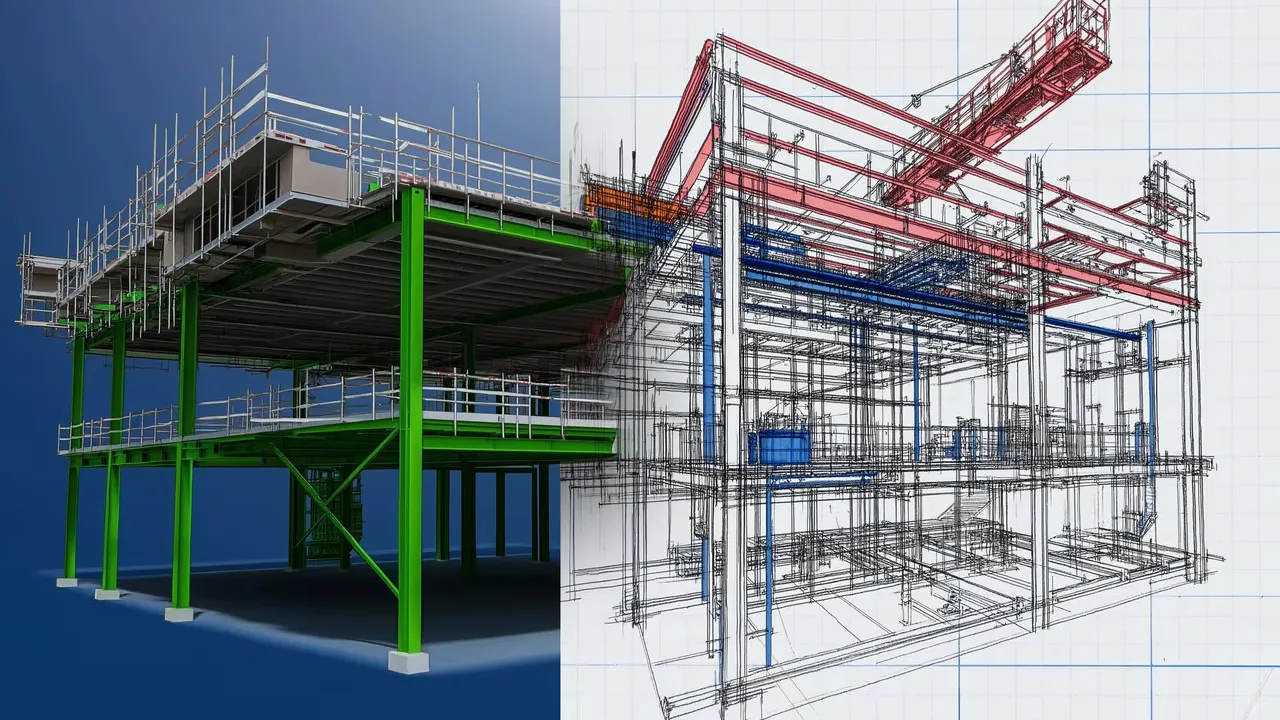
BIM coordination for steel structures has become a critical safeguard against costly on-site clashes in modern construction projects. As steel systems grow more complex and project schedules become increasingly compressed, the margin for coordination errors has effectively disappeared. What was once considered a “nice-to-have” digital workflow is now a core risk-management process.
On-site steel clashes—whether between beams and ductwork, columns and cable trays, or connections and architectural elements—remain one of the most expensive and disruptive problems in construction. These issues rarely stem from poor engineering alone; more often, they result from fragmented coordination across disciplines.
This is where BIM coordination for steel structures plays a decisive role. By aligning structural, architectural, and MEP systems within a shared digital environment, BIM coordination enables teams to identify and resolve conflicts long before steel reaches the site.
Why Steel Clashes Are Still a Major Construction Risk
Despite advances in design software and detailing standards, steel clashes continue to occur on projects of all sizes. The root cause is not a lack of information, but a lack of integrated visibility.
Steel structures sit at the intersection of multiple building systems. Beams must align with slabs, penetrations must accommodate services, and connections must respect architectural constraints. When these systems are developed in isolation, clashes become almost inevitable.
Common steel-related clashes include:
- Steel versus MEP systems such as ducts, pipes, and cable trays
- Steel versus concrete elements, including embeds and slab edges
- Steel versus architectural components like façades and ceilings
Fast-track projects amplify this risk. As design and construction overlap, unresolved coordination issues are more likely to surface on site—where they are far more expensive to fix.
The Cost of Fixing Steel Errors On Site
Errors discovered during erection carry a disproportionate cost. Unlike finishes or lightweight systems, steel components cannot be easily modified without affecting structural integrity and safety.
On-site fixes often involve cutting, re-welding, re-drilling, or fabricating replacement members. These interventions disrupt erection sequences, delay follow-on trades, and increase safety exposure. In contrast, resolving the same issue during coordination costs a fraction of the time and money.
This cost imbalance is a key reason why BIM coordination for steel structures has shifted from being a technical preference to a commercial necessity.
What BIM Coordination Really Means for Steel Structures
BIM coordination is frequently misunderstood as the creation of a 3D model. In reality, it is a structured process for aligning information, responsibilities, and decisions across disciplines.
For steel structures, BIM coordination involves integrating the structural model with architectural and MEP models to evaluate spatial relationships, constructability, and sequencing. The goal is not just visualization, but conflict resolution.
Effective BIM coordination for steel structures establishes a shared digital reference where all parties work from the same geometry and data, reducing assumptions and misalignment.
BIM vs Traditional Drawing-Based Coordination
Traditional coordination relies heavily on 2D drawings, overlays, and manual checks. While this approach can identify some conflicts, it struggles to capture the full spatial complexity of modern buildings.
Drawings flatten three-dimensional relationships, making it difficult to detect clashes that occur across planes or elevations. BIM models, by contrast, allow teams to interrogate space directly, revealing conflicts that would otherwise remain hidden.
This shift from drawing-based review to model-based coordination is foundational to preventing steel clashes.
BIM Coordination for Steel Structures in the Design Phase
Early-stage coordination is where BIM delivers the greatest value. When BIM coordination for steel structures begins during schematic and detailed design, conflicts can be resolved before they influence shop drawings or fabrication.
Key design decisions—such as grid spacing, floor elevations, and connection strategies—have cascading effects across all disciplines. Coordinating these parameters early reduces downstream changes and preserves schedule integrity.
Steel models developed in isolation may appear technically sound, yet still clash with services or architectural intent. BIM coordination exposes these issues while change remains inexpensive.
Integrating Steel Models with Architectural and MEP Systems
Successful coordination requires more than overlaying models. It involves aligning tolerances, clearances, and access requirements across systems.
For steel structures, this means verifying beam depths against duct routes, checking column positions relative to walls, and confirming that connections do not obstruct services. These checks are central to BIM coordination for steel structures and directly influence fabrication accuracy and erection efficiency.
Clash Detection: Finding Problems Before They Reach the Site
Clash detection is one of the most tangible outputs of BIM coordination. By running automated checks between models, teams can identify conflicts systematically rather than relying on manual review.
Clashes are typically categorized as:
- Hard clashes, where elements physically intersect
- Soft clashes, where clearance or access requirements are violated
Filtering and prioritizing these clashes allows teams to focus on issues with the greatest impact on steel fabrication and erection.
Industry research consistently highlights the value of early clash detection. According to analysis published by Autodesk, coordinated BIM workflows significantly reduce rework and construction delays by resolving conflicts before materials are delivered.
Using Clash Detection to Protect Steel Fabrication Accuracy
Once steel enters fabrication, flexibility drops sharply. Changes to member geometry or hole locations can invalidate entire batches of components.
By resolving clashes during coordination, teams protect fabrication accuracy and reduce the need for late-stage revisions. This reinforces the role of BIM coordination for steel structures as a safeguard for both schedule and quality.
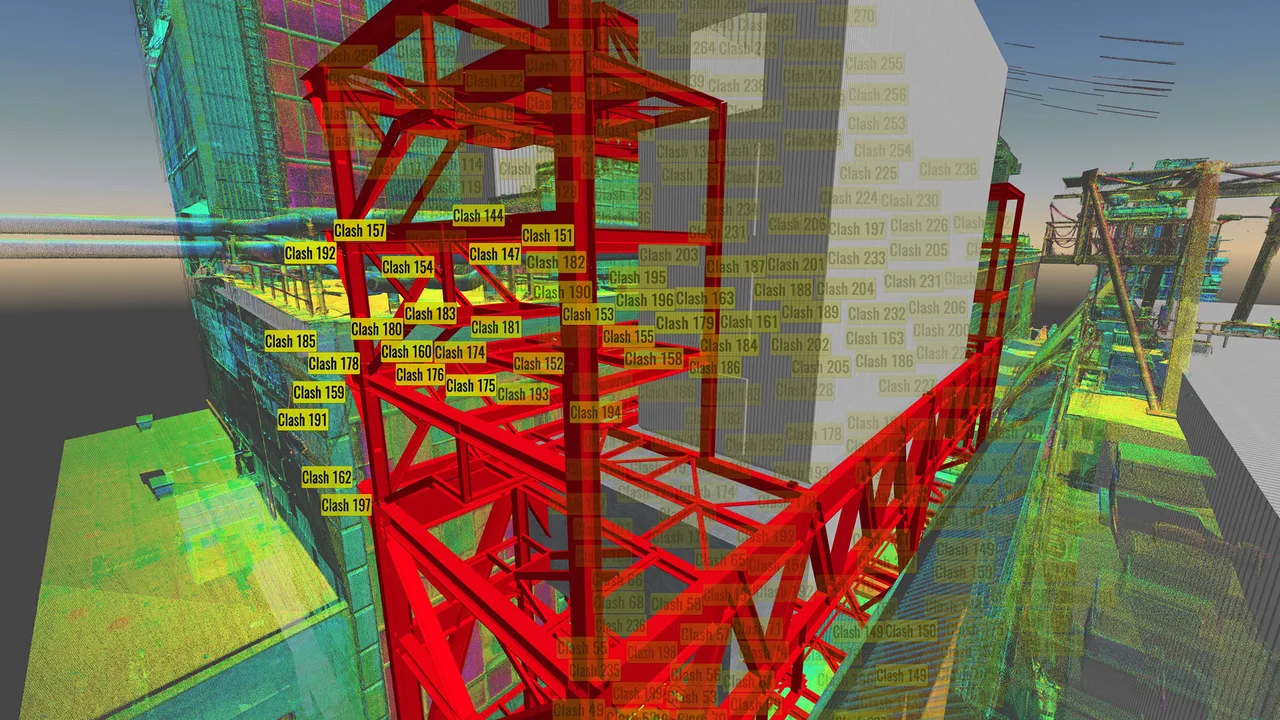
Model Review as a Decision-Making Tool
Beyond automated clash checks, model review plays a central role in BIM coordination for steel structures. A coordinated model is not only a detection tool, but a decision-making environment where constructability, sequencing, and risk can be evaluated visually and collaboratively.
Model reviews allow project teams to simulate real construction conditions before work begins on site. Steel erection sequences, access constraints, temporary bracing requirements, and lifting paths can all be examined within the model, reducing uncertainty during execution.
For complex steel structures, these reviews often reveal issues that are not strictly clashes, but still pose significant risk—such as insufficient installation clearance or impractical connection access.
How Steel Contractors Use Model Review to Reduce Risk
Steel contractors rely on coordinated models to validate assumptions made during design. By reviewing the model, they can confirm tolerances, verify bolt access, and assess whether members can be erected in the intended sequence.
This process reduces reliance on last-minute field adjustments. As a result, BIM coordination for steel structures shifts risk resolution upstream, where changes are cheaper and safer to implement.
Coordination Meetings Powered by BIM Models
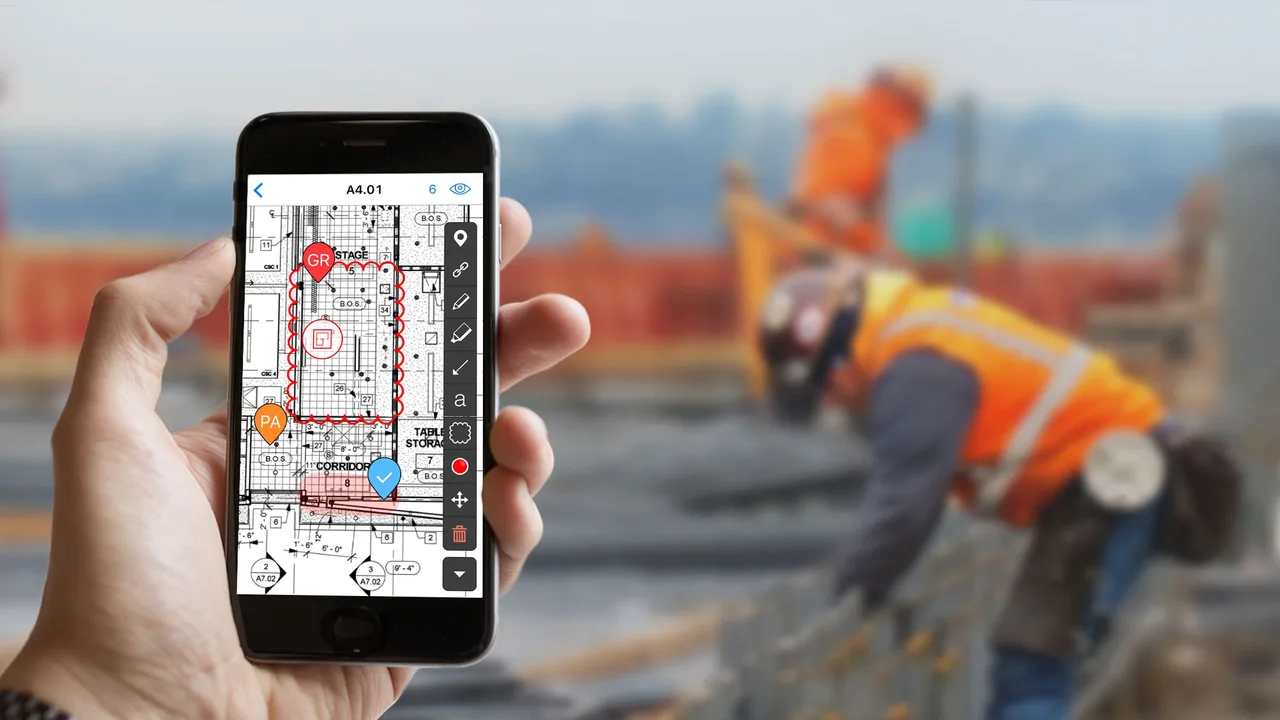
Coordination meetings have evolved significantly with the adoption of BIM. Instead of reviewing stacks of drawings, teams now gather around a shared model that serves as a single source of truth.
In these meetings, issues are identified directly within the model, responsibilities are assigned, and resolutions are agreed upon in real time. This model-centric approach improves clarity and accountability across disciplines.
For steel coordination, this is particularly valuable. Visualizing conflicts in three dimensions reduces misinterpretation and accelerates decision-making, especially on fast-track projects.
Turning Coordination Meetings into Actionable Decisions
Effective coordination meetings are structured around resolution, not discussion alone. BIM enables this by linking issues to specific elements, locations, and disciplines.
When coordination meetings are driven by BIM coordination for steel structures, outcomes are documented, tracked, and verified in subsequent model updates. This closed-loop process prevents unresolved issues from reappearing during fabrication or erection.
BIM Coordination in Fast-Track Steel Projects
Fast-track steel projects leave little room for error. With design, fabrication, and erection progressing in parallel, unresolved coordination issues can quickly disrupt the entire workflow.
BIM coordination provides the synchronization required for fast-track delivery. As design information evolves, updates propagate through the coordinated model, allowing downstream activities to adjust without losing alignment.
In this context, BIM coordination for steel structures acts as the connective tissue between disciplines, ensuring that acceleration does not come at the expense of control.
Long-Term Benefits Beyond Clash Prevention
While clash prevention is the most visible benefit, the long-term value of BIM coordination extends further. Coordinated models contribute to improved schedule reliability, more accurate cost forecasting, and safer construction environments.
For owners and operators, coordinated BIM models can also serve as a digital record of the steel structure. This information supports future modifications, maintenance planning, and lifecycle management.
As projects become more complex and timelines more compressed, these benefits reinforce why BIM coordination for steel structures is increasingly viewed as foundational rather than optional.
Final Thoughts: Preventing Steel Clashes Before They Exist
On-site steel clashes are rarely the result of a single mistake. They emerge from gaps in coordination, misaligned assumptions, and fragmented information.
BIM coordination addresses these challenges by creating a shared environment where conflicts are identified, discussed, and resolved before steel is fabricated or erected. In doing so, it transforms coordination from a reactive process into a proactive risk-prevention strategy.
As construction continues to evolve, BIM coordination for steel structures will remain a critical discipline—one that protects schedules, budgets, and safety by ensuring that steel works as intended long before it reaches the site.
From a broader technology perspective, BIM coordination represents how digital workflows are reshaping traditional construction practices, turning complex steel coordination challenges into predictable, data-driven processes.